Australia’s home and grid-scale batteries used to have one job: store solar power for later. That job is changing fast. Across the National Electricity Market (NEM), Australian batteries are becoming grid assets in their own right. They now stabilise voltage, set wholesale prices, and replace ageing coal-fired backup services. For NSW homeowners, this shift changes the case for installing a battery. A battery is no longer just a way to cut your own bill. It is a small piece of shared energy infrastructure. This article explains how that transition works. It also covers the latest 2026 data and what it means for your own system.
Australia’s Battery Boom, By the Numbers
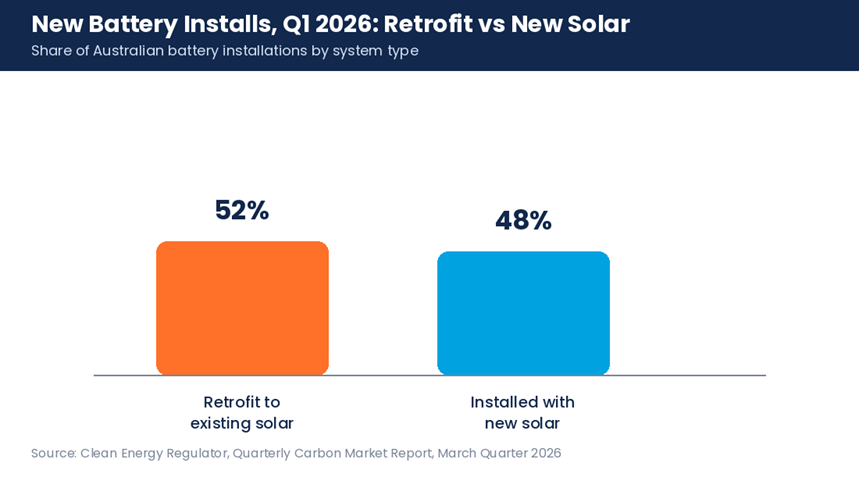
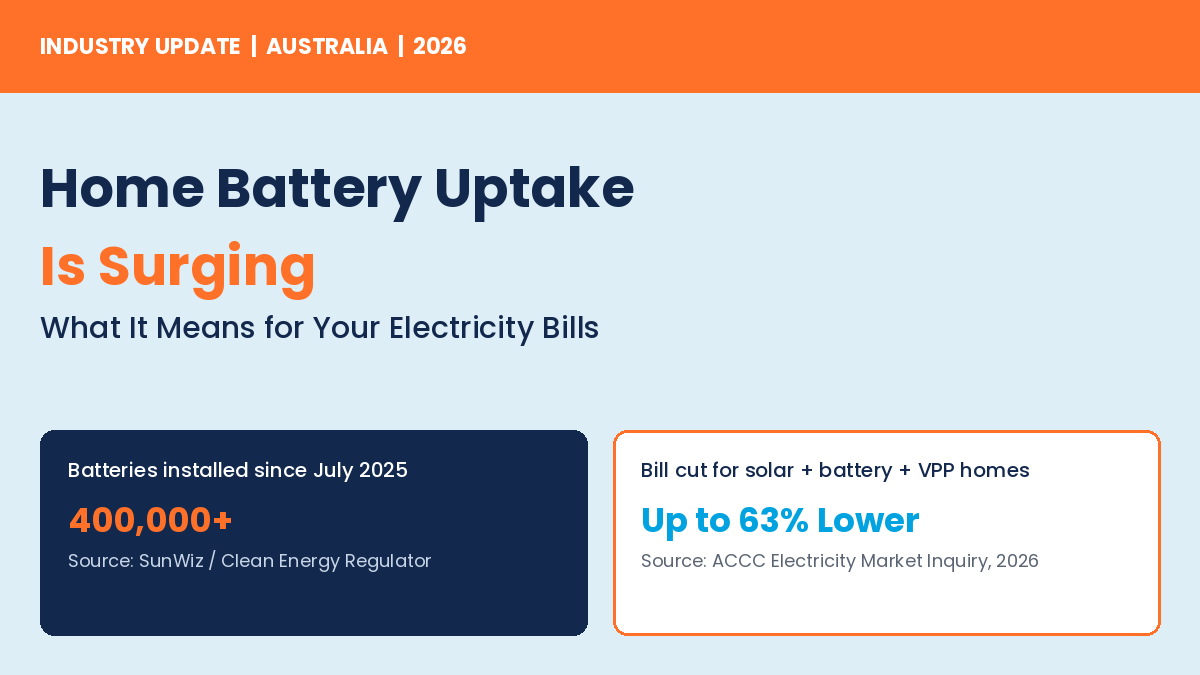
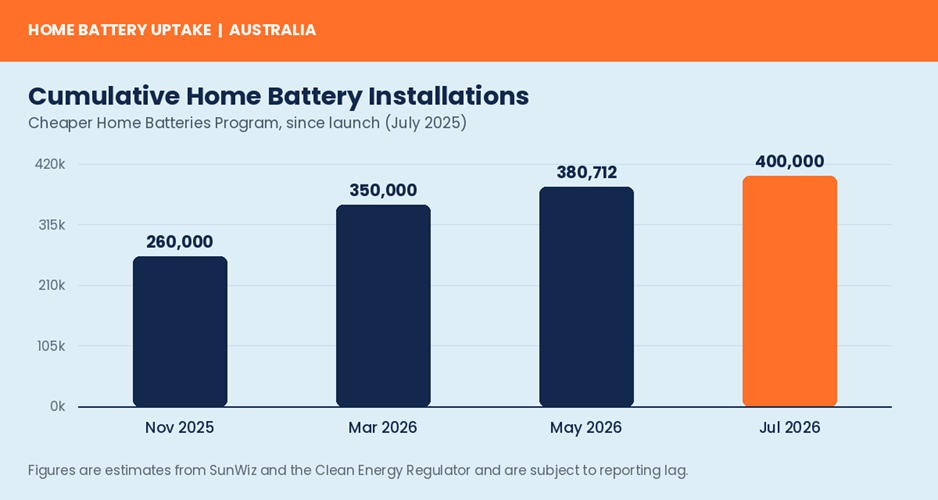
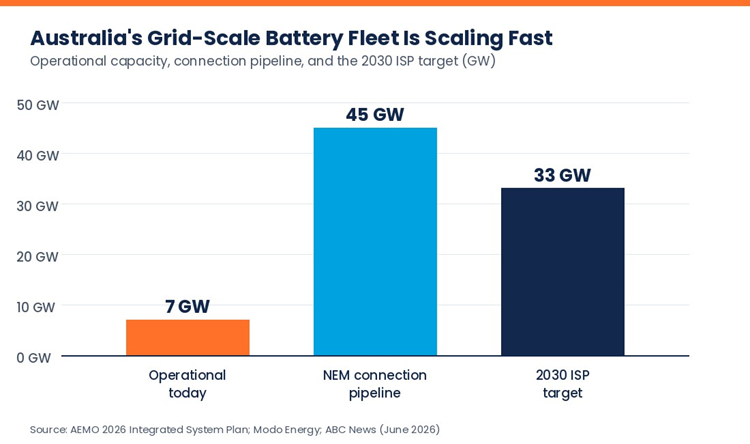
Grid-scale battery storage is expanding at record pace across the NEM. Around 7 gigawatts (GW) of grid-scale batteries are operating today. Another 45 GW sits in AEMO’s connection pipeline, already ahead of the 2030 target. AEMO’s final 2026 Integrated System Plan lifts that 2030 target to 33 GW of grid-scale storage. This is a 40% increase on the draft plan released earlier in the year. Household batteries are growing just as quickly. More than 600,000 Australian homes now have battery storage installed, largely driven by the federal Cheaper Home Batteries Program. NSW households have contributed a large share of these new installs. Daniel Westerman, AEMO’s CEO, called batteries a “game-changing force” alongside rooftop solar at Australian Energy Week 2026. He noted that even passive household batteries reduce evening peak grid demand by close to one kilowatt per home. Across 600,000 homes, that adds up to roughly 600 megawatts of peak demand relief.
How Batteries Earn Their Keep on the Grid
Batteries do more than store energy for later use. They also earn revenue by helping balance the grid in real time. During the first quarter of 2026, grid-scale batteries set the wholesale price in about 32% of all trading intervals. That is a significant jump from previous years. Batteries also tripled their daily energy-shifting activity in the same period. Average discharge reached 359 megawatts (MW) in Q1 2026, up from just 98 MW in Q1 2025. Beyond wholesale energy trading, batteries earn money through Frequency Control Ancillary Services (FCAS). FCAS keeps the grid’s frequency stable within a tight band. In June 2026 alone, residential VPP and aggregator units earned an estimated $13,000 in FCAS revenue. That works out to around $214 per megawatt of registered capacity. That figure is small next to grid-scale earnings. Still, it shows household batteries can now join formal grid markets, not just save on bills.
Grid-Forming Inverters: Batteries Take On Coal’s Old Job
As coal power stations retire, the grid loses an important service called system strength. Coal generators once provided this stability as a byproduct of spinning turbines. Batteries fitted with grid-forming inverters can now step into that role. These inverters set the grid’s voltage and frequency reference, rather than just following it. AEMO data shows grid-forming inverters now feature in 74% of Australia’s battery storage pipeline. NSW transmission operator Transgrid is leading this shift locally. The company launched the country’s biggest tender for grid-forming batteries, targeting 5 gigawatts of capacity over time. Transgrid’s Jason Krstanoski said the fleet would eventually match the stabilising power of around 17 synchronous condensers. The first gigawatt of contracted capacity is expected to deliver services from the second half of 2026. Some batteries, including a site at Darlington in NSW, already provide these services today. For homeowners, this shift matters indirectly. It shows regulators and networks now treat batteries as core infrastructure, not backup hardware. When you choose a solar battery company for your own installation, ask about grid-forming technology. Find out whether the system supports it now or through a future software update.
Virtual Power Plants Turn Rooftops Into Power Stations
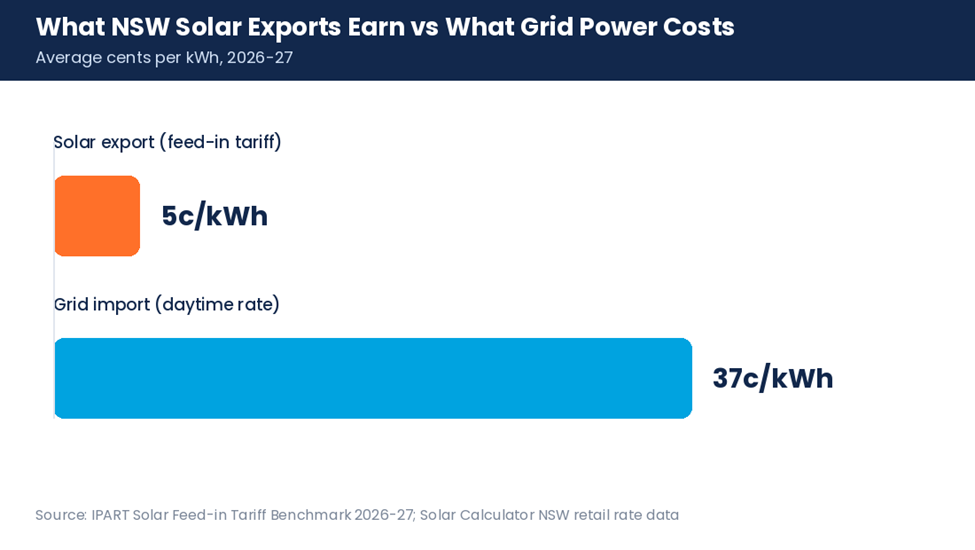
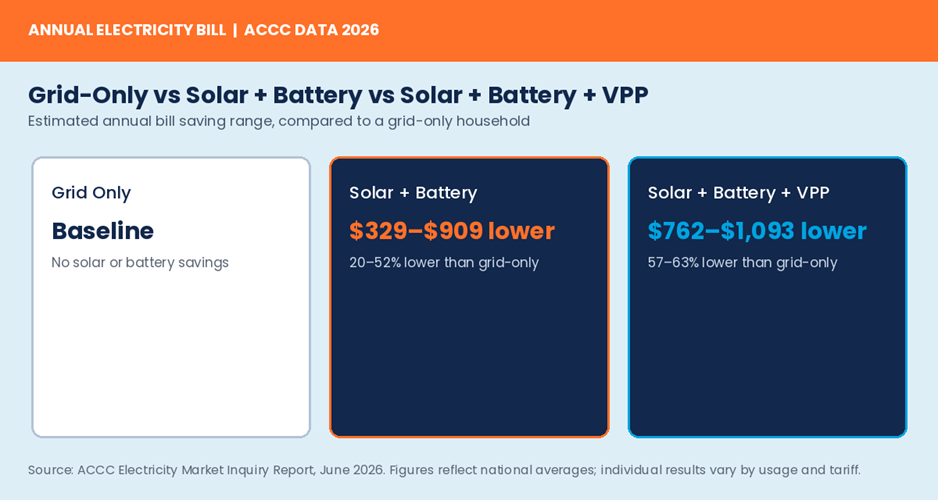
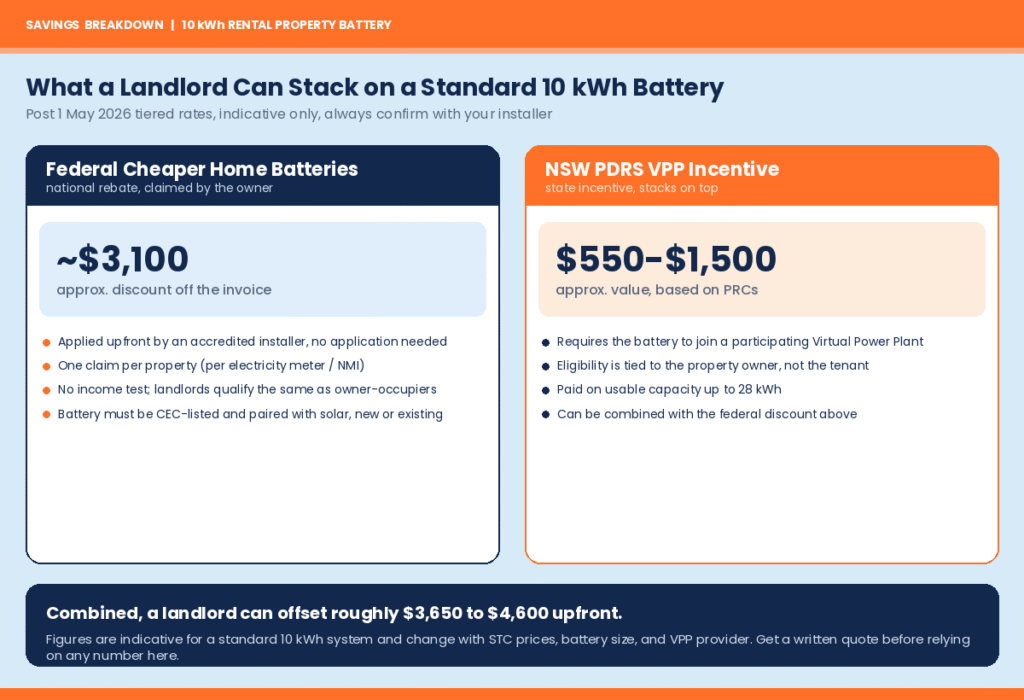
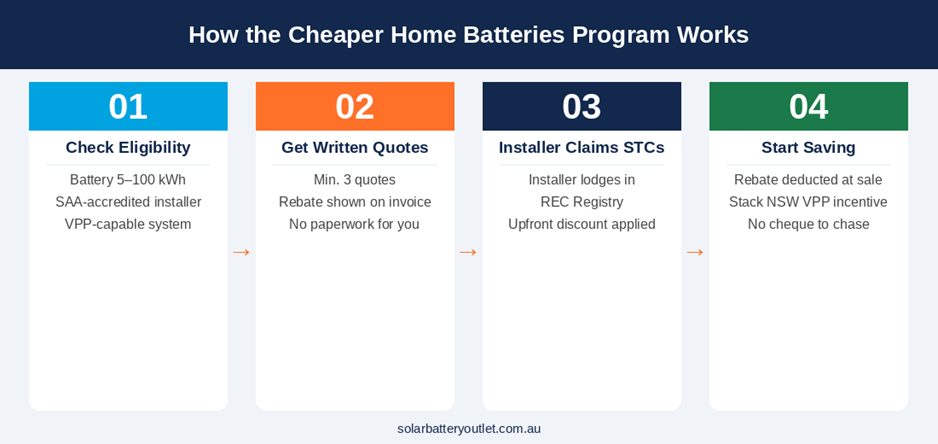
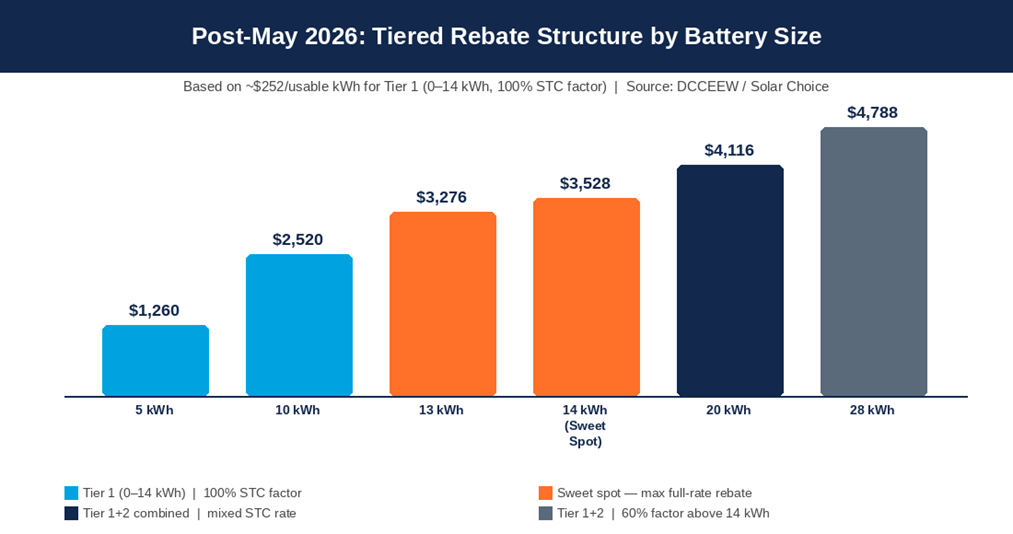
Virtual power plants (VPPs) link many home batteries into one coordinated fleet. A VPP operator can call on stored energy across thousands of homes at once. This turns scattered batteries into a single, dispatchable power source. Despite the potential, VPP uptake remains low. Every battery installed under the federal rebate must be VPP-compatible. Yet only around 10% of households with a rebate battery have actually joined a VPP. AEMO’s Westerman says passive batteries still help the grid, even without VPP orchestration. Coordinated VPP fleets, however, offer far more value during genuine emergencies. In NSW, the Peak Demand Reduction Scheme (PDRS) rewards households that connect to an approved VPP. From 1 July 2026, eligibility widened to batteries up to 50 kWh, and solar is no longer required. The incentive is calculated on usable capacity, up to a cap of 28 kWh. Typical documented offers now sit between roughly $1,000 and $1,500, paid once per system. Joining a VPP does not just earn a payment. It also means your battery contributes power exactly when the grid needs it most, during heatwaves and high-demand evenings.
What This Means for NSW Homeowners
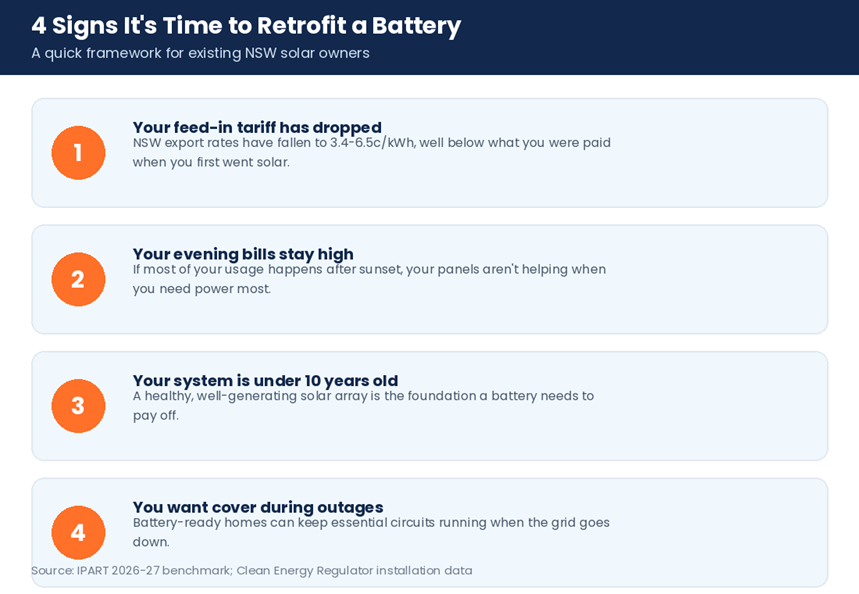
This shift changes how NSW homeowners should think about a battery purchase. A system is not just backup power for outages. It is also a way to earn ongoing value from grid services. Before you commit, check that your setup can actually participate.
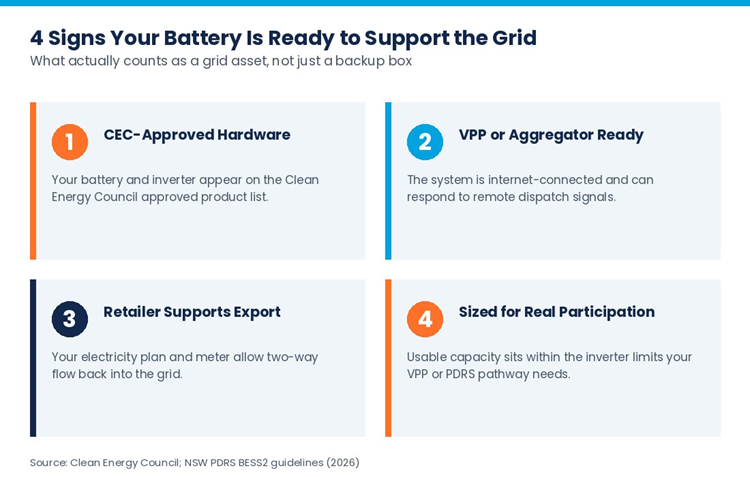
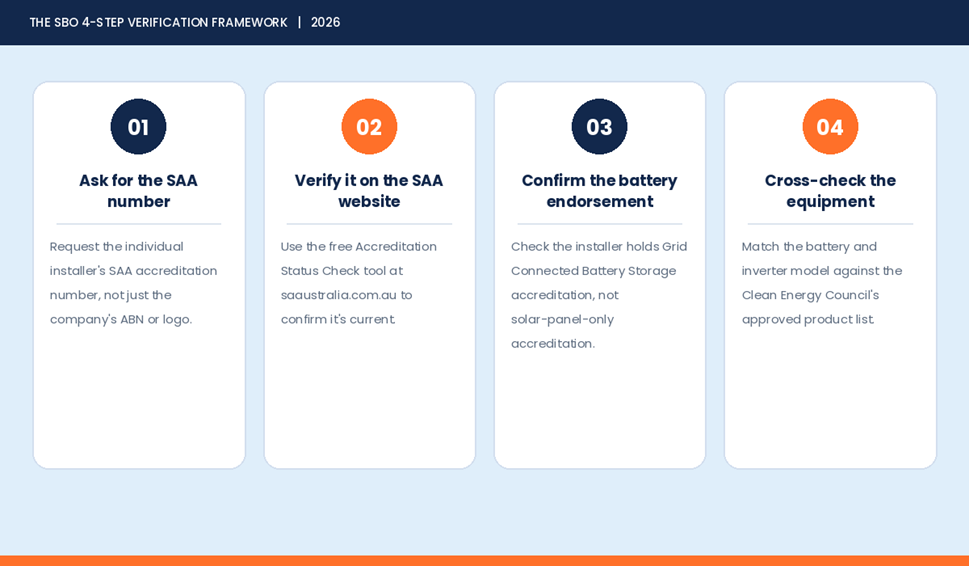
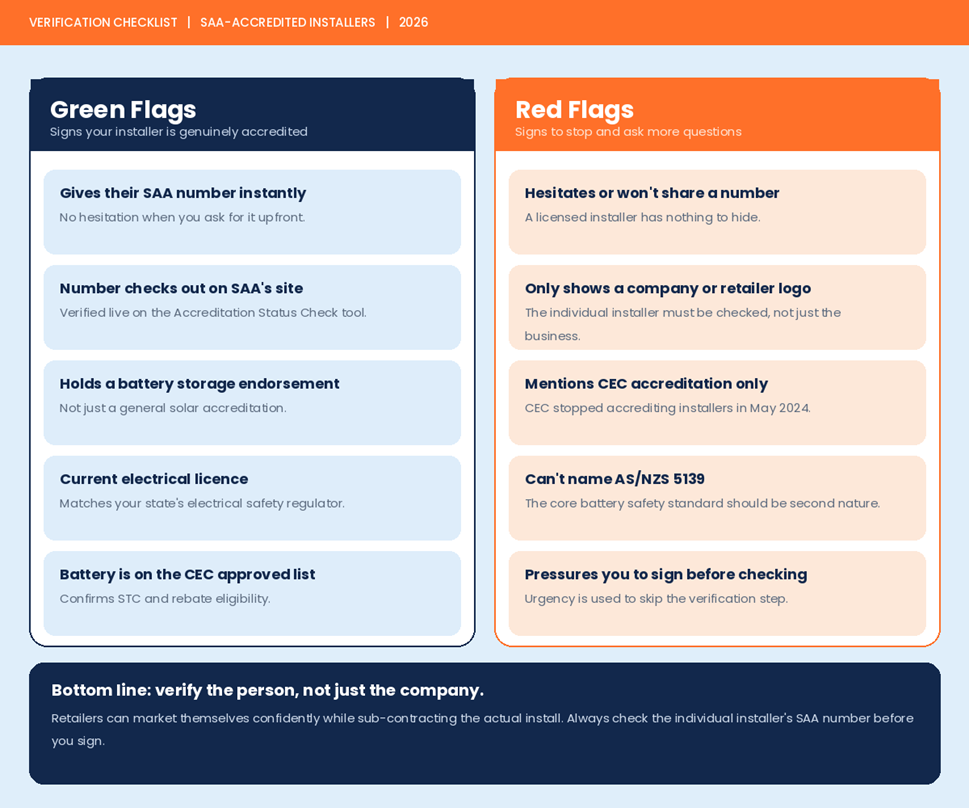
Choosing the right hardware matters more than ever. If you are comparing options, our guide to the best solar batteries in Australia for 2026 covers capacity and VPP compatibility. A good solar battery company will explain these details clearly, rather than focusing only on backup hours. Look for the best solar battery installer in your area, one who understands CEC accreditation and current NSW PDRS rules. Ask direct questions about grid-forming support, VPP partnerships, and export limits on your network. Homeowners across Liverpool, Bankstown, and Mudgee are increasingly asking these questions before they sign a contract. Solar Battery Outlet works with households across these areas to size systems that qualify for current rebates and VPP incentives. Want a system built for where the grid is heading, not where it has been? Our team can walk you through your options and your local network rules.
Frequently Asked Questions
A grid asset is a battery that actively supports the wider electricity network, not just one home. This includes batteries that help set wholesale prices, provide frequency control services, or stabilise voltage through grid-forming inverters.
No. AEMO reports that passive batteries already reduce peak demand and support the grid, even without VPP orchestration. Joining a VPP simply lets your battery earn a direct incentive for that support.
Under the NSW PDRS BESS2 pathway, the incentive is calculated on usable capacity up to a 28kWh cap. Documented 2026 offers typically range from around $1,000 to $1,500, paid once per battery.
A grid-forming inverter sets the grid’s voltage and frequency reference itself, rather than just following an existing signal. This function helps replace stability services once provided by coal-fired generators.
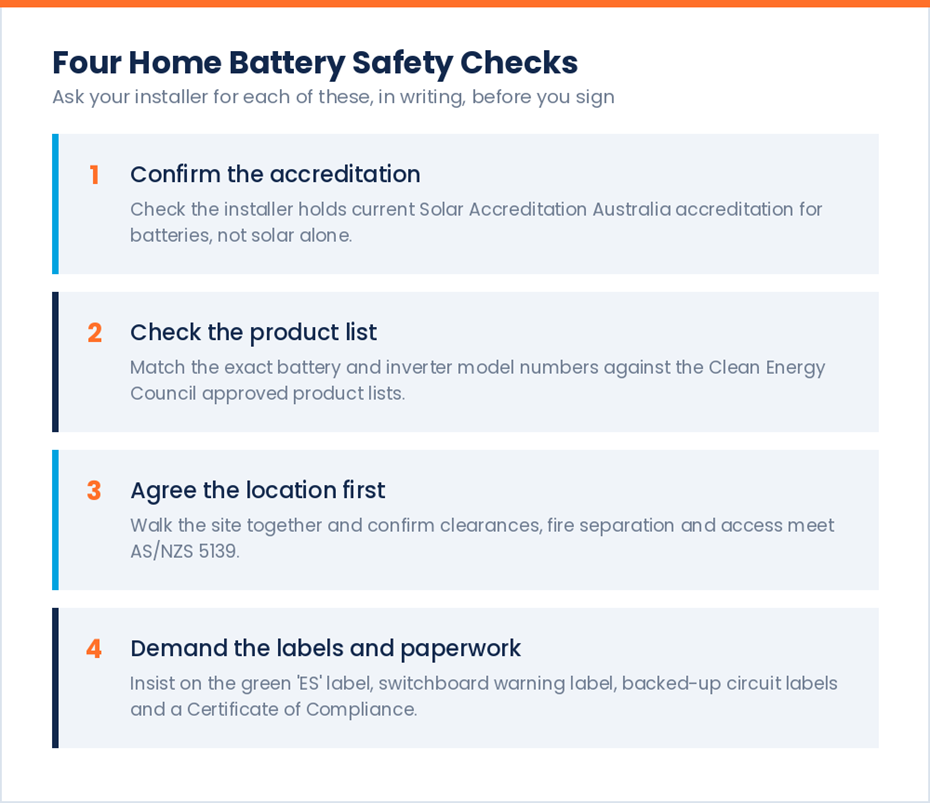
Check that your battery and inverter appear on the Clean Energy Council approved product list. Then confirm with your retailer or your best solar battery installer that your plan supports two-way export and VPP participation.
Disclaimer
This article shares general information about Australia’s electricity grid, battery incentives, and VPP programs, current as of September 2026. It does not constitute financial, legal, or investment advice. Incentive amounts, eligibility rules, and program details can change without notice. Solar Battery Outlet does not guarantee specific savings, VPP earnings, or rebate outcomes for any individual property. Always seek personalised advice before making a purchasing decision.