For decades, gas-fired generators held one job better than anything else. They started fast. Between 4pm and 9pm, households switched on the oven, the air conditioner, and the television. Gas plants then ramped up and filled the gap.
That job is now shrinking fast. Batteries have taken most of it over. Crucially, a growing share of those batteries sit on the walls of ordinary homes rather than in power stations.
This guide explains what changed and how quickly. It also shows what the home battery’s evening peak shift means for your NSW electricity bill.
What the evening peak actually is
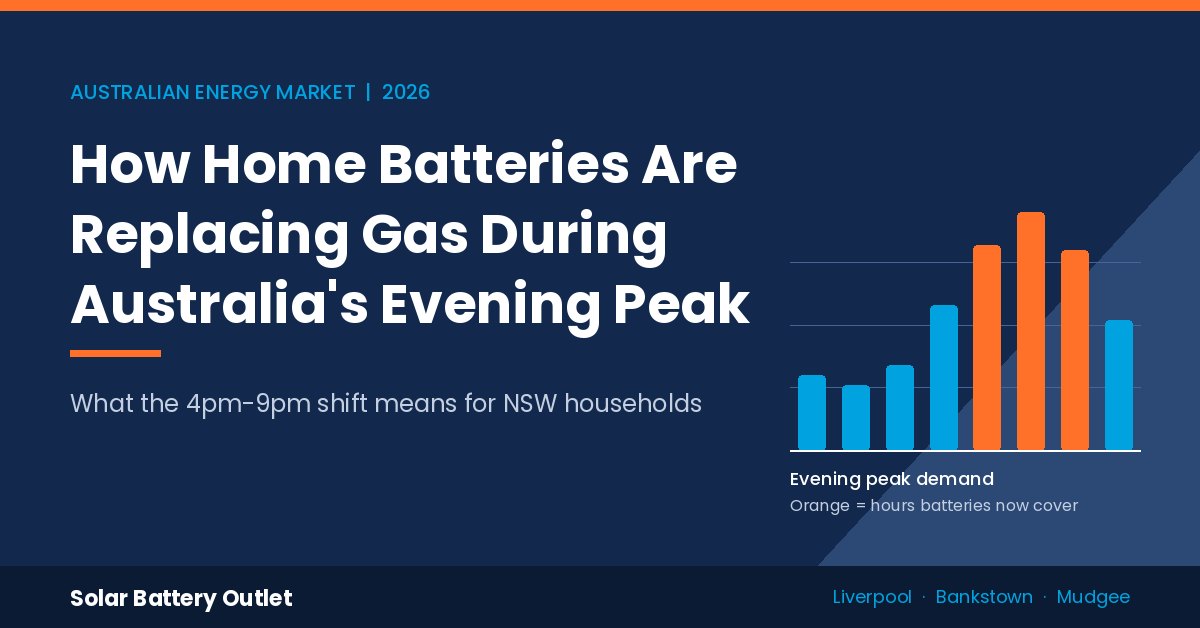
The evening peak is the window when grid demand climbs fastest. AEMO measures it between 4pm and 9pm. Rooftop solar fades during those hours. Meanwhile, people arrive home, cook dinner, run heating or cooling, and charge devices.
Consequently, the grid must find a lot of extra supply in a short space of time. Historically, gas peaking plants did that work. They cost more to run than coal, yet they respond within minutes. For that reason, they also set the wholesale price during those hours more often than their output alone would suggest.
Households feel the same pattern on their bills. Most NSW time-of-use plans charge their highest rate in the late afternoon and evening. Supply simply costs the most then.
Gas has lost most of its evening job
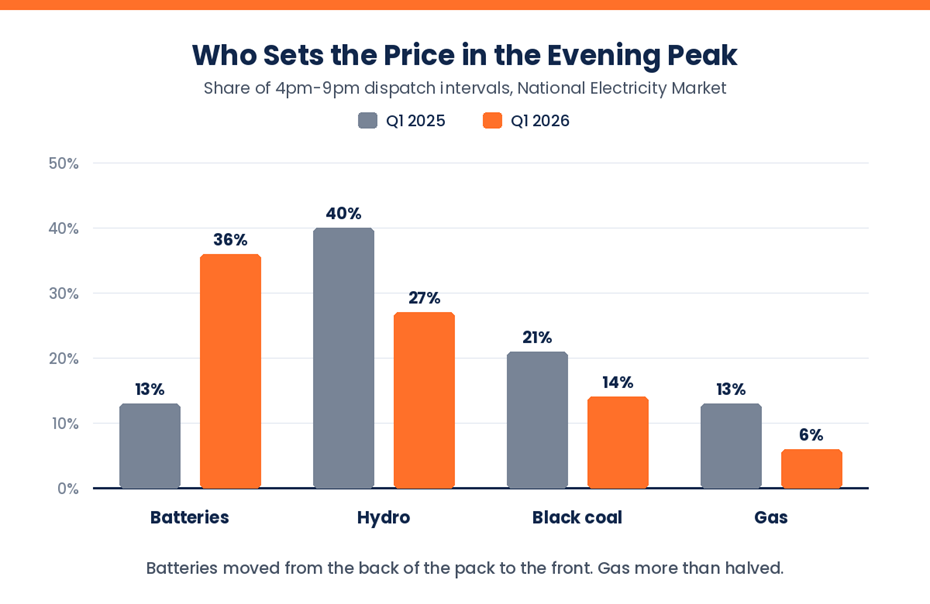
The change shows up clearly in market data. In Q1 2026, the Australian Energy Market Operator reported that batteries delivered 1,115 MW into the evening peak. They also became the market’s most frequent price setter.
Gas moved the other way. Across the same quarter, gas-powered generation averaged 712 MW. That was its lowest quarterly average since 1999. During evening peak hours specifically, gas set the price in just 6% of intervals, down from 13% a year earlier.
Furthermore, the trend accelerated in the following quarter. In Q2 2026, gas-fired generation averaged 1,050 MW, its lowest second-quarter output since 2003. Average gas discharge during the evening peak fell 1,441 MW year on year. Battery discharge, by contrast, set the price in 46% of evening peak intervals.
AEMO’s Violette Mouchaileh summed up the shift plainly. She noted that batteries increasingly reduced reliance on gas and hydro during evening peaks. That change pushed wholesale prices lower year on year in most regions.
Home batteries evening peak discharge is reshaping demand
Grid-scale batteries explain part of the story. However, household storage now moves the needle too, and AEMO has quantified it.
AEMO’s Q2 2026 analysis compared solar-only homes with solar-plus-battery homes. On average, the battery homes cut evening peak grid imports by roughly 0.7 kW. That equals about a 73% reduction in net grid imports across the 4pm to 9pm window.
Multiply that across hundreds of thousands of homes and the effect becomes structural. Indeed, AEMO noted demand is shifting away from the evening peak. More home batteries now supply household consumption after sunset. Daytime demand rose at the same time, because those batteries charge while solar is abundant.
In short, households are doing at a small scale exactly what gas peakers used to do at a large scale. They store cheap energy, then release it when the grid is tight.
Half a million Australian sites have joined in
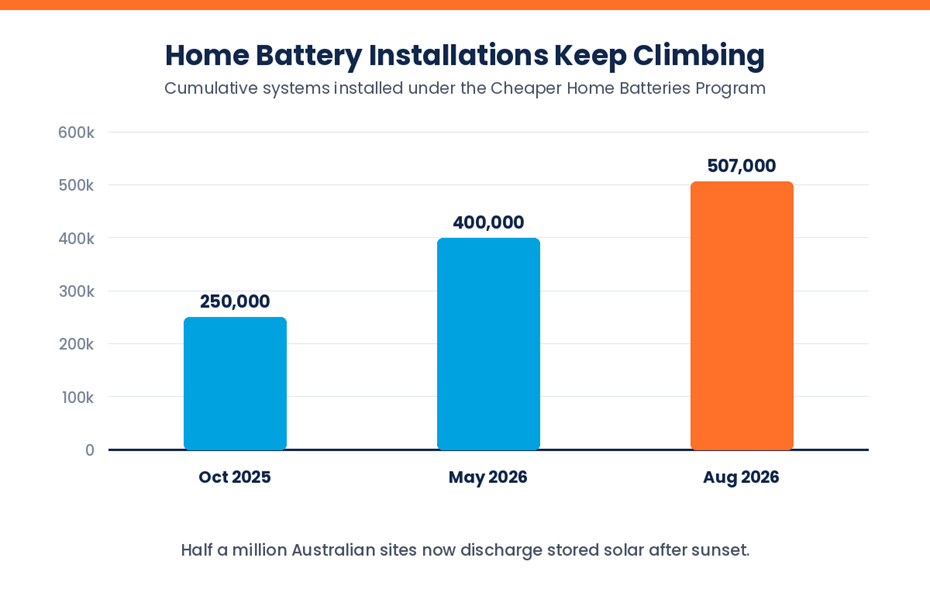
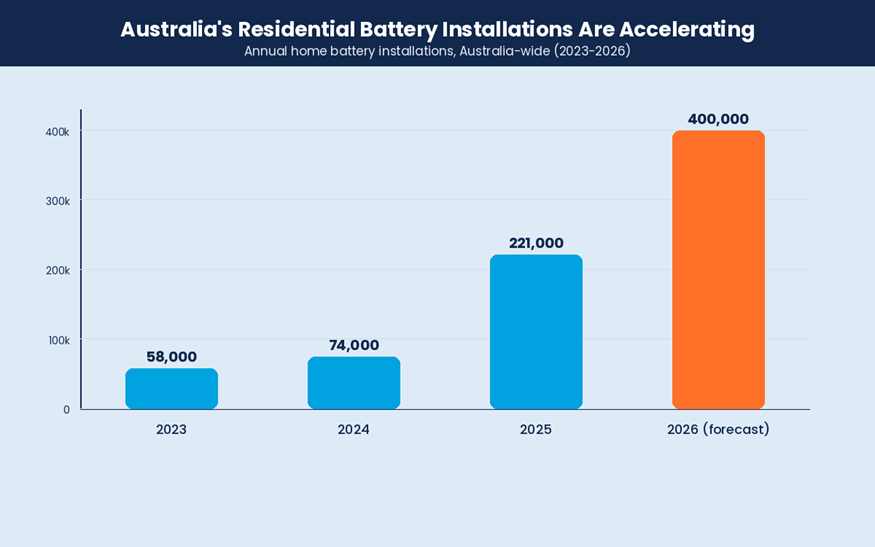
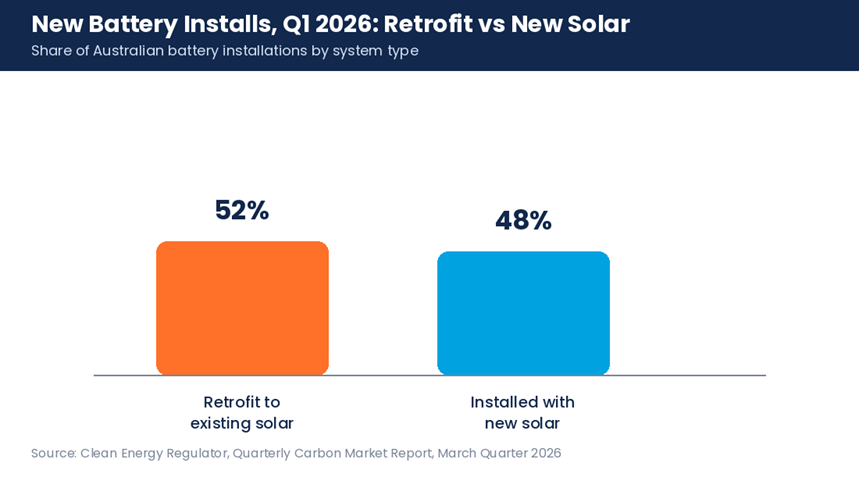
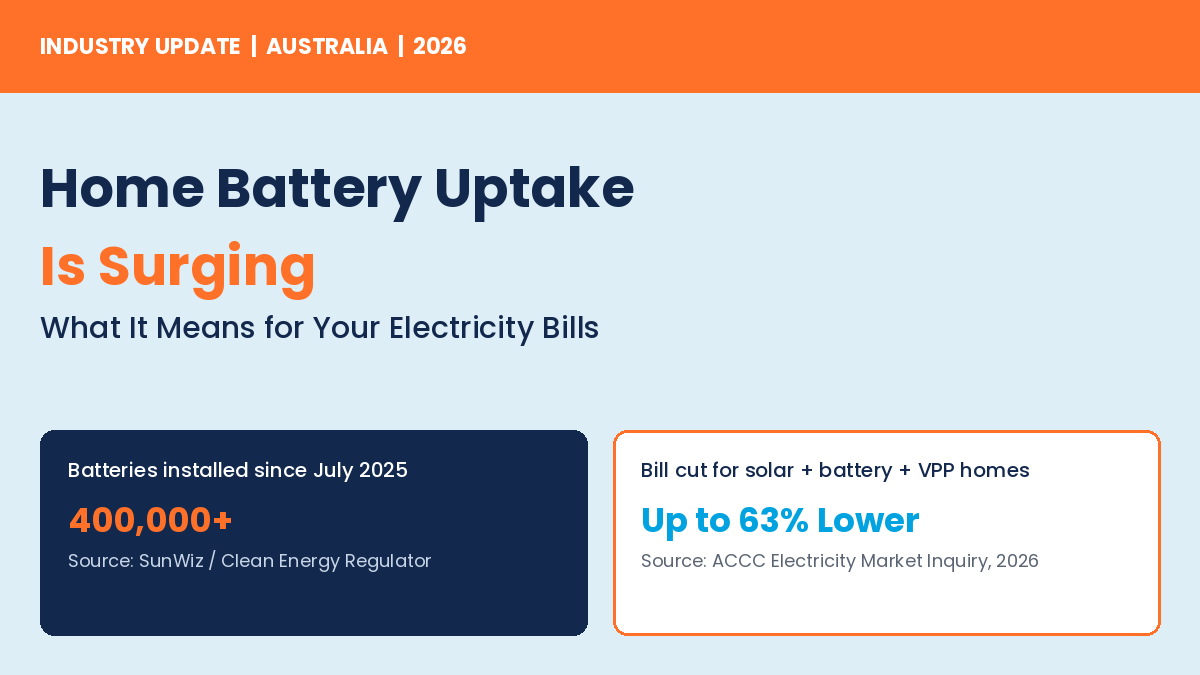
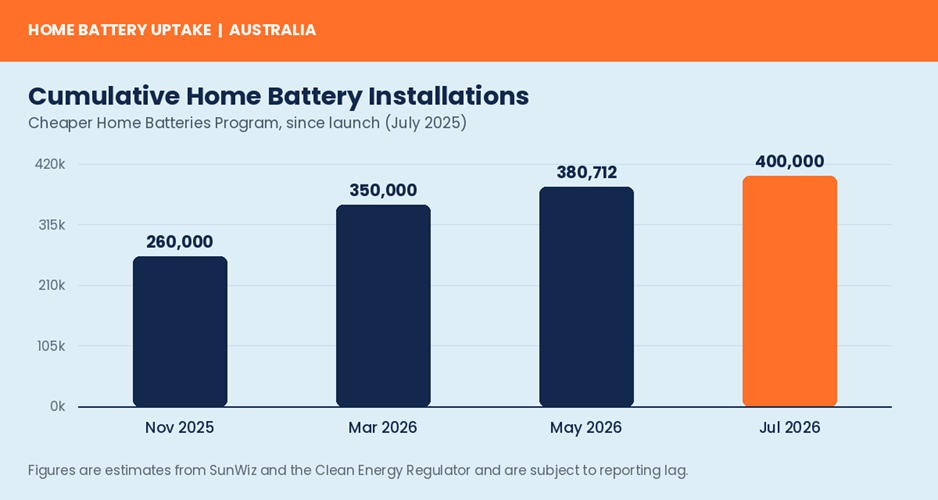
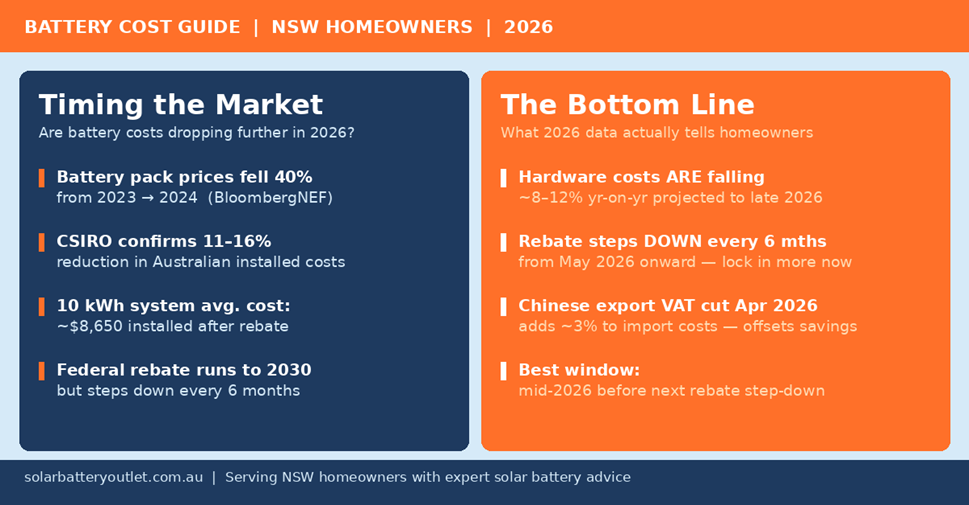
The federal Cheaper Home Batteries Program began on 1 July 2025. It drove much of this growth. By 14 August 2026, the Prime Minister and energy minister confirmed 500,000 installations. Later figures put the tally above 507,000.
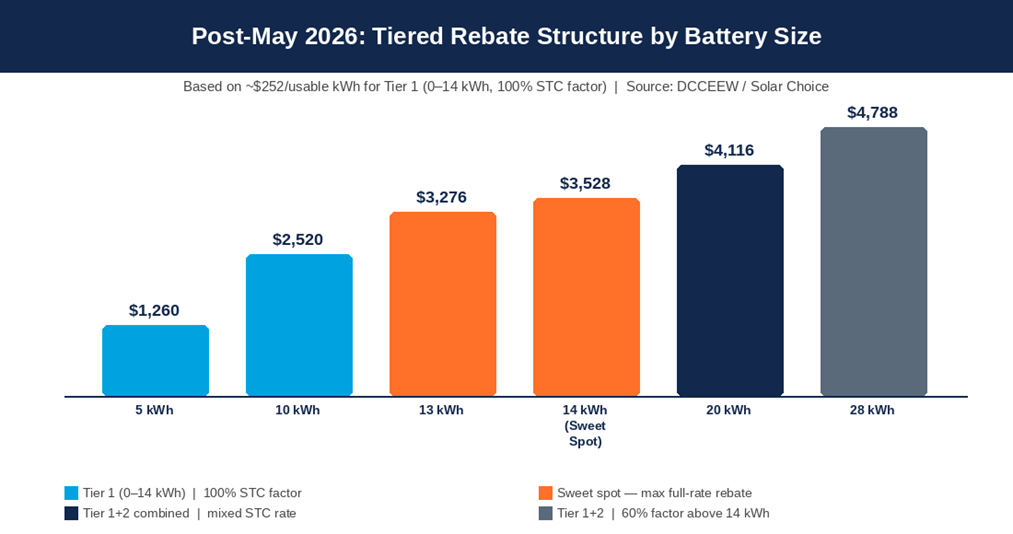
The installer base grew alongside it. Accredited battery installers in Australia have doubled to 8,846 since the program commenced. Average system size also climbed. It rose from about 25.2 kWh at the 250,000 mark to roughly 28 kWh by 400,000.
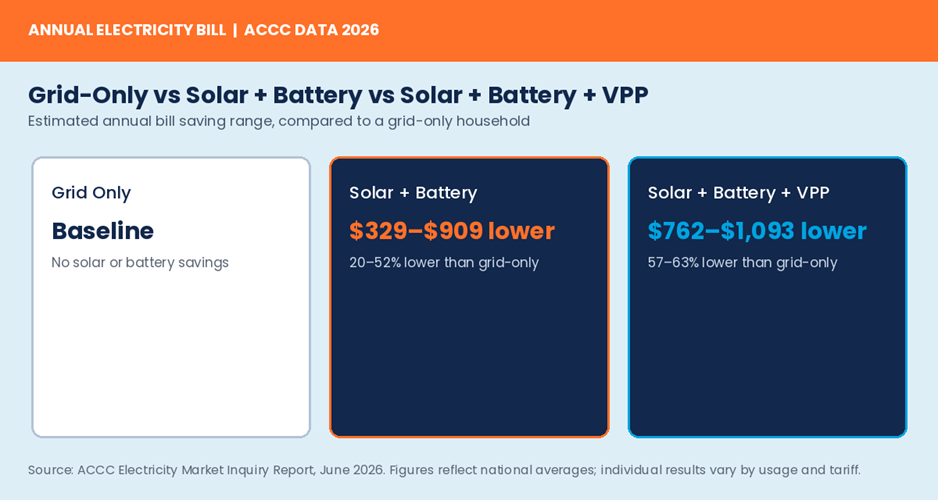
Naturally, this scale of uptake changes the national picture. The surge in home battery uptake across Australia is already filtering through to electricity bills. Benefits reach beyond battery owners too, because the market leans less on expensive peaking generation.
Why this matters for your NSW electricity bill
The market shift is interesting. The household maths, though, is what actually decides whether a battery suits your home.
On the Ausgrid network, peak network pricing applies from 2pm to 8pm on weekdays. No peak period applies in April, May, September or October. Retailers then set their own windows and rates on top of that. Take AGL’s 2026 NSW standing offer. Peak usage sits near 65 cents per kWh, while off-peak sits near 30 cents.
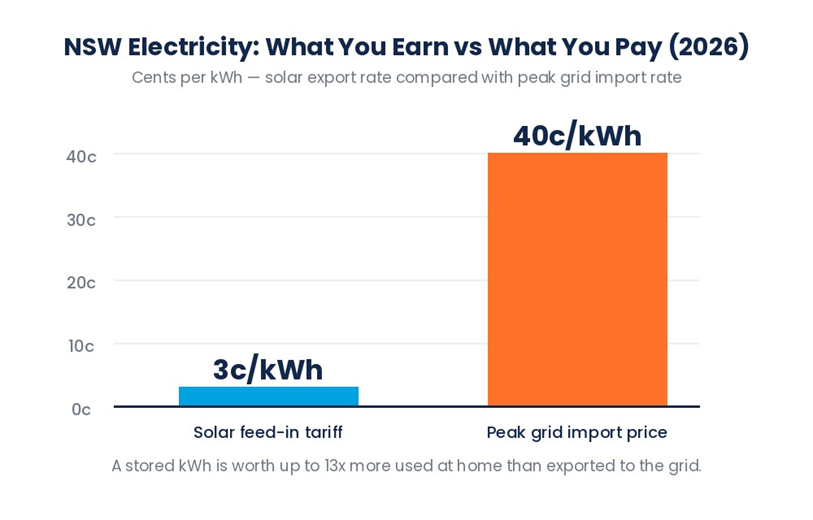
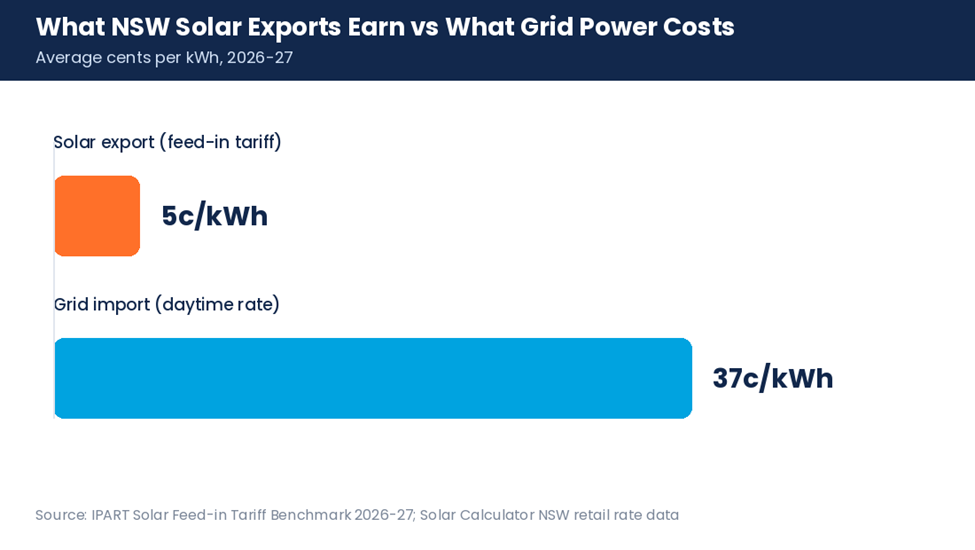
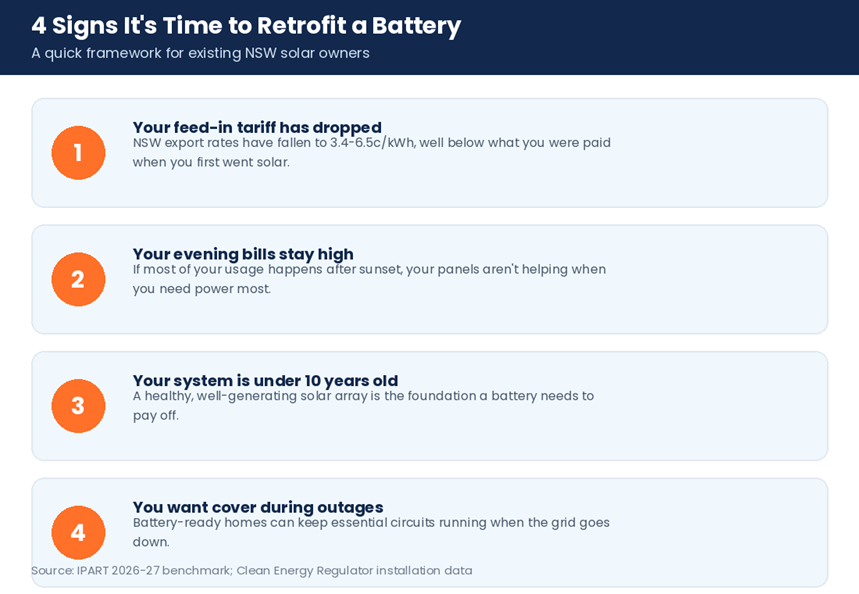
Meanwhile, exporting solar at midday earns very little. IPART’s voluntary all-day benchmark for 2026-27 sits between 3.4 and 6.5 cents per kWh. Time-of-use export benchmarks for evening hours are far higher on the Ausgrid and Endeavour networks.
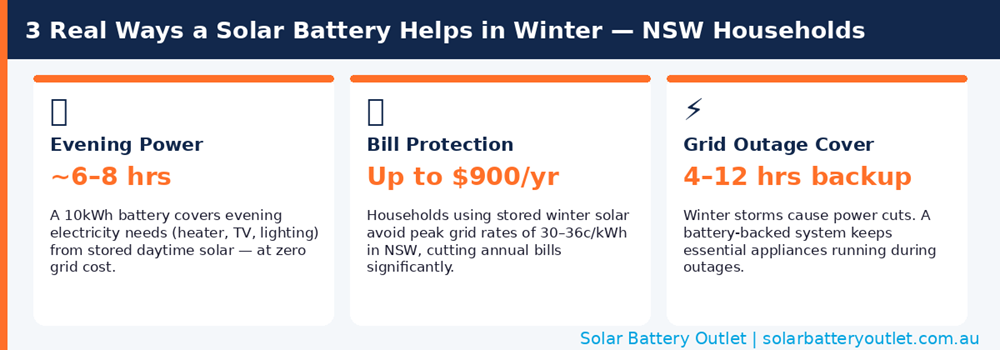
Therefore, the value of a battery comes from one simple swap. You stop buying expensive evening electricity, and you stop selling cheap midday electricity. Your actual result depends on your tariff, your usage pattern, your solar size and your battery size. Rates change, so always check your own plan’s fact sheet before you assume a figure.
How to size a battery for the evening peak
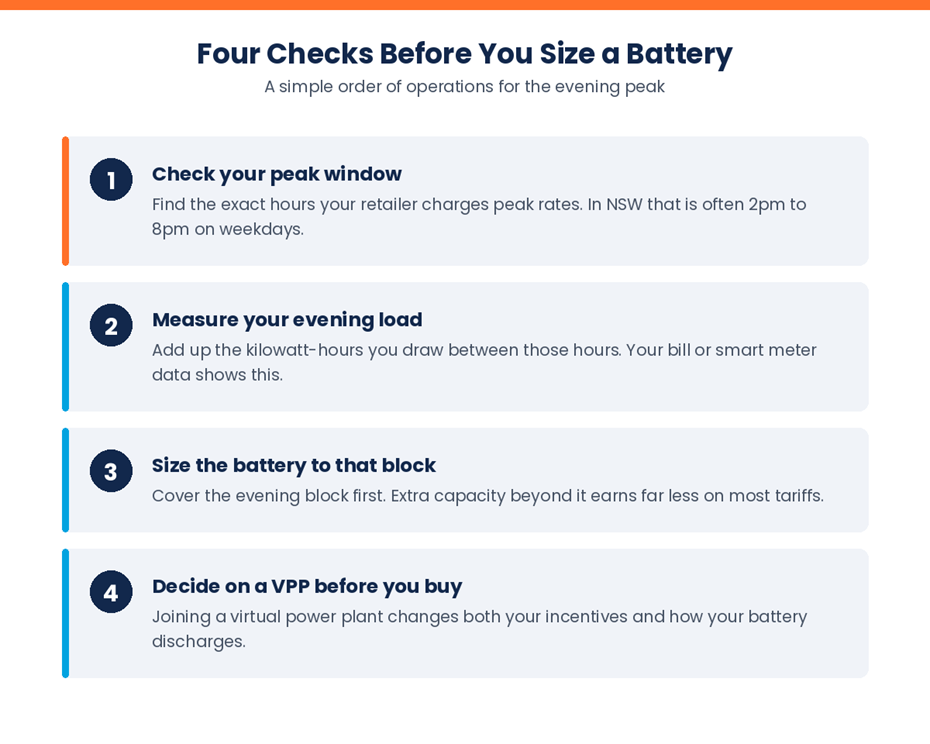
Most homeowners size a battery around total daily usage. However, the home batteries evening peak advantage lives inside one narrow block of hours. Sizing around that block usually produces a better return.
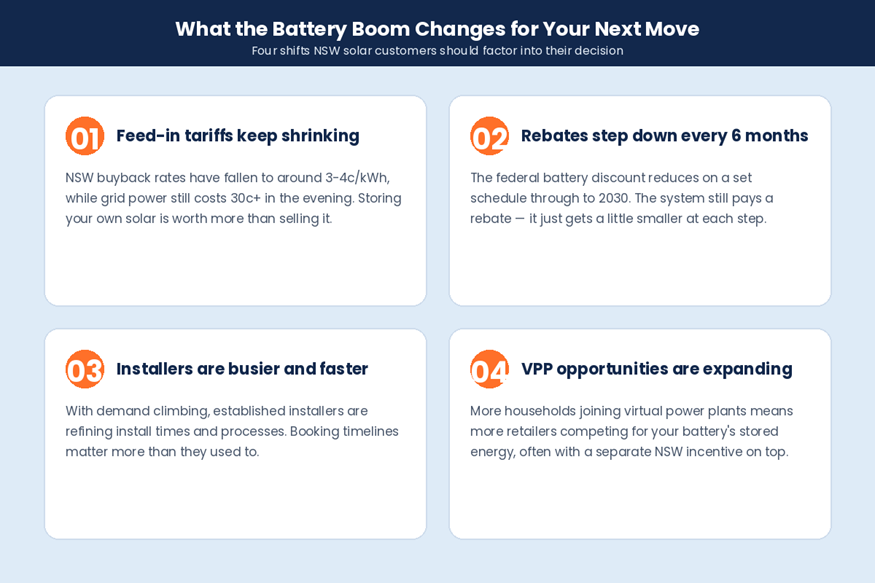
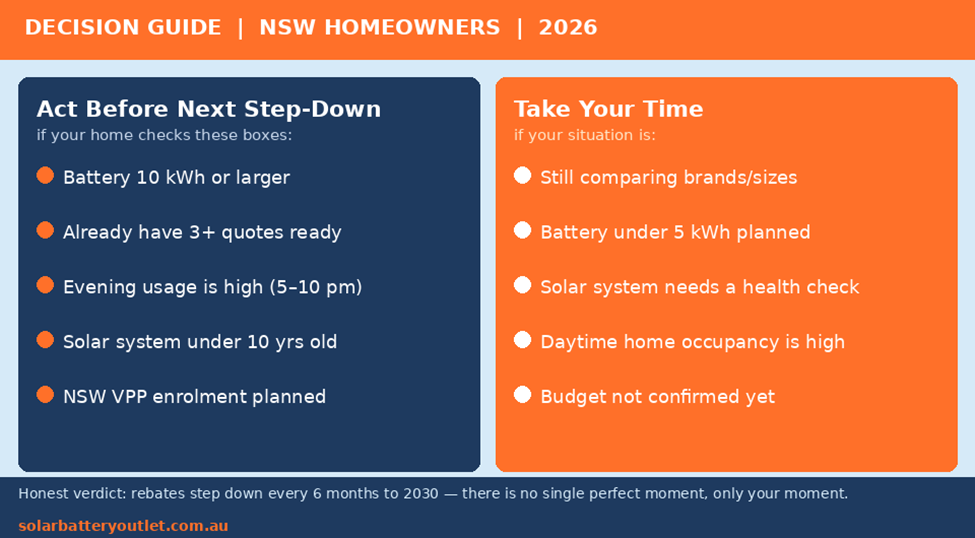
Work through the four checks above in order. A good solar battery company does this with you before quoting a capacity. The best solar battery installer will size around your evening block, not around a headline kWh number.
A worked example from Liverpool
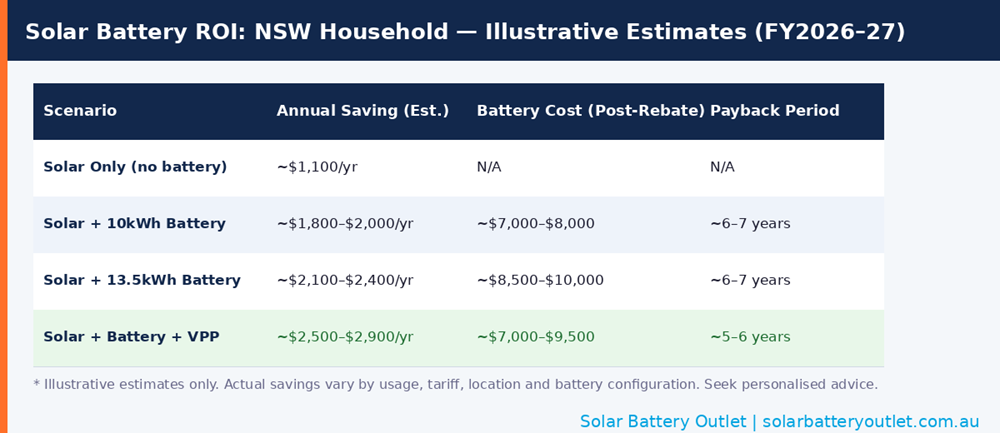
Consider an illustrative Liverpool household on a time-of-use plan. Suppose it draws 8 kWh between 2pm and 8pm on a typical weekday. Assume a peak rate near 60 cents per kWh. That block then costs roughly $4.80 a day.
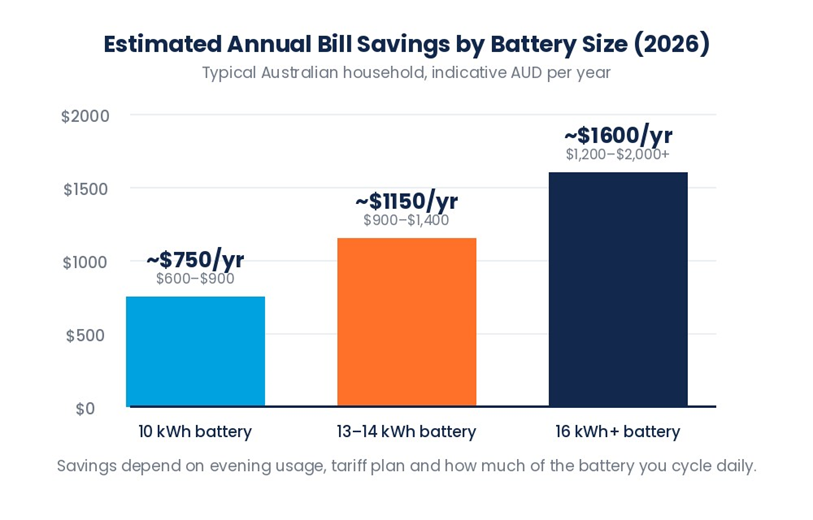
Now suppose the battery covers that block on most weekdays. The weekday peak saving then lands near $1,000 to $1,200 a year. This is an estimate only, not a guarantee.
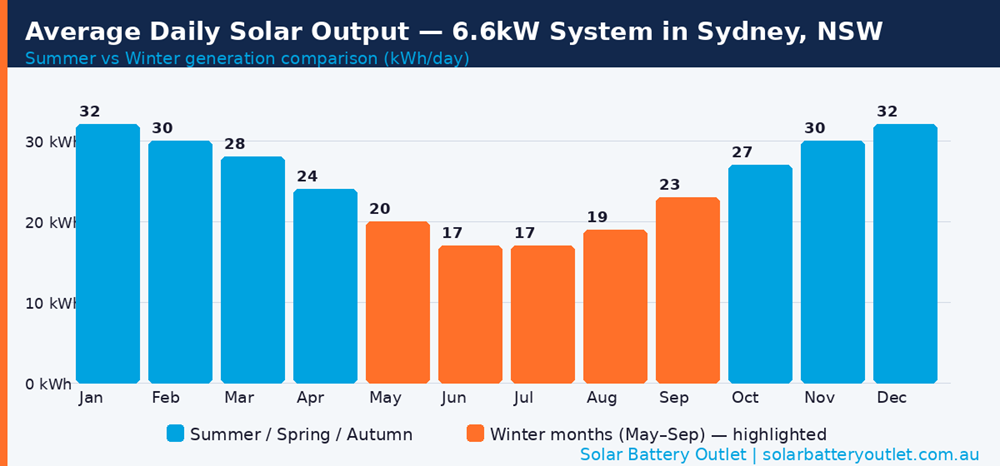
Several things can reduce it. Winter solar output falls, so the battery may not fully recharge every day. Weekend rates differ. Shoulder and off-peak usage still gets billed. Household consumption also varies month to month. Ask the best solar battery installer you can find to model your own 12 months of bills.
The bottom line
Gas built its business on being the fastest thing on the grid after sunset. Batteries now do that job more cheaply, and households own a growing share of them.
For NSW homeowners, the practical takeaway is simple. The home batteries evening peak shift has made stored solar more valuable than exported solar. Therefore, the right question is no longer whether to store energy. It is how much you need and when you use it.
| Talk to a local team before you commit We install and service home batteries across Liverpool, Bankstown and Mudgee. Our quotes are free and carry no obligation. We will review your last 12 months of bills, check your existing solar, look at your actual evening usage, and tell you honestly whether a battery fits your situation. Call 1800 000 777, or visit solarbatteryoutlet.com.au and complete the 60-second eligibility form. Every installation is completed by SAA-accredited electricians, and we handle the rebate paperwork for you. |
Frequently Asked Questions
Partly, yes. AEMO data shows battery discharge set the wholesale price in 46% of evening peak intervals in Q2 2026. Meanwhile gas-fired generation fell to its lowest second-quarter output since 2003. Both grid-scale and household batteries contribute. Gas has not disappeared, though. It still runs during long wind lulls and extreme demand events.
AEMO measures the evening peak between 4pm and 9pm. Retail tariffs differ. On the Ausgrid network, peak network pricing applies from 2pm to 8pm on weekdays. No peak period applies in April, May, September or October. Check your own plan’s fact sheet for the window that applies to you.
AEMO compared solar-only homes with solar-plus-battery homes. The battery homes cut evening peak grid imports by about 0.7 kW on average. That equals roughly a 73% reduction in net imports during the 4pm to 9pm window. Your own result depends on your battery size and evening usage.
Often it does, because exporting midday solar earns very little now. IPART’s voluntary all-day feed-in benchmark for 2026-27 is 3.4 to 6.5 cents per kWh. Evening peak electricity costs far more to buy. Storing that energy instead of exporting it is where the value sits.
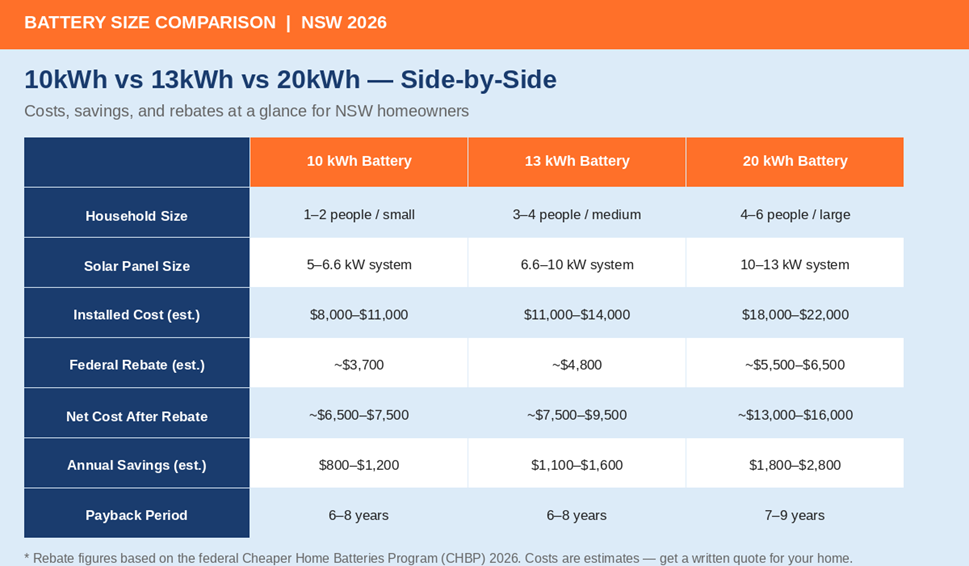
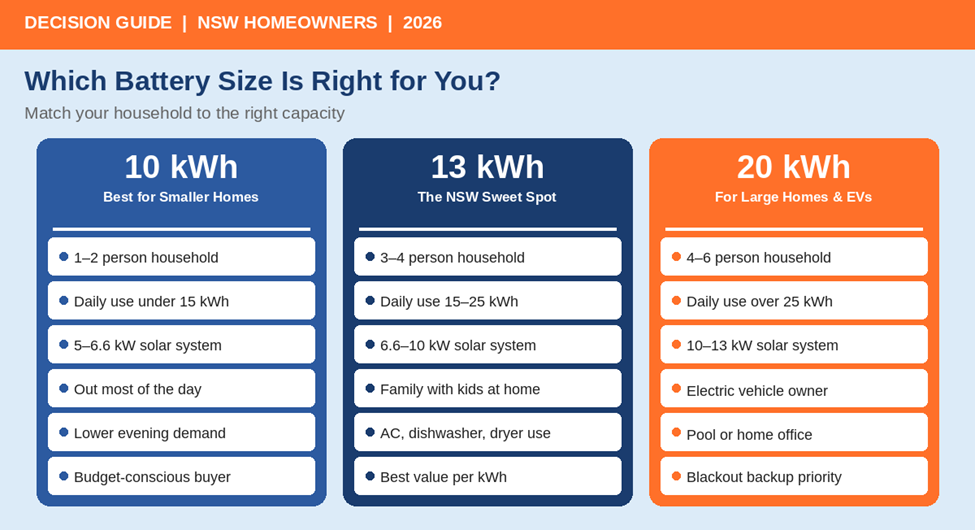
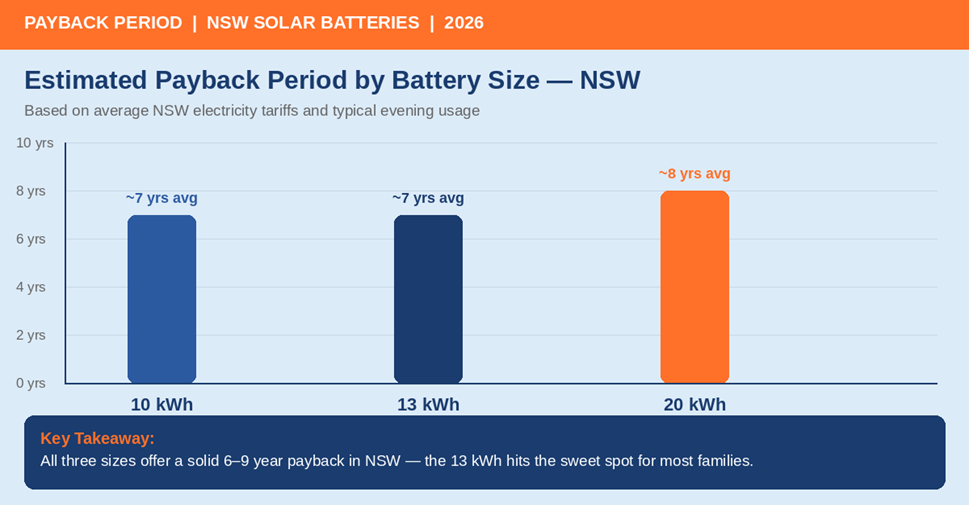
Size it around the energy you actually draw during your peak window, not your total daily usage. Many NSW households land between 10 kWh and 20 kWh. A reputable solar battery company should read your smart meter data or bills before recommending a capacity.
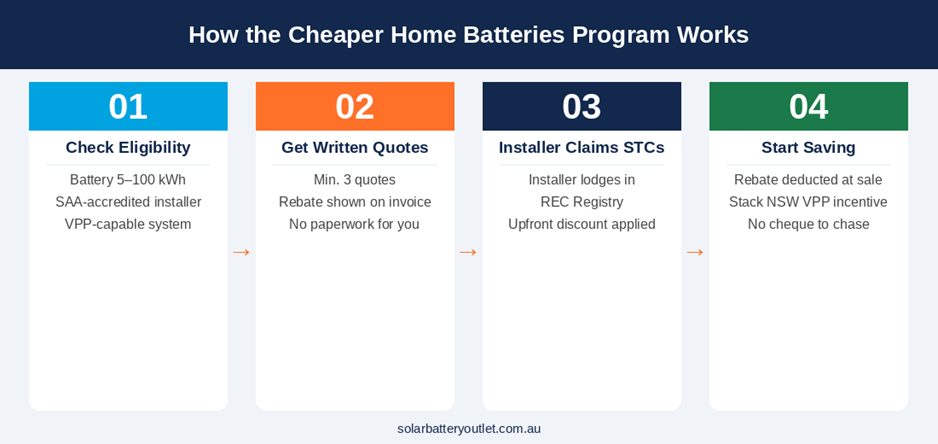
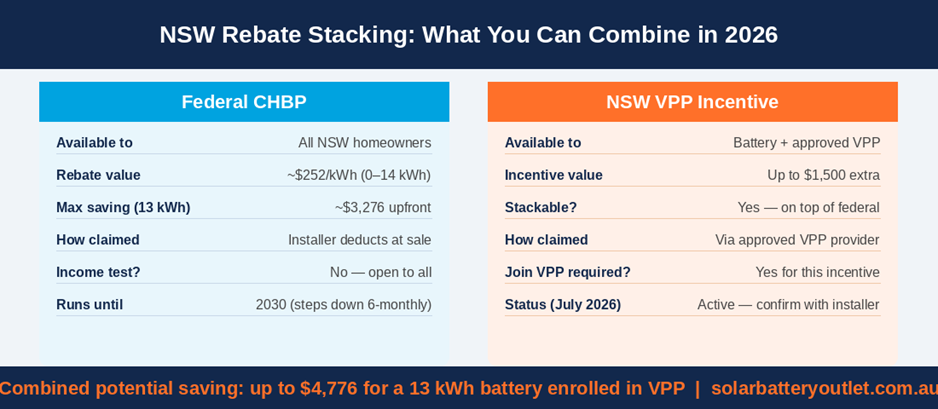
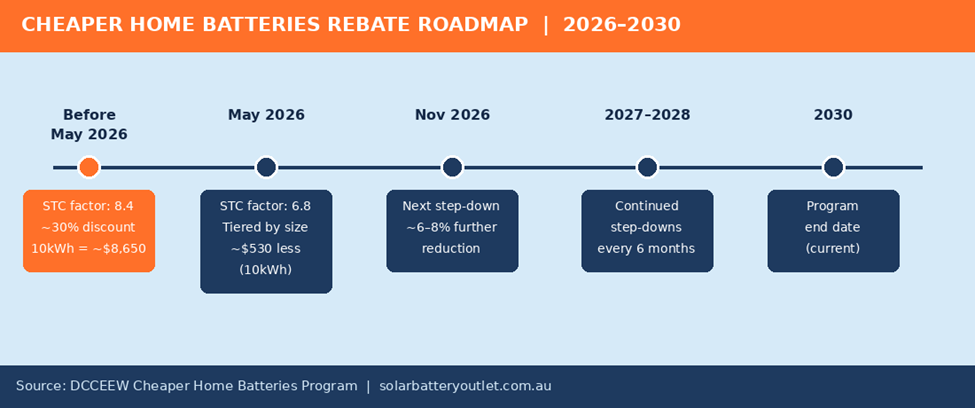
Yes. The program started on 1 July 2025 and passed 500,000 installations in August 2026. The discount rate steps down over time, so the amount available changes. Confirm the current rate and your eligibility with an accredited installer before you sign anything.
Disclaimer
This article is general information about Australia’s electricity market and home battery storage. It is not financial, energy or engineering advice, and it does not take your personal circumstances into account. All market figures come from the published sources listed below and were accurate at the time of writing. Tariffs, feed-in rates, rebate levels and network peak windows change regularly. The Liverpool saving example is an illustration built on stated assumptions, not a promise of results. Your actual outcome depends on your tariff, solar output, battery size, usage and installation costs. Solar Battery Outlet does not guarantee any specific bill reduction or payback period. Always seek personalised advice before making a purchasing decision.