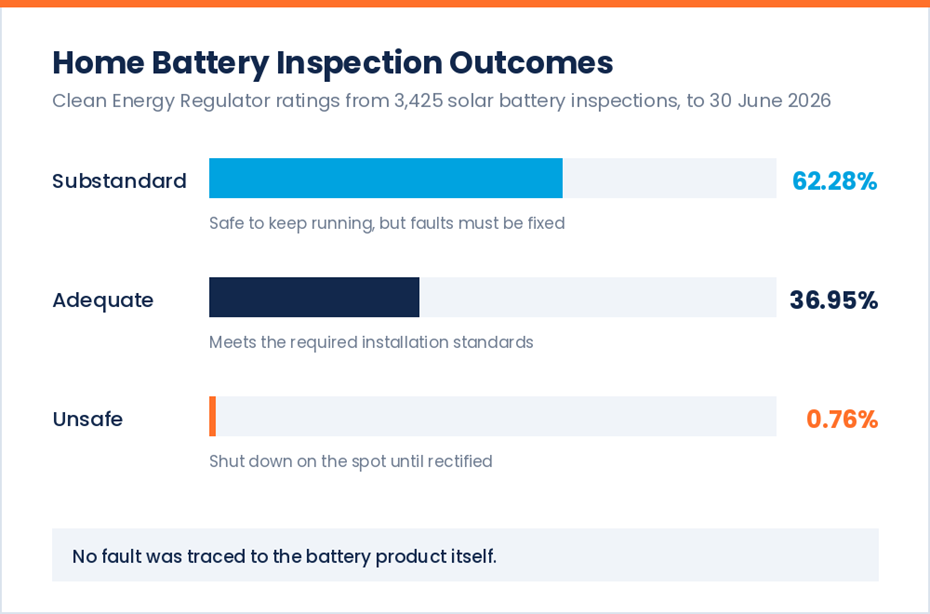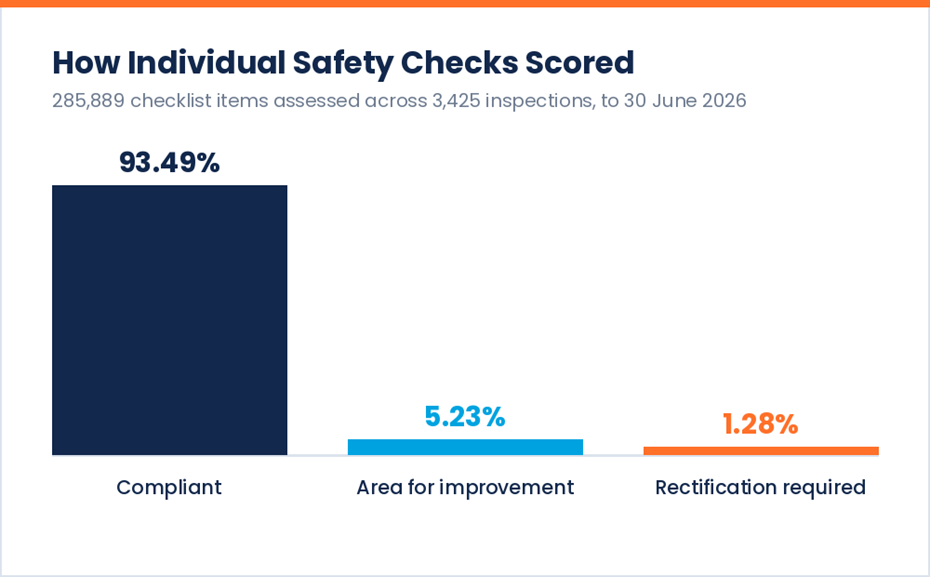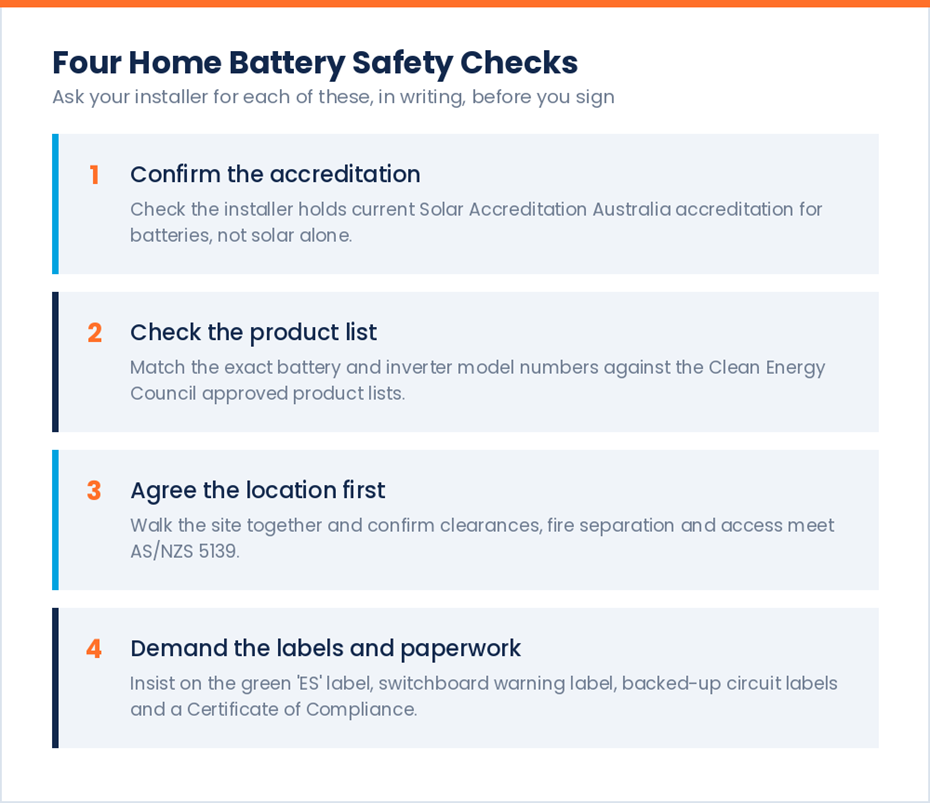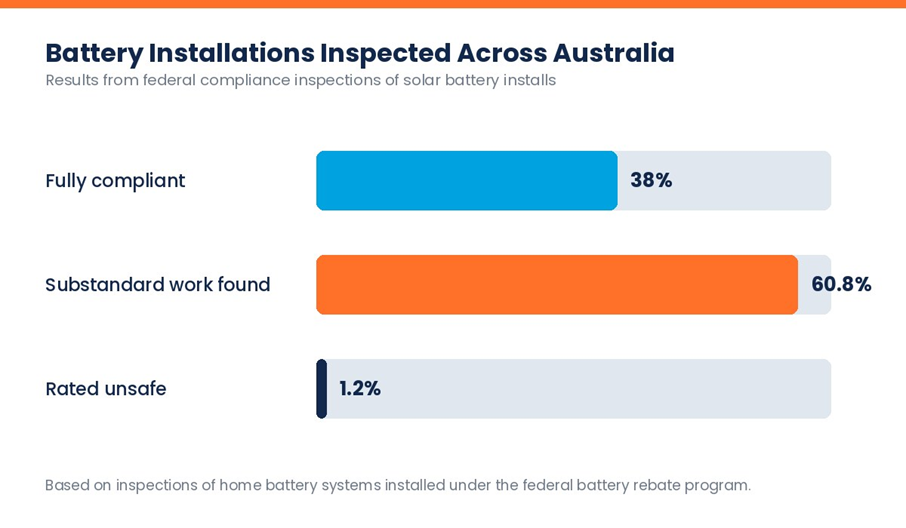
When homeowners think about solar battery safety, they usually think about fire risk from the battery itself — a legitimate concern and one that good brands like BYD and Sungrow take seriously. But there is a second risk that almost nobody talks about: the wiring behind the wall.

Across New South Wales, a significant number of solar battery installations are wired incorrectly. Not badly — incorrectly. There is a specific Australian Standard that governs how batteries must be wired into your home, and many homeowners have no idea it exists, let alone whether their own installer followed it.

This article explains what the standard is, what it requires, and the three questions you should ask any installer before you sign anything.

Battery Safety Guide

The Standard You Have Never Heard Of: AS/NZS 3000:2018

Australian electrical installations — including solar battery storage systems — are governed by AS/NZS 3000:2018, commonly known as the Wiring Rules. Every licensed electrician in NSW is legally required to follow it. The problem is not that the standard does not exist. The problem is that nobody tells homeowners about it, which means nobody thinks to check.

In 2019, the standard was updated with a companion document specifically for battery energy storage systems: AS/NZS 5139:2019. Together, these two documents set out exactly how a battery must be wired — from the cable sizing, to the isolator placement, to the earthing arrangement — to be considered safe and compliant.

Why Most Homeowners Miss It

The solar and battery industry in NSW has grown rapidly. With that growth has come pressure on installers to move quickly, keep costs low, and compete on price. In that environment, some corners get cut — and wiring compliance is one of the first places shortcuts appear.

Here is what non-compliant wiring typically looks like in practice:

  • The installation connects the battery to an existing circuit that already serves other loads, instead of using a dedicated run
  • The cable used is undersized for the continuous discharge current of the battery — creating heat at the cable over time
  • The DC isolator is missing, poorly placed, or not rated for the battery’s voltage and current
  • No Certificate of Compliance is issued after the install — meaning there is no official record that the work meets the standard

None of these shortcuts are visible once the wall is closed. You would not know. Your installer might not even acknowledge the issue. But your insurer might — particularly if something goes wrong.

The Insurance Problem Nobody Warns You About

Home insurance policies in Australia typically contain a clause that voids coverage for damage caused by non-compliant electrical work. If your battery is wired incorrectly and causes a fire or electrical fault, your insurer can — and in some cases will — refuse to pay.

This is not about fearmongering. The vast majority of battery installations are done correctly. But a ‘mostly fine’ installation rate is not the same as a ‘yours is definitely fine’ guarantee. Given that a compliant install and a non-compliant install often look identical from the outside, the only way to know is to ask the right questions before you sign.

Compliance Checklist

The Three Questions to Ask Any Installer

You do not need to become an electrician to protect yourself. These three questions will quickly tell you whether an installer knows their obligations — and whether they are willing to meet them.

Question 1: Which wiring standard governs battery installations in NSW?

The correct answer is AS/NZS 3000:2018 (the Wiring Rules) and AS/NZS 5139:2019 (the battery-specific standard). An installer who cannot name either document — or who looks uncertain — is a red flag. This is not obscure knowledge. It is the legal foundation of their work.

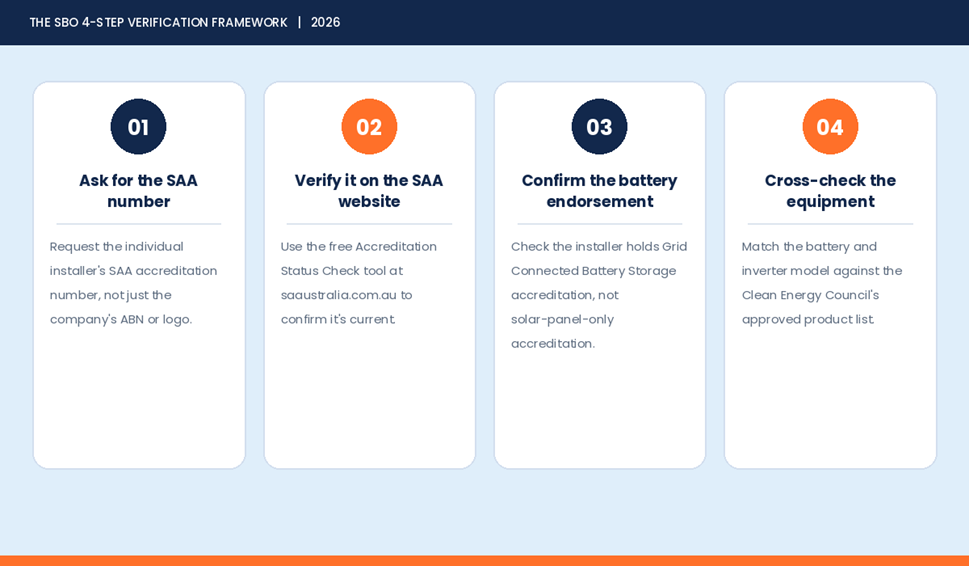
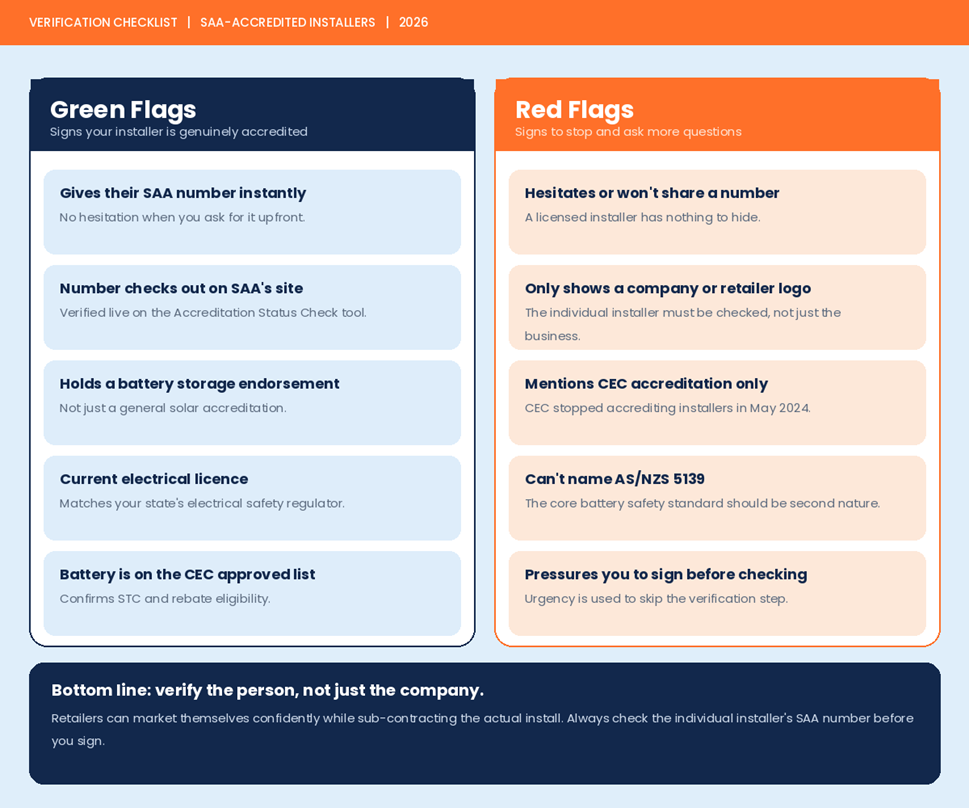
Every licensed installer in NSW should hold current accreditation. You can verify your installer’s accreditation here before you agree to anything — it takes less than a minute and gives you immediate peace of mind.

Question 2: Will you provide a Certificate of Compliance after installation?

This certificate, sometimes called a Certificate of Compliance for Electrical Work (CCEW), is issued by a licensed electrician to confirm that the installation meets the required standard. It is not optional. If an installer says they do not usually provide one, or that you can request it separately, be cautious. It should be offered as standard.

Question 3: Will the battery have its own dedicated circuit?

A compliant battery installation requires a dedicated circuit — not a circuit shared with other appliances or with your existing solar setup. If the answer is vague or the installer suggests they will reuse existing wiring, that is a flag worth exploring further before proceeding.

Solar Installer Guide

A Note on NSW VPP Incentives and Compliance

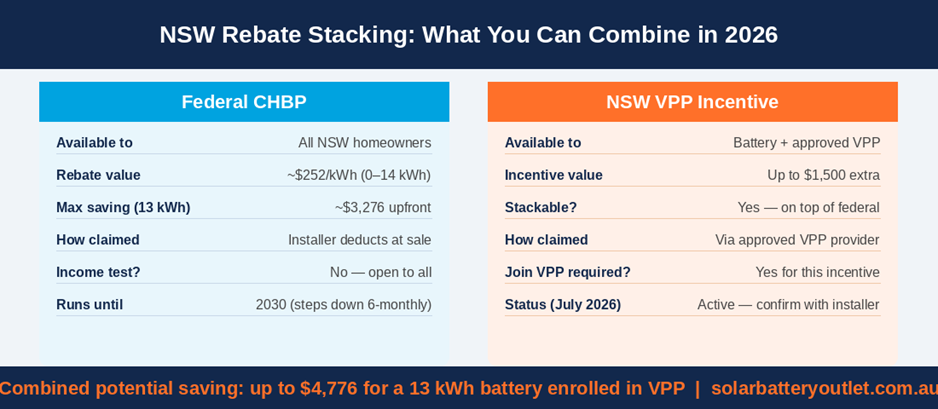
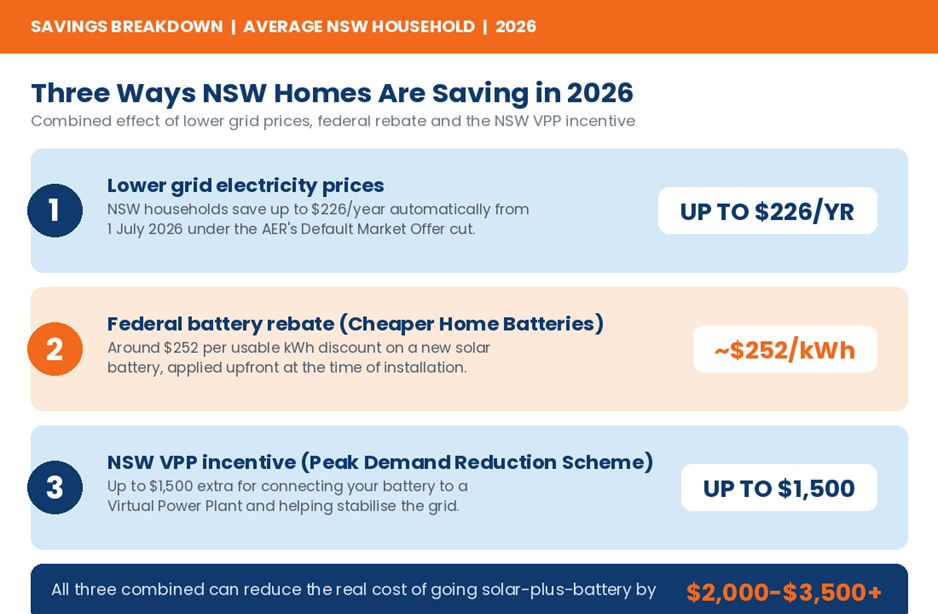
If you plan to participate in a Virtual Power Plant (VPP) to access the NSW VPP battery incentive — which can add up to $1,500 on top of the federal rebate — you must ensure your battery installation passes a network assessment before enrollment.

That assessment includes a review of how the system is wired. If your installation doesn’t meet AS/NZS 3000 or 5139 standards, it won’t pass the network check. A simple wiring shortcut could end up costing you the entire incentive If you want to understand more about how the VPP incentive works in NSW, this guide to the NSW VPP battery incentive explains the full requirements and eligibility process.

What a Compliant Installation Includes

To be clear about what you should expect from a professional battery installation in NSW. Here is what the standards require:

  • A dedicated battery circuit, separate from all other household wiring
  • AC and DC cables sized correctly for the battery’s continuous discharge current
  • A DC isolator installed between the battery and inverter, rated for the system voltage
  • Correct earthing and bonding in line with AS/NZS 3000:2018
  • Battery location meeting the clearance and ventilation requirements of AS/NZS 5139:2019
  • A Certificate of Compliance issued by the licensed electrician who performed the work

None of this is expensive or time-consuming when done from the start. The problem only arises when an installer tries to save time by skipping steps — and the homeowner does not know what to ask.

The Honest Bottom Line

Solar batteries are safe when installed correctly. The Australian standards exist precisely because someone — or many someones — worked out what ‘correctly’ looks like in detail. They are not bureaucratic box-ticking. They are the engineering consensus on what a battery installation needs to look like to be reliably safe over its working life.

The single most effective thing you can do as a homeowner is ask the three questions above before you sign. A good installer will answer them clearly and confidently. A poor installer will not.

Ask anyway. The answer will tell you everything you need to know.

Something significant is happening in Australian homes right now. Walk down any street in Western Sydney, Brisbane’s outer suburbs, or Adelaide’s growth corridors and you’ll notice it — gleaming solar panels on rooftops, flanked increasingly often by a white or grey box on the garage wall. That box is a home battery. And in 2026, more Australians are installing them than at any point in history.

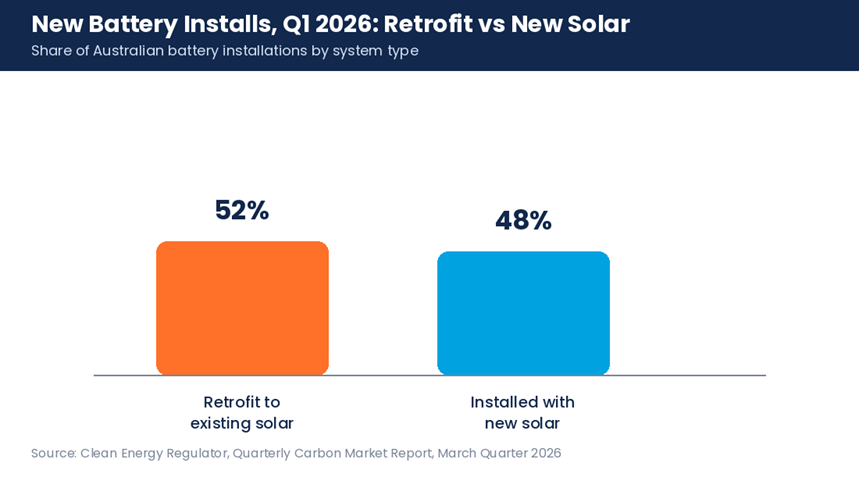
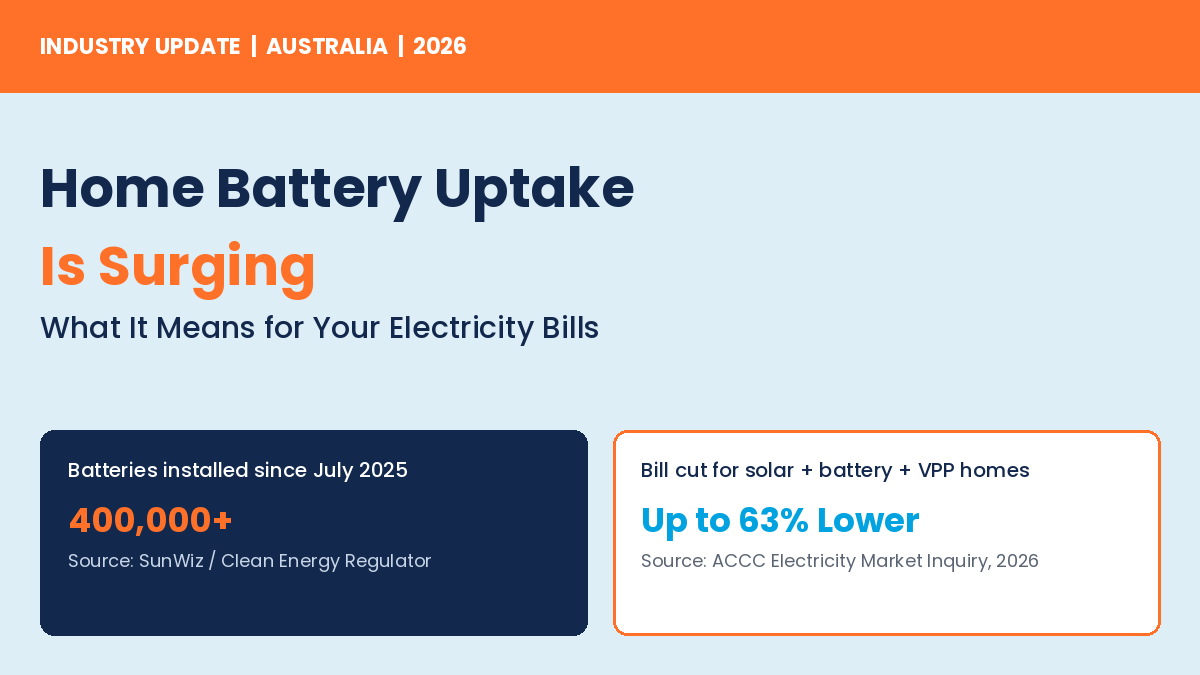
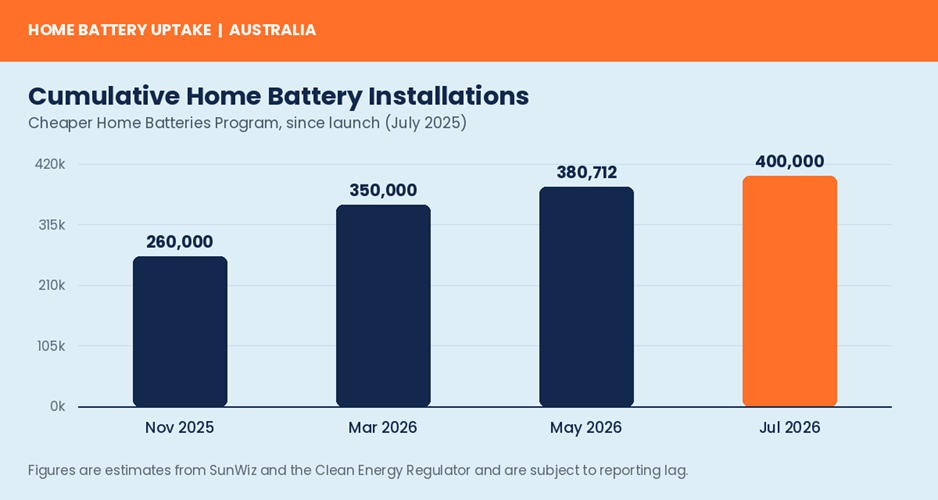
The numbers are striking. In March 2026 alone, NSW recorded over 600 megawatt-hours of new battery installations — a 44% monthly increase and a new state record. Nationwide, the Clean Energy Regulator is projecting up to 520,000 home battery installations this year alone, compared to just 193,000 in all of 2025. Australia’s residential battery storage market — already worth billions — is on track to reach USD 3 billion by 2034.

The rapid adoption of solar batteries is driving Australia’s energy shift in 2026, as homeowners look for smarter ways to store excess solar power and reduce reliance on the grid. With feed-in tariffs dropping and electricity prices rising, households are prioritising energy independence and better use of their rooftop solar systems. This isn’t a blip. 2026 is a genuine structural turning point for home energy storage in Australia. Here’s exactly why — and what it means if you’re still sitting on the fence.

Reason 1: The Government Finally Made It Worth It

For years, the economics of home batteries were marginal for most Australian households. The hardware was expensive, payback periods stretched to 12–15 years, and the financial case relied on a lot of optimistic assumptions.

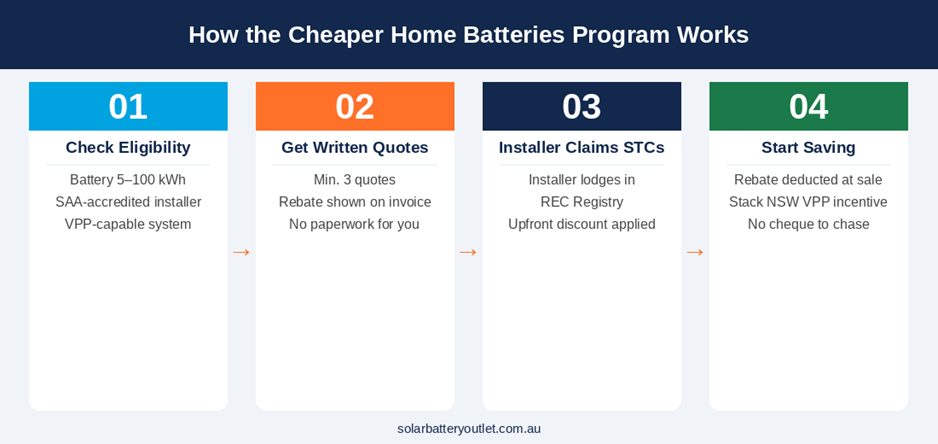
That changed in July 2025 when the federal government launched the Cheaper Home Batteries Program (CHBP) — making home batteries eligible for Small-scale Technology Certificates (STCs) under the Small-scale Renewable Energy Scheme for the first time. In plain English: the government is subsidising roughly 30% of the upfront cost of any eligible battery from 5 kWh to 100 kWh. On a standard 10 kWh system, that’s roughly $3,100 off the invoice before you even start talking about state-level incentives.

The results were immediate. Installations in the final quarter of 2025 alone were approximately three times higher than the total for all of 2024. The program has already supported more than 300,000 battery installations nationally since launch — and 2026 is on pace to dwarf that figure entirely.

Important for NSW homeowners: There’s also a separate NSW Peak Demand Reduction Scheme (VPP incentive) worth up to $1,500 on top of the federal rebate. Most homeowners don’t know about it until their installer tells them — or doesn’t. Read our full guide to the NSW VPP incentive here.

Australian residential battery installations 2022–2026

Australian residential battery installations 2022–2026 (2026 is CER midpoint projection). Sources: Clean Energy Regulator, SunWiz.

Reason 2: Feed-in Tariffs Have Collapsed — And That Changes Everything

Ask any solar installer what the number one question they get today is, and most will say some version of: “I already have solar but I feel like I’m not getting much back for what I’m exporting.”

With feed-in tariffs dropping and electricity prices rising, installing solar batteries allows households to use their own energy during peak evening hours instead of buying expensive power. This shift is helping many Australians reduce grid dependence while improving overall energy efficiency at home.

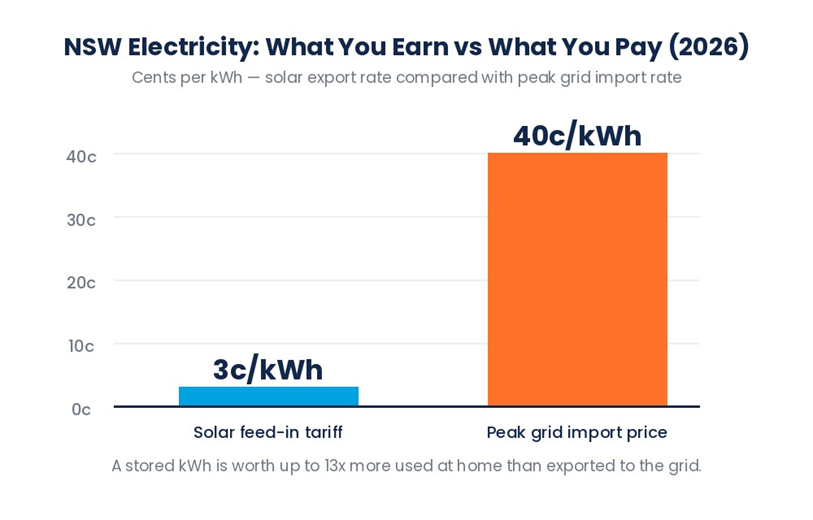
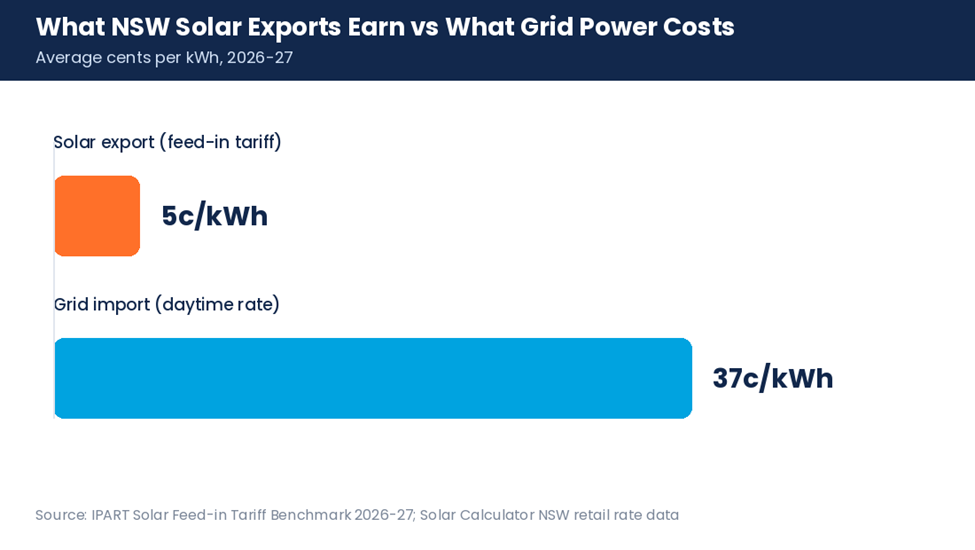
They’re right. Feed-in tariffs across Australia have dropped roughly 50% since 2022–23. In most states in 2026, you’re receiving somewhere between 3 cents and 10 cents per kilowatt-hour for electricity you export to the grid. Meanwhile, when you buy that same electricity back from the grid in the evening, you’re paying 28 to 45 cents per kilowatt-hour.

That gap — earning 5 cents, spending 35 cents — is the financial engine of the battery revolution. Every kilowatt-hour you store in your battery instead of exporting is worth six to ten times more than selling it. A 10 kWh battery that runs your house through an evening instead of drawing from the grid can save $8 to $14 in a single night. Run the numbers across a year and you can see why payback periods have compressed dramatically.

Average feed-in tariff vs. average grid electricity rate in NSW/VIC/QLD (2026)

Average feed-in tariff vs. average grid electricity rate in NSW/VIC/QLD (2026). Self-consumption via battery is worth 6–10× more than exporting. Sources: VoltFlow, IMARC Group.

Reason 3: Battery Costs Have Fallen to a Tipping Point

The third major shift in 2026 is on the cost side of the ledger. Battery hardware prices have followed the same downward curve as solar panels did a decade ago — a steep, sustained decline driven by scale manufacturing, improved chemistry, and fierce competition between BYD, Tesla, Sungrow, Enphase, and a growing field of challengers.

A 10 kWh battery system that would have cost $14,000–$18,000 installed five years ago now retails for around $10,000–$12,000 before rebates. After the federal CHBP rebate, the net cost drops to roughly $7,000–$9,000 for most households. For NSW homeowners who stack the VPP incentive on top, the net cost can fall below $6,000.

At those numbers, with current electricity prices and the end of meaningful feed-in tariffs, payback periods of five to eight years are realistic for a well-matched system. For high-consumption households or those in states with stronger incentives, payback of three to four years is achievable.

Popular Battery Models and Indicative 2026 Pricing (NSW)

BatteryUsable CapacityPre-Rebate (est.)After Federal RebateAfter Federal + NSW VPP
BYD Battery-Box HVM 10 kWh10 kWh~$10,500~$7,400~$6,300
Tesla Powerwall 313.5 kWh~$14,000~$10,280~$8,930
Sungrow SBR 9.6 kWh9.6 kWh~$9,800~$6,830~$5,770
Enphase IQ Battery 5P (10 kWh)10 kWh~$11,200~$8,100~$7,000

Prices are indicative estimates for installed systems including labour. Always request an itemised quote from your installer.

Government rebates and falling hardware costs have made solar batteries more affordable than ever, which is why many Australians are now pairing them with existing rooftop systems to maximise savings and improve backup reliability during outages.

Reason 4: The Grid Is Becoming Less Reliable — And Australians Know It

Beyond the financial case, there’s a growing practical motivation driving battery uptake: blackout anxiety. Australia’s electricity grid is under structural pressure. Coal plants are retiring faster than replacement capacity is being built. Extreme weather events — heatwaves, storms, cyclones — are becoming more frequent and more intense, placing higher peak demands on infrastructure that wasn’t designed for a 42-degree day.

For many Australians, the memory of being without power for hours or days is the final push they needed. A home battery with adequate backup capacity keeps the lights on, the refrigerator running, and the phone charged when the rest of the street goes dark. That resilience value is real and it’s something that doesn’t show up cleanly in payback period calculations — but it matters enormously to families with young children, medical equipment, or simply a home office they can’t afford to lose for a day.

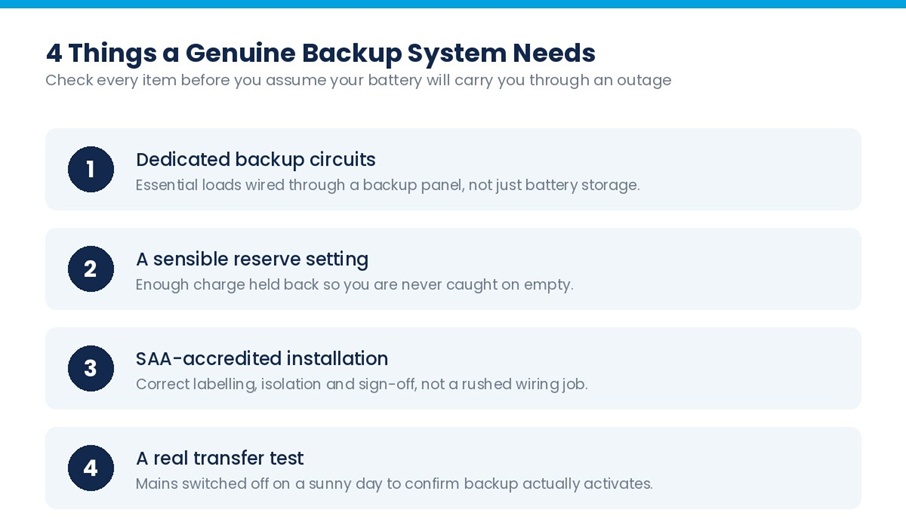
Blackout note: If backup power is your priority, make sure your battery is configured as a “whole home backup” system. Some battery installations are grid-tied only and won’t power your home during an outage. Always confirm backup capability with your installer before signing a contract.

Estimated average battery payback period for a standard 10 kWh system

Estimated average battery payback period for a standard 10 kWh system (NSW, typical household). Reflects falling hardware costs, rising grid prices, and government rebates. Sources: Gridly, Solutions4Solar.

Reason 5: 2026 Is the Peak Incentive Window — And It’s Closing

Here’s the thing most homeowners don’t realise until it’s too late: the federal rebate is designed to step down every six months until 2030. The rate that applies now, in April 2026, is the highest it will ever be. After 1 May 2026, the rebate value drops by roughly $1,000 on a typical 13.5 kWh system. It drops again in November. And again every six months after that.

This isn’t conjecture — it’s by design. The government structured the program to front-load the incentive to kick-start the market, then gradually reduce it as costs fall and the market matures. Which means the window to capture the maximum rebate is now, in early to mid 2026.

This is why March 2026 saw a record-breaking surge in installations. The SunWiz industry analyst firm reported that Australia registered 341 megawatts of small-scale solar in March — more than ever recorded in a single month — with batteries surging 35% month-on-month. Homeowners are reading the data correctly and acting on it.

Federal Battery Rebate Step-Down Schedule (Approximate, 13.5 kWh System)

Installation PeriodEstimated Rebate Valuevs. April 2026
Before 1 May 2026~$4,557Maximum — current window
May – Oct 2026~$3,488–$1,069
Nov 2026 – Apr 2027~$2,800–$1,757
2028+Declining furtherStepped reductions continue

How Much Can You Actually Save?

The question every homeowner eventually asks is: what does this mean for my electricity bill? The honest answer is that it depends on your consumption patterns, your current tariff, whether you’re on time-of-use pricing, and how well your battery is sized against your usage. But some ballpark numbers help calibrate expectations.

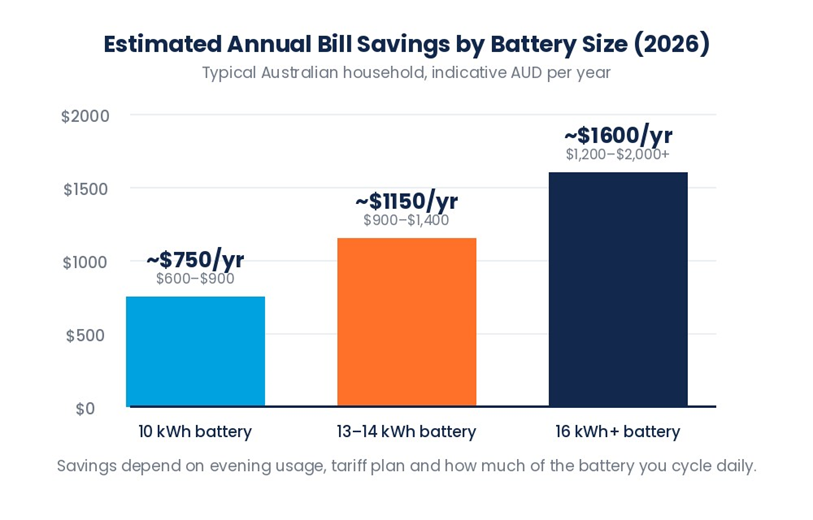
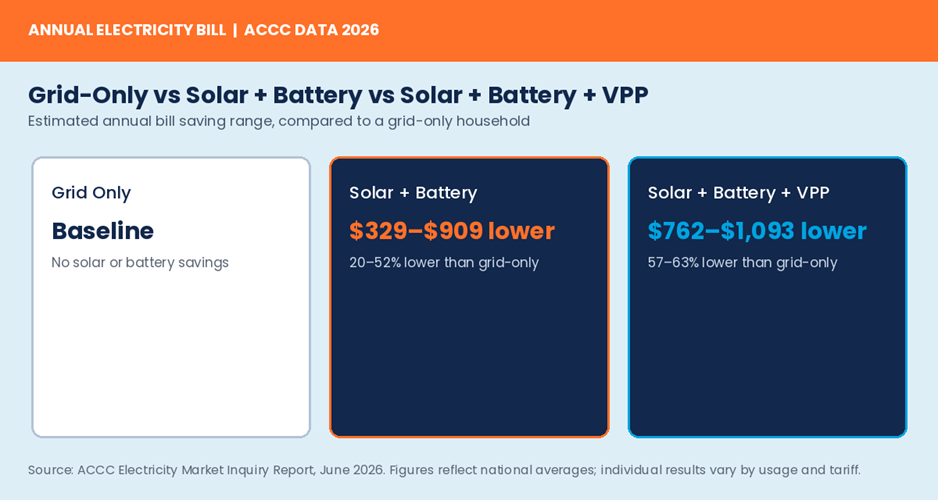
A typical Australian household on a time-of-use tariff, with a 6.6 kW solar system and a 10 kWh battery, can expect to reduce their annual electricity bill by $1,500 to $2,300. Higher-consumption households — those running air conditioning heavily, with an EV, or with pools — typically land in the $2,000 to $3,500 range. On top of bill savings, NSW homeowners enrolled in a VPP can earn an additional $130 to $450 per year from grid participation events.

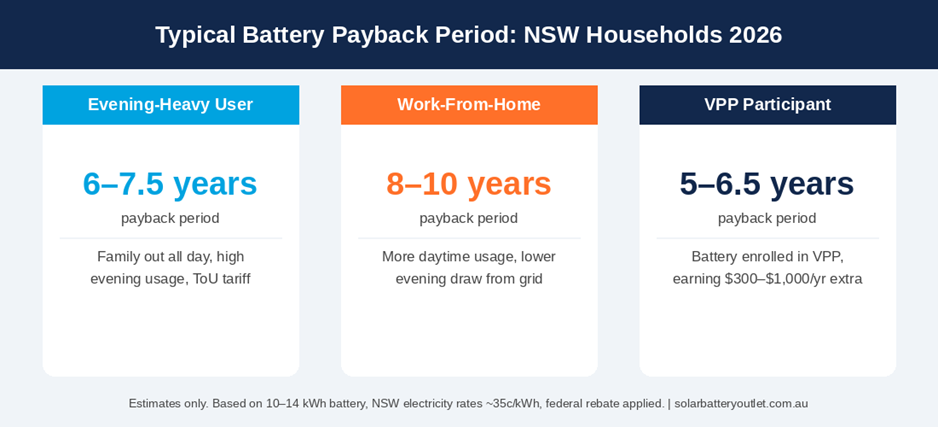
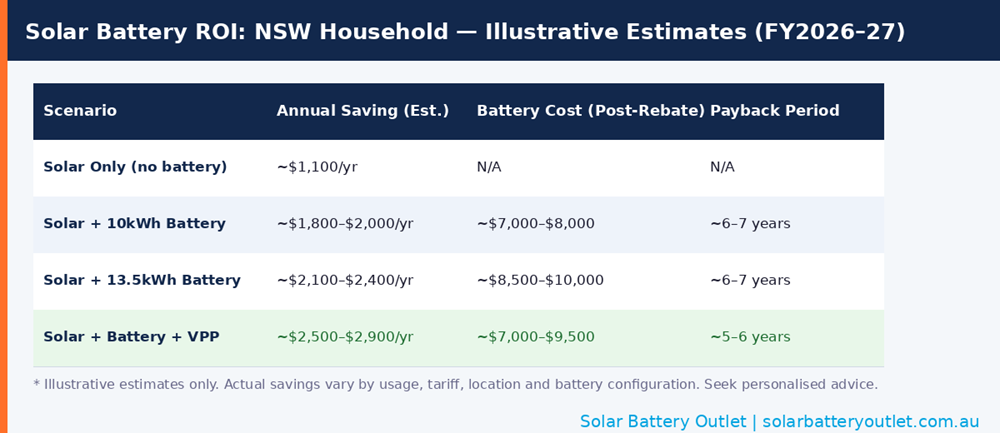
Add it up: at the current rebate levels, a typical NSW household installing a 10 kWh system could recover their net investment in five to seven years — and then enjoy free or near-free electricity for the remaining 7–10 years of the battery’s warranty period.

Estimated annual electricity bill savings with a 10 kWh battery system

Estimated annual electricity bill savings with a 10 kWh battery system (NSW, time-of-use tariff). VPP income shown as additional layer. Sources: Gridly, Solutions4Solar, Solar Battery Outlet installs data.

What Does This All Mean for You?

If you already have solar and you’re exporting most of your generation at 4–6 cents per kWh, you’re leaving money in the grid every day. A battery doesn’t just save money — it recaptures value you’ve already generated and are currently giving away.

If you don’t have solar yet, 2026 is also an exceptional time to install solar and battery together. Combined packages often attract better pricing from installers, and the incentive structures for solar (STCs) remain strong alongside the battery rebate.

The structural forces driving the boom — a 30% government rebate, collapsing feed-in tariffs, rising grid prices, falling hardware costs, and a growing awareness of blackout risk — aren’t going away. But the specific rebate level that exists today in early 2026 is the most generous it will ever be. The market is telling you that clearly.

As one industry analyst put it plainly: the households that install in the first half of 2026 will look back at this window the way early solar adopters in 2012 looked back at the feed-in tariff era. The numbers will eventually change. Right now, they’re exceptional.

Ready to find out what you’d save?

We process both the federal Cheaper Home Batteries rebate AND the NSW VPP incentive on every installation. No chasing paperwork. Just a cleaner electricity bill.

Get a free quote — takes 60 seconds

Or call us on 1800 000 777

Frequently Asked Questions

Is 2026 really the best time to install a solar battery in Australia?

For most households, yes. The federal rebate is at its highest point and steps down every six months from May 2026. Grid electricity prices are at historic highs while battery hardware costs continue to fall. The combination of these factors creates a financial case that is better in early 2026 than it has ever been — and better than it will be by the end of the year.

Do I need to already have solar panels to install a battery?

No — you can install a battery without existing solar. Some households do this to take advantage of cheaper off-peak electricity rates. However, the payback case is strongest when you pair a battery with an existing or new solar system, because the battery stores your self-generated power rather than cheap grid electricity.

What’s the difference between the federal rebate and the NSW VPP incentive?

They are completely separate programs run by different governments. The federal rebate reduces your upfront invoice by around 30% on any eligible battery. The NSW VPP incentive pays you up to $1,500 separately after installation when your battery is connected to a Virtual Power Plant network. Both can be claimed together. See our NSW VPP guide for the full detail.

How long do solar batteries last?

Most major battery brands — BYD, Tesla Powerwall, Sungrow, Enphase — come with 10-year warranties and are typically rated for 3,000 to 6,000 charge cycles. In real-world Australian conditions, batteries are lasting 12–15 years in many installations. The warranty period is the floor, not the ceiling.

What size battery do I need?

For a typical Australian home using 20–28 kWh per day, a 10–13.5 kWh battery will cover most evening and overnight usage. If you have an electric vehicle, air conditioning running heavily in summer, or a larger property, you may benefit from a larger system or stacked batteries. A good installer will analyse your actual usage data before recommending a size.

Most NSW homeowners buying a solar battery in 2026 know about the federal rebate. They’ve seen the ads, they’ve had the conversations with installers, they know roughly what to expect off the invoice.

What a lot of them don’t know — until someone tells them — is that there’s a second payment available on top of that. From the NSW government. Up to $1,500. And you can stack it with the federal rebate.

It’s called the NSW VPP incentive. It comes through the Peak Demand Reduction Scheme. And the reason most people miss it is simple — their installer either doesn’t bother processing it because it takes extra paperwork, or they mention it once in passing and the homeowner forgets to follow up.

This guide explains exactly what a VPP is in plain English, how much the incentive is actually worth for your battery size, what you need to qualify, and the step-by-step process to make sure you actually receive it. Because a lot of NSW homeowners are leaving $1,500 on the table without realising it.

Quick note on timing: The federal battery rebate rate drops after 1 May 2026. The NSW VPP incentive is completely separate and is NOT affected by that change — you can still claim the full amount after May. But if you’re installing before May anyway, you capture both the higher federal rate AND the full VPP payment. More on the federal rebate deadline here.

What Is a VPP?

Virtual Power Plant sounds complicated. It’s actually a straightforward concept.

Your battery sits in your garage or on your wall. That doesn’t change. The hardware stays exactly where it is. What a VPP does is connect your battery — through software — to a network of thousands of other home batteries across NSW.

During peak demand periods, usually hot summer afternoons when everyone is running air conditioning at once, the grid comes under pressure. The VPP operator can draw a small amount of stored power from the network of batteries to help stabilise it. In practice, your battery might contribute a small discharge during these events — you probably won’t even notice.

In return for making your battery available to the network, the NSW government pays you. That’s the VPP incentive. It’s not charity — it’s a genuine payment for a service your battery is providing to the grid.

You stay in control. You can set minimum charge reserves so your battery never drops below a level you’re comfortable with. You’re not handing over your battery to a stranger. You’re joining a coordinated network with clear rules about how and when it can be accessed.

How Much Is the NSW VPP Incentive Worth?

The NSW Peak Demand Reduction Scheme pays a point-of-sale incentive based on your battery’s usable capacity. Here’s what that looks like in real numbers:

Battery SizeVPP IncentiveFederal Rebate (before May)Combined Saving
5 kWh~$550~$1,550~$2,100
10 kWh~$1,100~$3,100~$4,200
13.5 kWh~$1,350~$3,720~$5,070
15 kWh~$1,500~$4,200~$5,700

The $1,500 is the cap — you hit that around 13 to 15 kWh of usable capacity. Most standard 10 kWh batteries land around $1,100 in VPP incentive.

These are estimates — the exact amount depends on your battery’s certified usable capacity as registered with the scheme. Your installer will confirm the exact figure for your specific battery model before installation.

For a full breakdown of what these rebates mean for your out-of-pocket cost, our Solar Battery Cost Sydney 2026 guide has the complete numbers.

Who Qualifies for the NSW VPP Incentive

NSW VPP incentive eligibility checklist 2026

Not every battery installation qualifies. Here’s the exact checklist:

You must be a NSW homeowner. The Peak Demand Reduction Scheme is a NSW state program. Properties in Victoria, Queensland or other states don’t qualify — those states have their own separate schemes.

Your battery must be VPP-capable. This means the battery’s firmware and hardware support remote dispatch by a VPP operator. Every major brand we install — BYD, Tesla, Sungrow, Enphase, Growatt — qualifies. Cheaper imported brands sometimes don’t. Your installer should confirm this before quoting.

Your battery must be connected to a registered VPP operator. There are several approved VPP operators in NSW — your installer will connect you to one as part of the installation process. You don’t need to go find one yourself.

The battery must be installed by an SAA-accredited installer. Same requirement as the federal rebate. If your installer isn’t SAA-accredited, you can’t access either scheme. Verify at saaustralia.com.au before signing anything.

One claim per property. The incentive is tied to your property’s electricity meter (NMI). If a previous owner already claimed it, you can’t claim again on the same address. A good installer checks this upfront.

You must not have previously claimed the old NSW Empowering Homes battery rebate on this property. If the old scheme was claimed, the VPP incentive may still be accessible separately depending on your battery specifications — worth asking your installer to check your specific situation.

The Federal Rebate vs The NSW VPP Incentive — What’s the Difference

People often confuse these two. They’re completely separate schemes run by different governments. Here’s the clearest way to think about them:

Federal Cheaper Home Batteries Program:

  • Run by the Australian federal government
  • Gives you roughly 30% off the upfront cost of an eligible battery
  • Applied directly off your invoice by your installer — you never see the money, it just reduces what you pay
  • Rate drops after 1 May 2026 and steps down every six months until 2030
  • Available across all of Australia

NSW Peak Demand Reduction Scheme (VPP Incentive):

  • Run by the NSW state government
  • Pays you up to $1,500 as a separate payment after installation
  • Paid out after your battery is connected to a VPP and registered with the scheme
  • Not affected by the 1 May federal changes — rate stays the same
  • Only available in NSW

The key point: you can claim both. They are designed to stack. A typical NSW homeowner installing a 10 kWh battery captures around $3,100 from the federal scheme and around $1,100 from the NSW VPP scheme — over $4,200 in combined savings before a single electricity bill reduction kicks in.

Our Federal Battery Rebate NSW 2026 guide walks you through the federal rebate step by step and explains exactly who qualifies and how it’s applied.

How to Claim the NSW VPP Incentive — Step by Step

Good news: most of this happens automatically when you use a good installer. Here’s the process so you know what to expect and what to ask.

Step 1 — Choose an SAA-accredited installer who processes both rebates.

This is the most important step. Not all installers bother with the VPP incentive because it involves extra compliance and registration steps. Before you accept any quote, ask directly: “Do you process the NSW Peak Demand Reduction Scheme incentive?” If they hesitate or look confused — find a different installer.

Step 2 — Choose a VPP-capable battery.

Your installer will confirm this. Every battery we recommend — BYD, Tesla Powerwall 3, Sungrow SBR, Enphase IQ 5P — qualifies. The installer will specify a registered VPP operator at the time of installation. You sign a VPP agreement, which covers how your battery can be dispatched and sets your minimum reserve levels.

Step 3 — Installation day.

Your battery is installed and connected. The installer registers the system with Ausgrid (your local network operator across most of NSW) and with the VPP operator. Both registrations are handled by your installer — not you.

Step 4 — VPP incentive payment.

After installation and registration are confirmed, the NSW incentive payment is processed. This typically takes a few weeks and comes through as a payment separate from your installation invoice. Your installer should give you a clear timeline on when to expect it.

Step 5 — You’re done.

Your battery runs normally. You keep full visibility of your charge levels through your battery’s app. The VPP operator can access your battery during peak events — but you set the floor on how low it can go.

Will Being in a VPP Affect My Battery Performance?

This is the question we get asked most often once people understand what a VPP is. The honest answer is — minimally, and usually in your favour.

VPP dispatch events typically happen a handful of times per year during extreme peak demand. Each event might draw 1 to 2 kWh from your battery. In practice, your battery recharges from solar the next day and you’re back to normal.

Some VPP arrangements also pay you ongoing payments or bill credits each time your battery is dispatched — on top of the upfront $1,500 incentive. This varies by VPP operator, so ask your installer which operator they use and what the ongoing earning structure looks like.

The one thing to confirm is your minimum reserve setting. If you want blackout protection — and you should, given South West Sydney’s storm season — make sure your VPP agreement lets you set a minimum charge reserve to keep enough backup power available. A good installer configures this during setup.

Which Batteries Qualify for the NSW VPP Incentive in 2026

NSW VPP eligible batteries 2026 comparison

Every battery we stock and install qualifies. Here’s the confirmed list:

BatteryVPP EligibleUsable CapacityApprox. VPP Incentive
BYD Battery-Box HVM 10 kWh✅ Yes10 kWh~$1,100
Tesla Powerwall 3✅ Yes13.5 kWh~$1,350
Sungrow SBR 9.6 kWh✅ Yes9.6 kWh~$1,060
Enphase IQ Battery 5P (10 kWh)✅ Yes10 kWh~$1,100
Sungrow SBH 9.6 kWh✅ Yes9.6 kWh~$1,060

For a full comparison of these batteries including prices and performance, our Best Solar Battery NSW 2026 guide has everything side by side.

What About VPP Ongoing Earnings — Is It Worth Staying In?

The $1,500 upfront incentive is the main headline. But some VPP programs also pay you on an ongoing basis each time your battery contributes to a grid event.

The exact amount varies by operator and by how active your battery is in dispatch events. Some households earn an extra $50 to $200 per year through ongoing VPP participation. It’s not life-changing money on its own — but it’s passive income from a battery you already own.

The key question to ask your installer is: which VPP operator are we being connected to, and what’s the ongoing payment structure after the upfront incentive is paid?

Some operators give you bill credits. Some pay direct. Some offer a hybrid arrangement. It’s worth understanding before you sign the VPP agreement — not because any of them are bad, but because you want to know what you’re getting.

Frequently Asked Questions

Does the NSW VPP incentive drop after 1 May 2026 like the federal rebate?

No. The federal rebate rate drops on 1 May 2026 — the NSW VPP incentive is completely separate and is not affected by that date. You can claim the full VPP incentive amount whether you install before or after May. The only reason to rush for May is the federal rebate component.

Can I claim the VPP incentive if I already have a battery installed?

Generally no — the NSW Peak Demand Reduction Scheme incentive is designed for new battery installations. If you have an existing battery that’s already registered with a VPP, you may have already received it or been ineligible depending on when it was installed. Worth asking your installer to check your specific situation.

What if I don’t want to join a VPP?

You can still claim the federal rebate without joining a VPP — the two are separate. You simply won’t receive the $1,500 NSW incentive. For most homeowners the VPP agreement is a straightforward arrangement and the $1,500 is well worth it. But it’s your choice.

How long does the VPP incentive payment take to arrive?

Typically 2 to 6 weeks after your installation is registered and confirmed. Your installer handles the registration — ask them for a specific timeline at the time of installation so you know what to expect.

Will the VPP drain my battery during a blackout?

No. VPP dispatch only operates when the grid is running — not during a blackout. If the grid goes down, your battery automatically switches to backup mode and the VPP connection is inactive. Your stored power is yours during an outage.

Does joining a VPP affect my battery warranty?

It shouldn’t if you’re using an approved VPP operator and your battery is installed correctly. The VPP dispatch events are within the normal operating parameters of the battery. Confirm this with your installer and check your battery’s warranty documentation to be sure.

Want us to handle both rebates for your NSW home?

We process the federal Cheaper Home Batteries rebate AND the NSW VPP incentive as standard on every installation. You don’t chase paperwork. We handle it.

Call 1800 000 777 or fill in our 60-second form at solarbatteryoutlet.com.au

If you are reading this, you have probably already seen the ads. The countdown timers. The ‘act now before it is too late’ messaging that has been all over social media since the government announced the 1 May rebate change.

Here is the honest answer: it depends on your situation. And anyone who tells you otherwise — without knowing anything about your home, your electricity usage, your solar system, or your budget — is trying to sell you something.

This guide gives you five straightforward questions to work through. Answer them honestly and you will know exactly whether you should be moving quickly or taking your time.

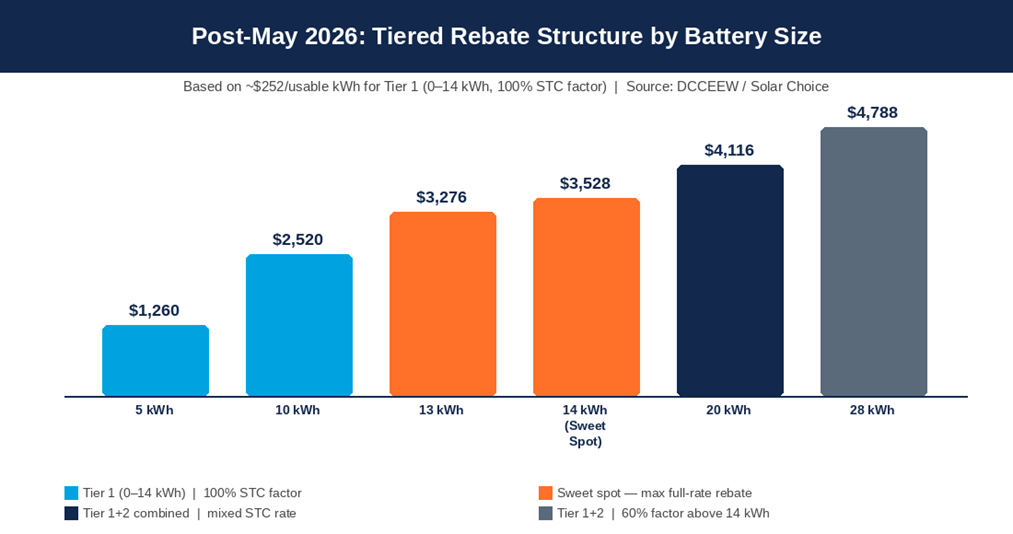
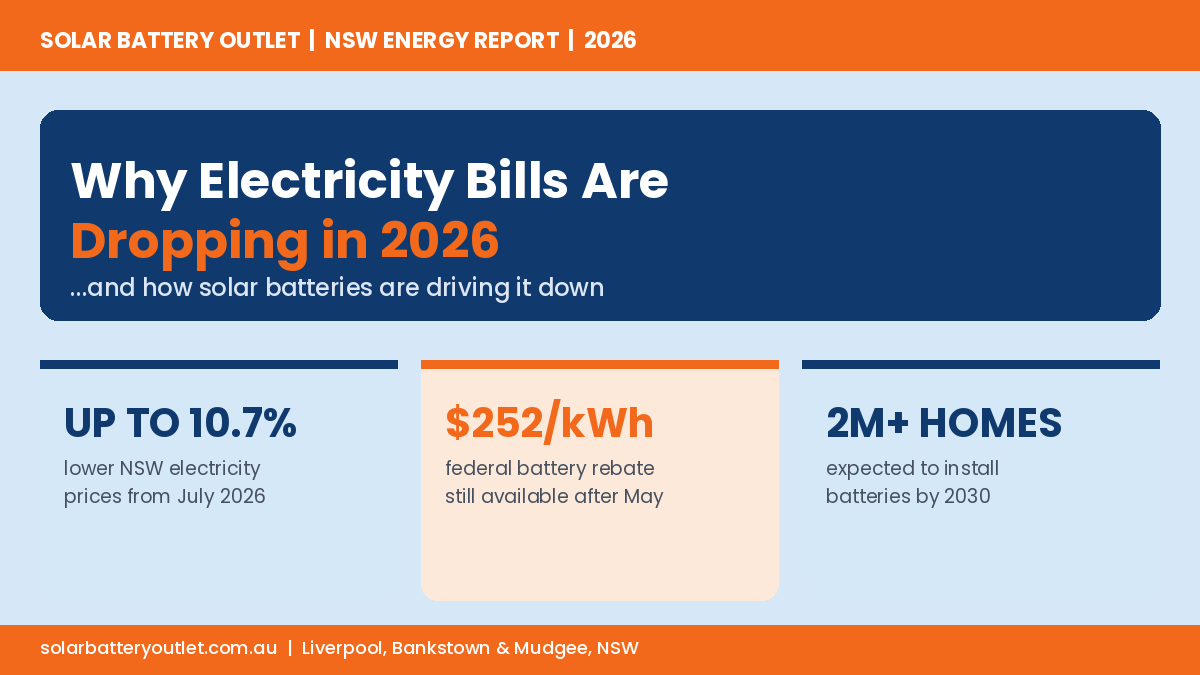
First — what is actually happening on 1 May 2026? The federal battery rebate is not ending. It runs until 2030. What is changing is the rate used to calculate the rebate — the STC factor drops from 8.4 to 6.8. For a standard 10 kWh battery, that means roughly $530 less rebate. For larger batteries above 14 kWh, the hit is bigger due to a new tiered structure. The rebate continues after May — it just keeps getting a little smaller every six months.

Five Questions That Tell You Whether to Rush or Wait

Five Questions That Tell You Whether to Rush or Wait

Work through these in order. Be straight with yourself.

Question 1: Have you already compared at least 3 written quotes?

This is the most important question. If the answer is no, you are not ready to book — and rushing into a booking without comparing quotes is the most expensive mistake you can make with solar batteries.

A difference of $530 in rebate savings means nothing if you end up with the wrong installer, the wrong battery size, or a quote that has not accounted for a switchboard upgrade you need. Get your three quotes first. Then make the timing decision.
If yes: you have done the work. There is no good reason to delay past 1 May if you are already ready to book.

If no: start there. Get the quotes. Then come back to the timing question.

Question 2: Is your planned battery larger than 14 kWh?

From 1 May 2026, there is a new tiered rebate structure that reduces support for batteries above 14 kWh of usable capacity. If you are planning a 20 kWh system, a whole-home setup, or anything that pushes above that threshold, the cost difference between installing before and after May is not $530 — it is $1,000 to $1,800 or more.

At that level the maths on timing is pretty clear, assuming you are already ready to go.

If yes: this is a meaningful saving. Worth acting before May if your other questions check out.

If no: the factor drop alone gives you a $530 difference. Real money, but not urgent.

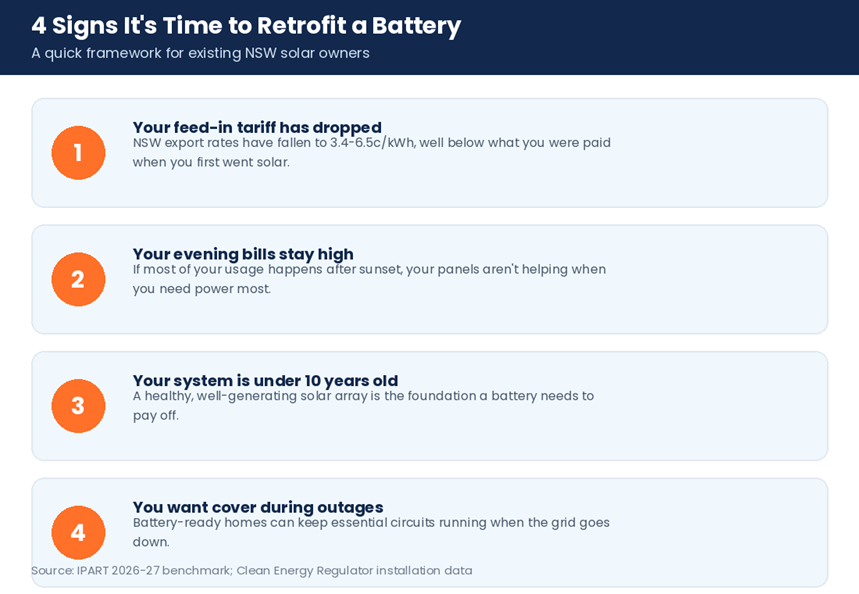
Question 3: Is your solar system less than 10 years old and generating well?

A battery will not help you much if your solar panels are degraded and not generating properly. Before adding storage, it is worth knowing how your existing system is performing.

If your system is over 10 years old, get a quick health check from a solar technician before booking a battery. Adding a $10,000 battery to a solar system that generates poorly is throwing money at the wrong problem.

If yes: your system should charge a battery well. Good to proceed.

If no: sort the solar first. The battery can wait.

Question 4: Do you use most of your power in the evenings, after solar stops generating?

This is the core question about whether a battery will actually save you meaningful money. A battery stores the solar power your panels generate during the day and releases it at night when electricity is expensive — typically 30 cents or more per kWh in NSW.

If you work from home, are retired, or are home all day, you might already be using a lot of your solar output directly. A battery will help less in that case than for a family that is out all day and runs the dishwasher, oven and TV from 5pm onwards.

If yes: a battery is likely to give you a solid return. The timing decision becomes more financially meaningful.

If no: take the time to understand your usage pattern before committing. A free quote assessment from a good installer will look at your bills and advise you properly.

Question 5: Is anyone pressuring you to sign on the spot?

This one is a bit different. It is not about your home — it is about protecting yourself from a common tactic that spikes around any rebate deadline.

Door knockers. Cold callers. ‘Limited spots available.’ ‘Sign today to guarantee your rate.’ These are not legitimate sales techniques — they are pressure tactics that solar regulators in NSW have repeatedly warned about.

A legitimate installer will: give you a written quote, leave it with you to compare, answer questions honestly, and respect your timeline.

If you are being pressured: stop. Take the quote home. Call the installer back in your own time. If they will not give you a written quote to take away, that is your answer.

What the Payback Numbers Actually Look Like

Comparison of NSW solar battery

The payback comparison puts the timing decision in perspective. For a 10 kWh battery in NSW:

  • Install before 1 May 2026: net cost around $7,100, payback around 6.2 years
  • Install June 2026: net cost around $7,630, payback around 6.6 years — half a year longer
  • Install January 2027: net cost around $8,060, payback around 7.0 years — a full year longer than today

The annual saving from the battery itself does not change — that is determined by how much electricity you use at night and what your tariff is. The only difference is in the upfront cost, which affects how long until you break even.

The takeaway: every six months you delay adds roughly four to six months to your payback period. Over years, that compounds. But for a 10 kWh battery, the difference between installing in April 2026 and June 2026 is about half a year on payback — meaningful but not dramatic.

The one scenario where timing really matters: If you are planning a larger battery — 15 kWh, 20 kWh, or anything above 14 kWh — the 1 May change hits harder because of the tiered structure on top of the factor drop. A 20 kWh system loses over $1,800 in rebate after May. At that level, if you are already ready to go, the case for acting before May is genuinely strong.

Before You Book Anything — Know What to Look For

Green flags/Red flags Installer

Whether you are booking before May or later, the quality of your installer matters more than any rebate timing. Here is what separates a good installer from a poor one.

Green flags — signs of a good installer

  • The federal rebate appears as a dollar deduction on the written quote — not a verbal promise
  • They can show you their SAA accreditation number — verify it yourself at saaustralia.com.au
  • They give you an actual confirmed installation date, not just a contract signing date
  • They ask about your electricity usage and solar system before recommending a battery size
  • They mention the NSW VPP incentive and ask if you want to participate
  • They are happy for you to take the quote home and compare it

Red flags — walk away

  • Any pressure to sign on the same day — ‘this price is only available today’
  • Cannot produce an SAA accreditation number or avoids the question
  • Rebate mentioned verbally but not shown on the written quote
  • No confirmed installation date before 1 May — just a contract date
  • Recommends the biggest possible system without looking at your bills or usage
  • Door knocker with no leave-behind quote — nothing in writing on the day

So — Should You Rush?

Here is the straight answer:

Rush if: you have compared quotes, chosen an installer, your solar is in good shape, you use power in the evenings, and you are planning a battery over 14 kWh. In that case, there is no good reason to wait past May.

Take your time if: you are still researching, not sure a battery is right for you, have an older solar system that needs checking, or are being pressured by anyone. A $530 difference in rebate is not worth making a rushed decision on a $10,000 purchase.

Either way: the rebate continues to 2030. Batteries still make financial sense after May. The decision should be driven by your readiness — not by a deadline.

One last thing worth saying plainly: We install solar batteries for a living. It would be easy for us to tell you to rush, book now, do not wait. But the homeowners who get the best outcome from a battery are the ones who made the decision properly — not the ones who were panicked into it. If you are not ready, take more time. We will still be here in June.

Frequently Asked Questions

If I wait until June, will I still qualify for the NSW VPP incentive?

Yes. The NSW Peak Demand Reduction Scheme — up to $1,500 for connecting to a Virtual Power Plant — is a separate state incentive and is not affected by the 1 May federal changes. You can claim both rebates regardless of when you install.

Can I lock in the current rebate rate by signing a contract now, even if installation is after May?

No. Your rebate is determined by the date the battery is physically installed and commissioned — not the date you sign a contract. Any installer who tells you otherwise is not being straight with you. Get the actual installation date confirmed in writing before May if you want the current rate.

I am not sure if my electricity usage justifies a battery. How do I find out?

Ask any reputable installer to look at your last 12 months of electricity bills. A good installer will tell you honestly whether a battery makes financial sense for your home before recommending one. Be cautious of anyone who recommends a battery without looking at your bills first.

Are there any battery brands I should avoid buying near a deadline?

The brand is less important than the installer. Near any deadline, some less reputable operators push cheap or uncertified batteries because margins are easier to hide. Stick to established brands — Tesla Powerwall, BYD, Sungrow, Enphase, Growatt — and make sure the battery is SAA product-listed. Ask your installer to show you the product listing if you are unsure.

Not Sure If You Are Ready? Talk to Us First. We do free no-obligation quotes for NSW homeowners across Liverpool, Bankstown, and Mudgee. We will look at your bills, check your solar setup, and tell you honestly whether a battery makes sense — and whether timing matters for your situation. No countdown timer. No pressure. Just the numbers. Call us: 1800 000 777 Or visit solarbatteryoutlet.com.au — fill in the 60-second eligibility form and we will be in touch.
About Solar Battery Outlet: We are a Liverpool-based solar battery installer, part of GWM Group Pty Ltd, servicing homes across Bankstown and Mudgee. All installations are done by SAA-accredited electricians. We handle all rebate paperwork, so you do not have to.

It’s the million-dollar question every Australian homeowner with solar panels eventually asks: “Is a solar battery actually worth it?”

You’ve heard the debates. Your neighbour swears by it, but a forum you read said the payback period is over a decade. Some articles say it’s the key to energy independence, while others claim it’s an expensive gadget for green enthusiasts.

So, what’s the real answer?

As expert installers who live and breathe this technology every day, we’ll give you the honest, no-fluff truth: Yes, a solar battery is absolutely worth it in 2026, but with two huge conditions:

  1. You have to choose the right system for your home.
  2. You need to act before the government rebate drops significantly on May 1, 2026.

This isn’t a sales pitch; it’s a financial reality. In this guide, we’ll break down the real payback period, show you why now is the most critical time to buy, and help you figure out if a battery is the right move for you.

The Payback Period: It’s More Than Just a Number

Most people think the “payback period” is just about how long it takes for your electricity bill savings to equal the cost of the battery. While that’s part of it, the true value is much bigger.

The Real Return on Investment (ROI) includes:

  • Energy Independence: The freedom of generating, storing, and using your own power. You’re no longer at the mercy of rising electricity prices.
  • Blackout Protection: When the grid goes down in a storm, your lights, fridge, and internet stay on. What is that peace of mind worth to your family?
  • Future-Proofing Your Home: With the rise of electric vehicles and all-electric homes, having your own energy storage is becoming less of a luxury and more of a necessity.
  • Maximizing Your Solar Investment: You paid for your solar panels. A battery ensures you use every last drop of the free energy they generate instead of selling it back to the grid for pennies.

When you factor in these benefits, the “worth it” question starts to look very different.

How to Calculate Your REAL Payback Period

The payback period for a solar battery in Australia typically ranges from 5 to 10 years. Where you fall in that range depends on four key factors:

  1. Your Electricity Usage: The more power you use, especially in the evening, the faster your battery will pay for itself.
  2. Your Feed-in Tariff: The lower your feed-in tariff (the amount you get for selling excess solar back to the grid), the more sense it makes to store and use that power yourself.
  3. Your System Size: A correctly sized battery that matches your consumption is crucial for maximizing your return.
  4. Your Upfront Cost: This is the big one, and it’s about to change dramatically.


Want a precise payback calculation for your home?
Our free online tool analyzes your energy bills and system size to give you a personalized payback estimate in under 60 seconds.


The 2026 Rebate Cliff: Why You Must Act Before May 1st

This is the most important part of this entire article.

The Australian Federal Government’s solar battery rebate (known as the STC program) is being reduced. This isn’t a maybe; it’s a legislated change.

On May 1, 2026, the rebate value will drop significantly.

What does this mean for you in real dollar terms? For an average 10kWh battery system, you could receive hundreds, if not thousands, of dollars less in upfront discount if you install after this date.

This single change has a massive impact on your payback period. A system that has a 7-year payback today could have a 9-year payback if you wait until June. The time to act is now, while the full rebate is still available.


Don’t Miss Out on Thousands in Savings!
The May 1st deadline is fast approaching. Lock in the full government rebate by getting a quote and booking your installation today.

Case Study: The Miller Family in Sydney

  • Before Battery: A family of four with a 6.6kW solar system. They were exporting 70% of their solar energy during the day for a tiny feed-in tariff, only to buy expensive electricity back from the grid every evening.
  • After Installing a 10kWh Sigenergy Battery: They now store all their excess solar energy and use it to power their home at night.
  • The Result: Their quarterly electricity bill dropped from $550 to just $50 (the daily grid connection charge). Their calculated payback period is just 6.5 years, and they are fully protected from blackouts.

The Final Verdict: Is a Battery Worth It For YOU?

So, let’s circle back to the big question. A solar battery is worth it in 2026 if:

  • You want to slash your electricity bills and gain independence from the grid.
  • You want to be protected from blackouts and rising energy prices.
  • You want to maximize the return on your existing solar panels.
  • And most importantly, you are ready to act before the May 1st rebate deadline.

If you wait, the financial case becomes much harder to justify. The window of opportunity to get the best possible return on your investment is closing fast.

Your Last Chance for Maximum Savings

Don’t look back in July and wish you had acted sooner. Take the first step to energy independence today.

Option 1: See if You Qualify

Take our quick 30-second quiz to see if your home is a good fit for a solar battery and to get an instant rebate estimate.

Option 2: Get a Free, Detailed Savings Plan

Let our experts provide a free, no-obligation quote. You’ll get a fixed price, a detailed payback calculation, and a clear projection of your savings before and after the rebate change.

Blog Post Tags

are solar batteries worth it, solar battery payback period, solar battery Australia 2026, is a solar battery worth it, solar battery rebate 2026, home battery storage, solar power savings, energy independence