The key home solar battery safety features are certification, manufacturer safety data, and a battery management system. Proper electrical protection, correct labelling, and an accredited installer complete the picture.
However, no battery system is risk-free. Therefore, this guide explains each safety feature in plain language. It also shares what Australian regulators found in 2026 and gives you a checklist to use before you buy.
Quick answer: 7 safety features to look for
- A Clean Energy Council (CEC) listed battery model
- Known cell chemistry and manufacturer safety test data
- A battery management system (BMS) with thermal protection
- Electrical protection, including overcurrent protection and an RCD
- A compliant location and a suitable enclosure
- Clear labels and shutdown steps
- An accredited installer and ongoing support
Why Home Solar Battery Safety Features Matter in 2026
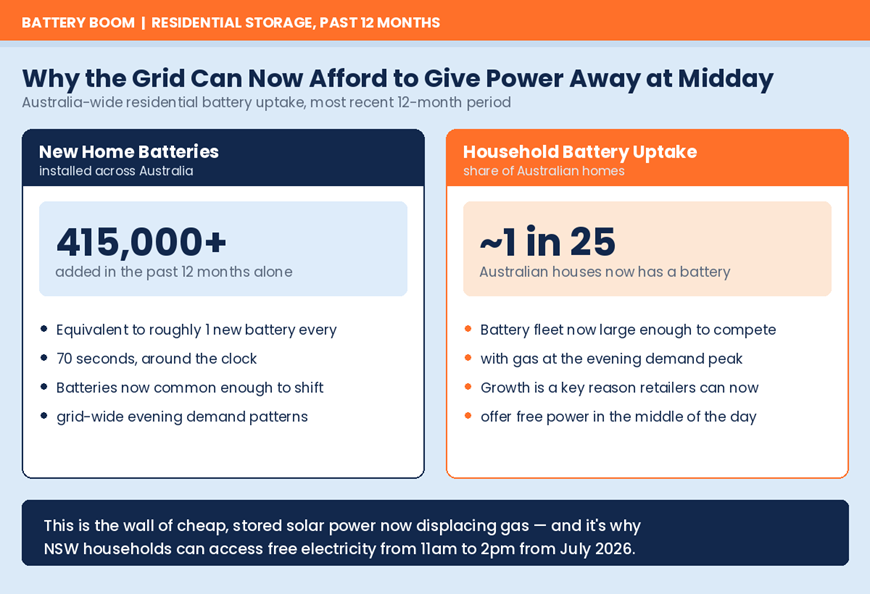
Australia’s battery boom is moving fast. Households and businesses installed 478,176 solar batteries between 1 July 2025 and 30 June 2026. That equals 13.58 GWh of storage. As a result, safety checks matter more than ever.
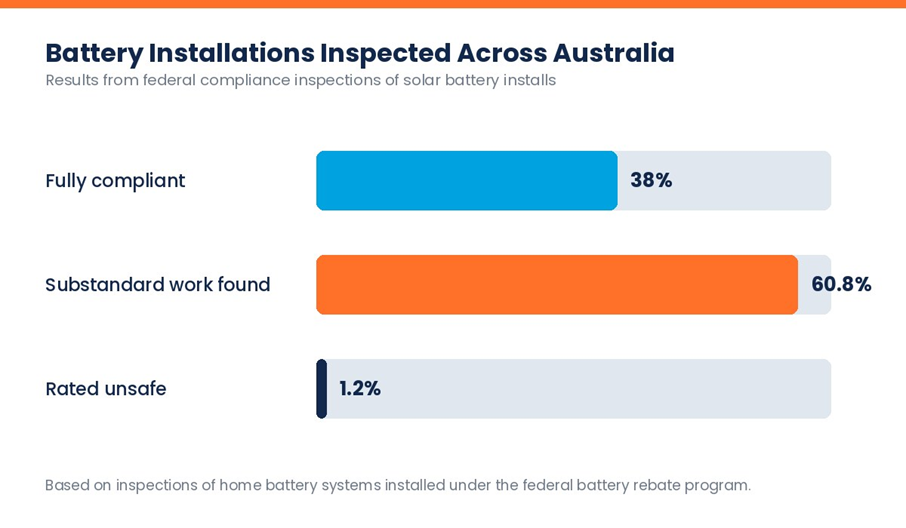
The Clean Energy Regulator (CER) inspects a sample of these installations. In its latest solar battery inspection results report, it reviewed 3,425 systems. It rated 0.76% unsafe, 62.28% substandard but safe to operate, and 36.95% adequate.
Importantly, no inspection found a problem with the battery itself. Instead, every issue traced back to installation practices and workmanship. Labelling was the most common reason for a substandard rating. The CER also notes it is too early to draw strong conclusions about compliance rates.
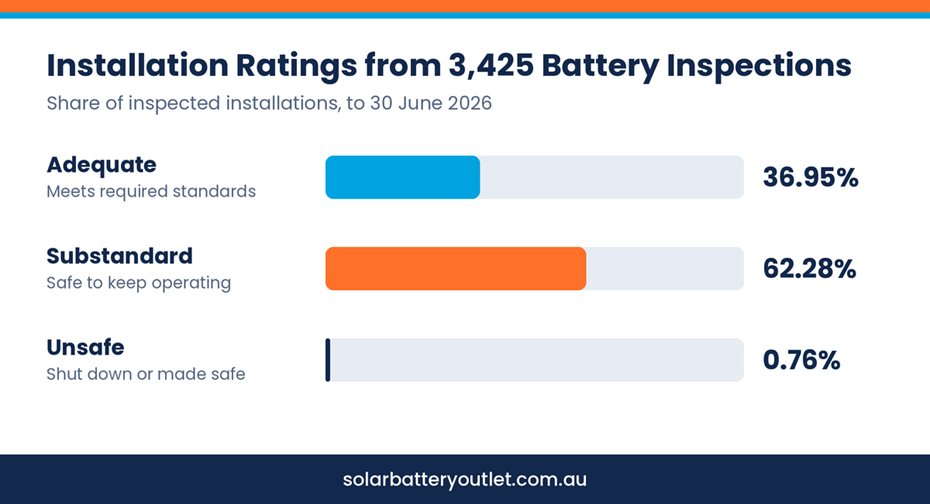
Substandard does not mean the whole system is faulty. Typically, inspectors flag one or two items, such as a missing label. However, those items can still affect electricians and emergency crews later. Consequently, check both the product and the installation.
Feature 1: Known Battery Chemistry and Safety Data
Most home batteries use lithium-ion cells. Two common chemistries are lithium iron phosphate (LFP) and nickel manganese cobalt (NMC).
Thermal runaway is the main hazard in lithium-ion batteries. In this chain reaction, one overheating cell heats its neighbours. Any lithium-ion chemistry can fail under abuse or poor installation.
Therefore, treat chemistry as one layer of protection, not a guarantee. Ask your installer which chemistry the battery uses. Then ask for the manufacturer’s safety test documentation.
Feature 2: Independent Certification and CEC Listing
Certification shows a battery passed independent safety testing. In Australia, the Clean Energy Council (CEC) keeps an approved batteries list. It now includes more than 1,000 lithium-based products. Listed batteries meet the lithium safety standard IEC 62619:2017, plus extra CEC requirements.
The federal Cheaper Home Batteries Program adds two rules. The battery must appear on the CEC list. It must also comply with AS/NZS 5139:2019.
Standards are evolving, too. Standards Australia published SA TS 5398:2025 on 3 October 2025. It is replacing the older Best Practice Guide. From 1 January 2027, the CEC will accept only applications assessed against the new specification.
Some manufacturers also cite UL 9540A, a US and Canadian test method for thermal runaway fire propagation. This adds useful evidence. However, it does not replace CEC listing. Before you buy, ask for the exact model number. Then search for it on the CEC list yourself.
Feature 3: A Battery Management System with Thermal Protection
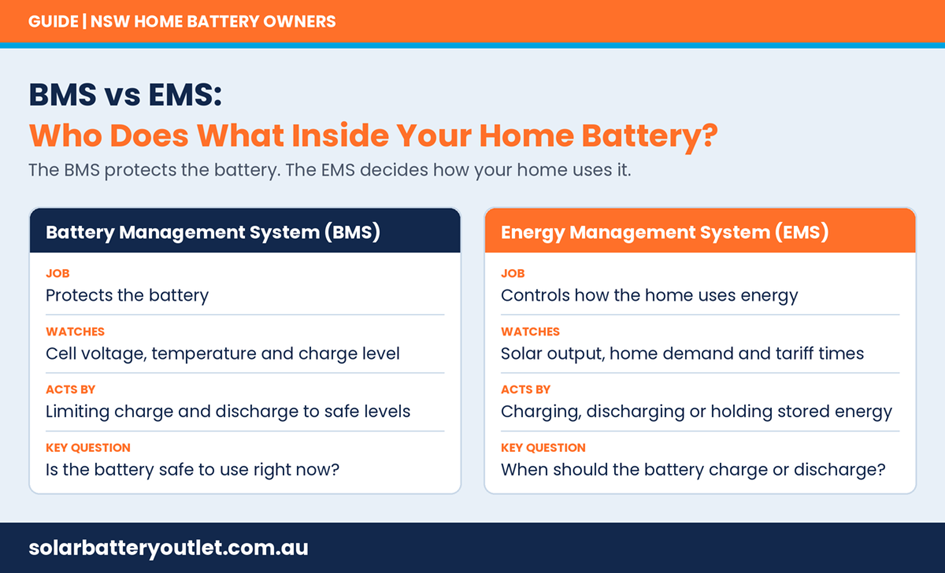
A battery management system (BMS) acts as the battery’s built-in safety controller. It monitors voltage, current and temperature across the cells. It also guards against overcharging, over-discharging, overcurrent and short circuits. If readings leave safe limits, the BMS can limit power or disconnect the battery.
Heat control matters too. Designs range from passive cooling to fans or liquid systems. Therefore, ask how the unit manages heat in summer. Also ask how it alerts you to faults, for example through an app or an inverter display.
Feature 4: Electrical Protection Beyond the Battery
The battery is only one part of the system. The installer adds the wiring and protective devices around it. The CER’s most common wiring findings included:
- A missing or incorrectly configured residual current device (RCD)
- Insufficient mechanical and fire protection
- Inadequate overcurrent protection on inverter circuits
Moreover, some unsafe ratings involved loose connections showing signs of heat. Therefore, ask your installer to explain each protective device. Also ask them to show you the isolation points.
Feature 5: A Compliant Location and a Suitable Enclosure
AS/NZS 5139 sets the installation rules for home battery systems, and it restricts where a battery can go. Standards Australia published Amendment 1 on 19 December 2025. The NSW Building Commission says it is now mandatory in NSW.
Fire and Rescue NSW advises placing a battery in a cool, ventilated, low-traffic area away from entries and exits. Meanwhile, outdoor installations need a unit with a suitable ingress protection (IP) rating. Where vehicles or impacts could damage the unit, the installer should add mechanical protection.
Suitable locations vary by home. The right spot depends on the battery model, your property layout and the standard. Therefore, expect your installer to assess the site and explain any restrictions.
Feature 6: Clear Labelling and Shutdown Steps
Labels may seem minor. However, they protect electricians, firefighters and your family. The CER found labelling was the most common reason for a substandard rating. Three labels deserve a check at your switchboard.
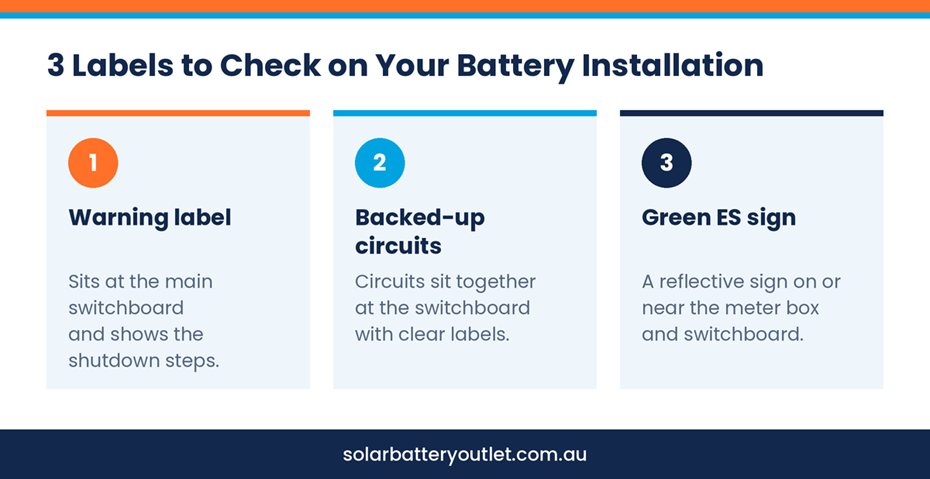
First, a warning label at the main switchboard must show the shutdown procedure. Next, backed-up circuits must sit together at the switchboard with clear labels. Finally, a green reflective “ES” sign must appear on or near the meter box and switchboard.
Emergency crews rely on the ES sign to know a battery is on site. In addition, the CER introduced new photo requirements from 1 March 2026 to improve labelling compliance.
Feature 7: An Accredited Installer and Ongoing Support
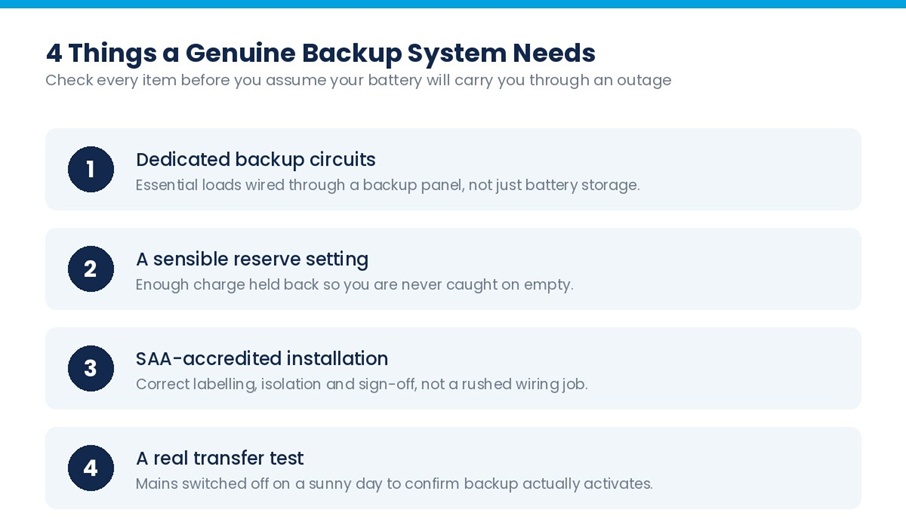
A certified battery still needs a skilled installer. The Cheaper Home Batteries Program requires installation by a Solar Accreditation Australia (SAA) accredited installer. That installer must hold a battery endorsement. By certifying the job, the installer confirms it is safe and eligible. Furthermore, the CER can declare installers ineligible if their installations repeatedly fail.
When you shortlist the best solar battery installer, ask these questions:
- Are you SAA accredited with a battery endorsement?
- Which CEC-listed model do you recommend, and why?
- Where will the battery go, and does the location meet AS/NZS 5139?
- How will you label the system and show me the shutdown steps?
- What warranty, monitoring and support do you provide?
Support matters after installation too. Register your product, keep your documents and watch for recall notices. As of December 2025, the CER reported one recalled eligible product. That recall involved an energy controller, not a battery. You can check current notices on the ACCC’s Product Safety Australia recalls register.
Your Home Solar Battery Safety Checklist
Use this home solar battery safety features checklist during every quote. A reputable solar battery company will answer each point with documents, not just promises.
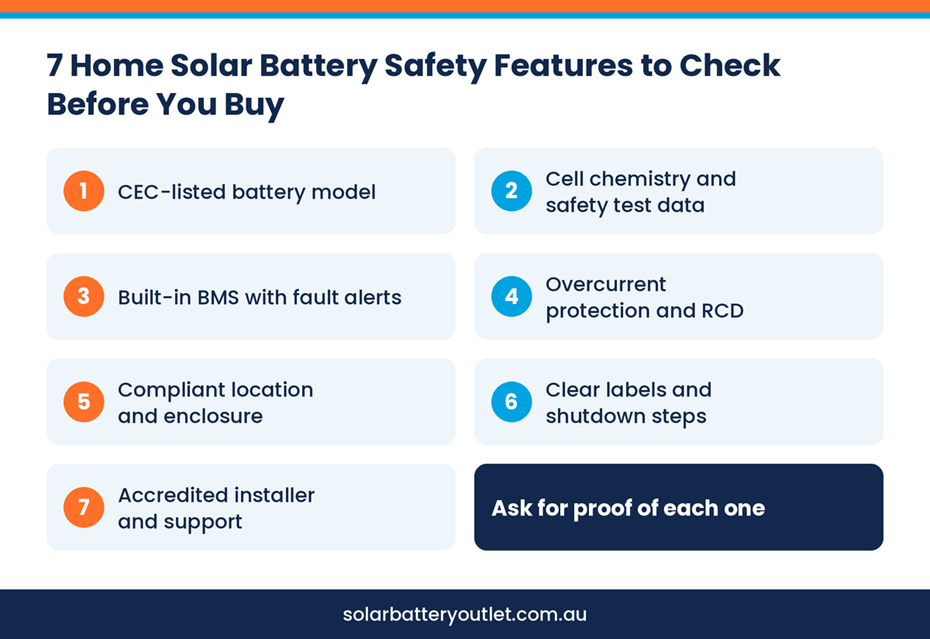
Ask for model numbers, certificates and installation photos. Then compare quotes on safety as well as price.
What to Do If Your Battery Shows Warning Signs
Fire and Rescue NSW advises against restarting a damaged system. Damage can include impact, fire or water ingress, including flooding. If your system shows damage:
- Do not restart the system.
- Follow the shutdown procedure, but only if it is safe to do so.
- Contact the manufacturer or your installer for an inspection.
In an emergency, evacuate immediately and call Triple Zero (000). Tell the operator the property has a battery energy storage system. Stay out until authorities give the all-clear. If smoke or chemicals affect anyone, seek medical help.
Talk to Solar Battery Outlet About Battery Safety
Choosing a battery involves more than capacity and price. Live in Liverpool, Bankstown or Mudgee? Our team can explain the home solar battery safety features behind each option. As a NSW-based solar battery company, we can explain certification, location requirements, and labelling in plain language. Contact Solar Battery Outlet today to discuss your home and your options.
Frequently Asked Questions About Home Solar Battery Safety Features
Look for CEC listing, manufacturer safety data, a battery management system and electrical protection. Also check for a compliant location, clear labelling and an accredited installer. Together, these features cover the battery, the wiring and the installation.
Chemistry affects how a battery behaves under fault conditions. However, any lithium-ion chemistry can fail under abuse or poor installation. Therefore, ask for certification and safety test documentation.
Check that the model appears on the Clean Energy Council approved batteries list. Listed batteries meet IEC 62619:2017 plus extra CEC requirements. The installation must also comply with AS/NZS 5139, and Amendment 1 applies in NSW.
AS/NZS 5139 restricts battery locations. Fire and Rescue NSW advises a cool, ventilated, low-traffic area away from entries and exits. Your accredited installer must assess your site and explain any restrictions.
Yes. The CER’s inspections found no issues with the battery itself. However, they rated 62.28% of installations substandard and 0.76% unsafe. Choosing the best solar battery installer therefore matters as much as choosing the battery.
Do not restart it. Follow the shutdown procedure only if it is safe, then contact your installer or the manufacturer. In an emergency, evacuate and call Triple Zero (000).
Disclaimer: This article provides general information only. It is not electrical, fire safety, legal, or financial advice. Battery safety requirements depend on your battery model, property and state or territory rules. Standards, program settings and inspection data change over time. The figures quoted here come from a sample of installations, not every installation. No battery system is risk-free, and this article does not guarantee any outcome. Information is current as at 10 October 2026. Always seek personalised advice before making a purchasing decision.