Electricity bills keep climbing across Australia in 2026. Feed-in tariffs keep falling in nearly every state. This gap between grid prices and solar export rates is growing. That’s why more homeowners are turning to battery storage.
Choosing the best solar batteries in Australia for saving money on electricity bills now matters more than ever. Rebates are still generous, but they shrink every six months. This guide breaks down which batteries perform best in 2026, what households are actually saving, and how to avoid overpaying. We built it from official government data and independent battery scorecards, with links to the sources below — not sales brochures.
Why Battery Storage Matters More in 2026
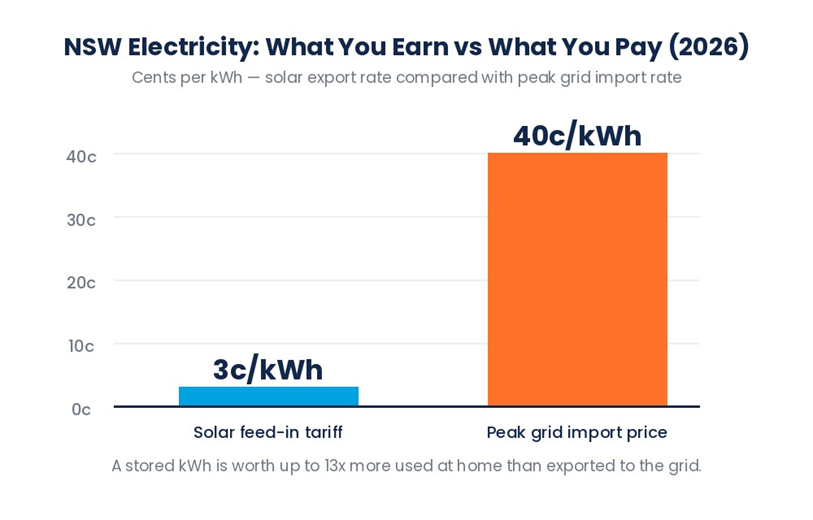
Australian electricity prices are not slowing down. The ACCC’s December 2025 report found residential electricity prices rose 6% across the National Electricity Market in 2025. Meanwhile, solar feed-in tariffs keep sliding lower. In NSW, the standard buyback rate dropped from 4c to 3c per kilowatt-hour from 1 July 2026.
Export a kilowatt-hour to the grid and you earn a few cents. Buy it back at night and you can pay ten times more. This value gap is the real engine behind battery savings. A solar battery lets you store cheap daytime solar power. Use it after sunset instead of selling it cheaply and buying it back at a premium. The chart below shows just how wide that gap has become in NSW during 2026.
The Best Solar Batteries in Australia for 2026
Not every battery suits every home. Independent reviewers assessed performance, warranty terms, safety and expandability for the 2026 season. According to Solar Choice’s 2026 Battery Scorecard, the strongest performers this year include GoodWe, Enphase, Alpha ESS, Sigenergy and Sungrow. Each earns its place for different reasons.
- Sigenergy SigenStor suits homes that want a modular system they can expand later.
- Tesla Powerwall 3 remains popular for its smart app, and it can provide backup power when installed with backup set up.
- Sungrow and Alpha ESS offer strong value for money on mid-size homes.
- GoodWe’s newer modular range suits budget-conscious retrofits.
- Enphase batteries pair well with existing microinverter solar systems.
Picking the right battery is only half the job. The solar battery company installing it decides whether you get proper sizing, honest advice and paperwork done correctly. A brilliant battery installed too small, or by an unaccredited installer, will underperform no matter how good the brand is. Always confirm your installer holds current SAA accreditation before signing anything.
How Much You Can Actually Save
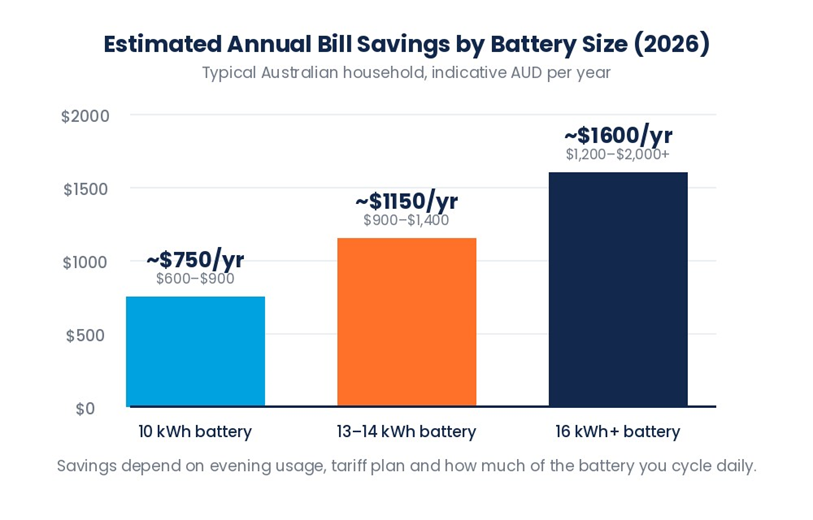
Savings vary a lot by household. As a rough guide only, based on [add source] and typical NSW tariffs, a well-sized 10kWh battery may save around $600 to $900 a year, 13–14kWh around $900 to $1,400, and 16kWh-plus around $1,200 to $2,000, depending on your evening usage, tariff and VPP. Your quote will show an estimate for your home.
Payback periods have shortened as prices fall and rebates apply. Battery payback periods vary depending on installation cost, household electricity usage, tariff structure, available incentives and battery performance. Your installer should provide an estimate based on your individual circumstances. Homes with high evening use, an electric vehicle, or a Virtual Power Plant (VPP) agreement often break even faster. If you join an eligible VPP, the NSW Peak Demand Reduction Scheme may add an extra incentive (the amount depends on your battery size and current scheme rules). This can stack on top of the federal rebate.
Run your own numbers before committing. A battery only saves real money when it replaces electricity you would otherwise buy at peak rates.
The Federal Rebate: Still Worth It in 2026?
The federal Cheaper Home Batteries Program remains the biggest lever for cutting upfront cost. It still gives eligible batteries an upfront discount, funded through small-scale technology certificates rather than a cheque you wait for. The amount depends on the battery’s usable size and the current STC rate. Your installer applies the discount directly to your quote.
The catch is timing. The STC factor that sets your rebate value steps down every six months through to 2030. It dropped from 8.4 to 6.8 STCs per usable kilowatt-hour on 1 May 2026, and it will keep falling. Larger batteries above 14kWh now receive a tapered rate on the extra capacity.
None of this means you should rush. We covered this timing question in our guide on why 2026 is a turning point for solar batteries in Australia. The smarter question is not how fast you move. It’s whether your home, solar system and usage pattern are actually ready. A rebate saving of a few hundred dollars means little if you end up with the wrong battery size.
For the current rebate rate and eligibility rules, check the official Cheaper Home Batteries Program page on the Department of Climate Change, Energy, the Environment and Water website, since figures are updated as the STC factor steps down.
How to Choose the Right Battery for Your Home
Start with your electricity bills, not the battery brand. Look at how much power you use after the sun goes down. A family running the oven, dishwasher and air-conditioning from 5pm needs a bigger battery. A household that’s out most evenings needs less.
Next, check your solar system’s age and output. A battery charges from your panels, so a tired 10-year-old system limits how much you can store. Confirm your installer’s SAA accreditation directly, rather than taking their word for it.
The Clean Energy Council publishes an approved battery list, and Solar Accreditation Australia (SAA) lists accredited installers. You can check both yourself. Finally, check your eligibility for the federal rebate on the government’s Cheaper Home Batteries Program page. Requirements around installation and battery size do change.
A well-sized battery, fitted by an accredited installer, can deliver real savings. The marketing on the box doesn’t.
Frequently Asked Questions
1. What is the best solar battery in Australia in 2026?
There is no single best battery for every home. Solar Choice’s 2026 Battery Scorecard rates GoodWe, Enphase, Alpha ESS, Sigenergy and Sungrow among the top performers, and Tesla Powerwall 3 remains a popular choice. The right choice depends on your budget, solar system size and evening electricity use.
2. How much can a solar battery save on electricity bills?
As a rough guide, savings may range from about $600 to $2,000 a year, depending on battery size, your tariff and how much power you use after sunset. Your results will vary. Larger batteries paired with high evening usage generally deliver the biggest annual savings.
3. Is the federal battery rebate still available in 2026?
Yes. The Cheaper Home Batteries Program still discounts eligible batteries by around 30%, though the rebate rate steps down every six months until 2030.
4. How long does a solar battery take to pay for itself?
Payback often falls around seven to nine years, but it depends on your price, usage, tariff and rebates. Homes with high evening usage, an EV, or a VPP agreement often pay back faster.
5. Do I need a big battery to save money?
Not necessarily. A correctly sized battery matched to your evening usage saves more, on average, than an oversized one that never fully cycles each night.
Get a Free, No-Obligation Battery Quote
Ready to see what a solar battery would actually save on your bills? Solar Battery Outlet gives free, no-obligation quotes for homeowners across Liverpool, Bankstown and Mudgee. We check your bills and assess your existing solar system. Then we recommend a battery size that matches your real usage, not the biggest box we can sell.
Call 1800 000 777 or visit solarbatteryoutlet.com.au to get started.
Disclaimer
This article is general information only and does not constitute financial, legal or personalised energy advice. Savings figures, rebate amounts and payback periods are estimates. They’re based on publicly available data and typical household usage, so your actual results will vary. Battery pricing, rebate rates and feed-in tariffs change regularly. They may differ from the figures shown here by the time you read this. Always seek personalised advice before making a purchasing decision. This content does not constitute an offer. Nothing here should be read as a guarantee of savings, performance or rebate eligibility.
