

The Australian energy landscape has shifted dramatically. With rising electricity tariffs and the introduction of sophisticated grid-balancing incentives, the math behind home energy storage has evolved. For homeowners in NSW and across the country, the question is no longer just “Does it work?” but rather, “How fast does it pay for itself?”
In this guide, we break down the financial reality of solar battery storage in 2026 and whether the elusive five-year payback period is finally within reach.
The 2026 Energy Climate: Why the Math Changed
In previous years, solar batteries were often viewed as a luxury for the eco-conscious or those seeking off-grid independence. However, three major factors in 2026 have accelerated the Return on Investment (ROI):
- The Rise of VPPs (Virtual Power Plants): Programs like the NSW Battery Incentive now offer upfront discounts and ongoing grid-sharing credits.
- Time-of-Use (ToU) Arbitrage: With peak electricity prices occurring between 5 PM and 9 PM, discharging a battery during these hours saves significantly more than selling solar back to the grid for a measly feed-in tariff.
- Hardware Efficiency: Modern lithium-iron-phosphate (LFP) batteries now boast 90%+ round-trip efficiency and longer cycle lives.
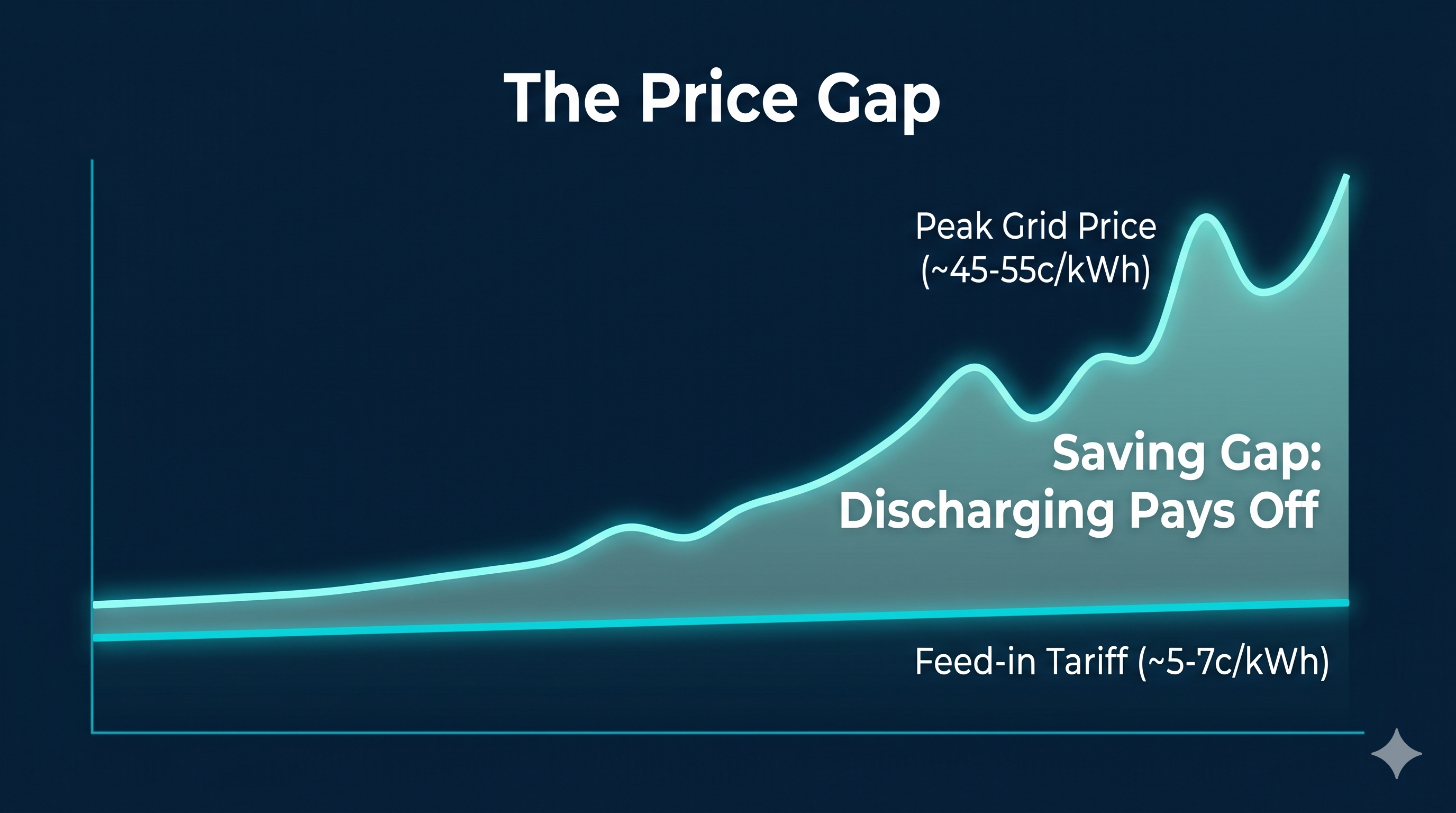
The 2026 Energy Gap: Why storing your own power is now 8x more valuable than selling it back.
Can You Hit the 5-Year Payback Mark?
The “Holy Grail” of solar investment is a five-year payback. While the national average still hovers around 7–9 years, specific conditions in 2026 make a 5-year window possible for many households.
The “Perfect Storm” for 5-Year Payback:
- High Self-Consumption: You use a lot of energy in the evening (AC, cooking, EV charging).
- Incentive Stack: You combine the federal STC (Small-scale Technology Certificate) with state-specific rebates.
- Strategic Location: In high-density residential hubs such as Liverpool or Bankstown, where grid demand is high, VPP participation rates are often more aggressive, offering higher “event” credits.
The Calculation (A 10kWh System Example):
- Upfront Cost (Post-Incentive): ~$8,500 – $10,000
- Annual Savings (Bill Offset): ~$1,400
- Annual VPP Earnings: ~$400 – $600
- Total Annual Benefit: ~$1,900
- Payback Time: ~4.7 to 5.2 Years.
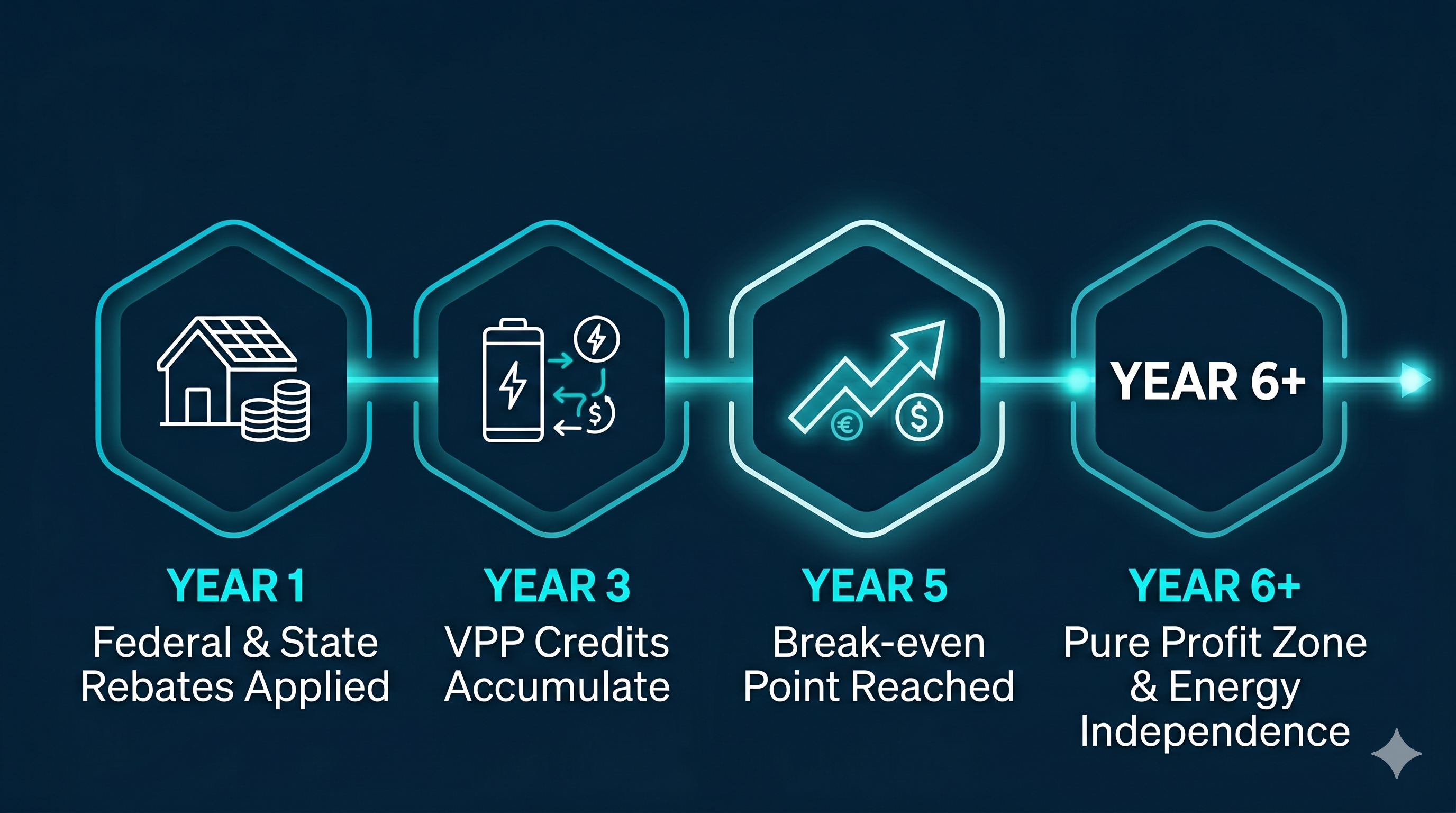
5-Year Roadmap: From Investment to Pure Profit and Energy Independence.
Regional Spotlight: Solar Battery in Liverpool and Bankstown
The Western Suburbs of Sydney have become a primary focus for energy efficiency. If you are looking for a solar battery in Liverpool, you are positioned in a zone with excellent solar irradiance and a high concentration of retailers competing for VPP enrollment.
Similarly, residents seeking a solar battery in Bankstown benefit from local council initiatives and a network of installers specializing in high-capacity systems for larger family homes. Because these areas often experience high summer temperatures, the ability to run air conditioning via battery storage during peak evening hours—without hitting the grid—is a massive financial win.
Navigating the NSW Battery Incentive (2026 Update)
The current incentive structure is the “secret sauce” for a 5-year payback. Unlike old grants that were flat rebates, the 2026 model rewards predictability.
- Upfront Discount: Most households receive between $1,600 and $2,400 off the battery price at the point of sale.
- VPP Enrollment: To get the full incentive, you must agree to let the grid “borrow” a small percentage of your battery during extreme demand peaks. In exchange, you receive a secondary payment every year.
By integrating a solar battery in Australia into these smart-grid programs, you aren’t just buying a box for your wall; you are investing in a micro-utility.
Maintenance and Longevity: Protecting Your ROI
To ensure your battery actually reaches that 5-year payback and continues to provide value for another decade, consider the following:
- Thermal Management: Batteries in hotter climates, like Western Sydney, should be installed in shaded, well-ventilated areas. Extreme heat can degrade battery health, slowing your ROI.
- Software Monitoring: Use your app to track “Cycle Life.” Modern systems allow you to prioritize either “Backup Power” (keeping the battery full for blackouts) or “self-consumption” (using it every day to save money). For the fastest payback, Self-Consumption is the priority.
- Warranty Check: Ensure your installer offers a 10-year performance warranty. If a battery fails in Year 4 and isn’t covered, your ROI is wiped out.
The Verdict: Is it Worth It?
In 2026, the financial case for a solar battery in Australia is stronger than it has ever been. While 5 years requires a combination of high energy usage and smart incentive participation, a 6-to-7-year payback is now the standard for almost everyone.
If you live in high-demand areas and are looking for a solar battery in Liverpool or Bankstown, the local competition among installers and specific grid incentives make this the ideal year to transition.
Summary of the 2026 Math:
- Traditional Payback (Pre-2024): 10-12 Years.
- Modern Payback (With VPP & Rebates): 5-7 Years.
- System Lifespan: 12-15 Years.
The “Solar+Battery” combo is no longer a “feel-good” environmental choice; it is a calculated, strategic financial move to protect your household from the volatility of the Australian energy market.
| Ready to see your custom payback period? At Solar Battery Outlet, we handle the full process—securing your federal rebate and NSW VPP incentive, providing SAA-accredited installation, battery backup payback guide, and managing your VPP enrollment—ensuring you reach your 5-year payback without leaving a cent on the table. GET A 2026 SOLAR BATTERY QUOTE Call us: 1800 000 777 |
| About Solar Battery Outlet: We are a Liverpool-based solar battery installer, part of GWM Group Pty Ltd, servicing homes across South West Sydney, Bankstown, Campbelltown, and the greater NSW region. SAA-accredited electricians do all installations. We handle all rebate paperwork so you do not have to. |