The Sigenergy vs Sungrow question comes up often for NSW households in 2026. Both brands use lithium iron phosphate (LFP) cells. Both advertise 10-year manufacturer warranties. However, the two systems work differently, and that difference often matters more than any headline specification.
Quick answer: neither brand suits every home. Sigenergy’s SigenStor combines the inverter, battery, and an optional EV charging module on one platform. Sungrow’s SBR pairs 3.2 kWh battery modules with a Sungrow hybrid inverter. Your existing solar system, electrical phase, backup needs, and budget will decide which one fits.
Sigenergy vs Sungrow at a Glance
This guide compares both systems for Liverpool homes. It covers design, capacity, warranty, safety history, backup power and NSW incentives. You can then ask your installer sharper questions before you sign.
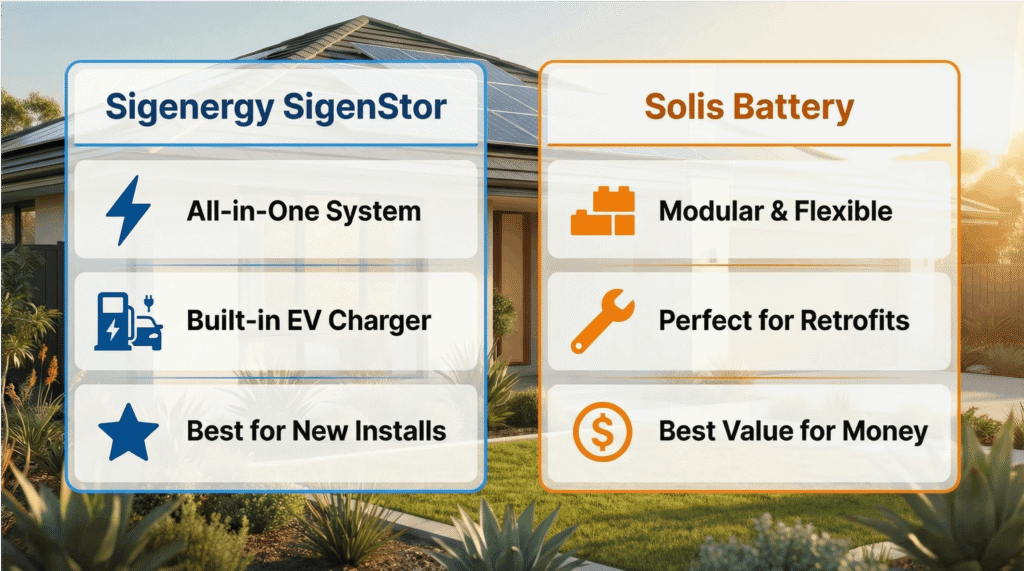
The infographic below summarises the main differences. However, specifications vary by model and phase. Confirm every figure against your written quote and the manufacturer’s datasheet.

How the Two Systems Are Built
Sigenergy SigenStor: One Platform
The SigenStor uses a single energy controller. That controller contains the hybrid inverter and the energy management system. Stackable battery modules then connect to it. Each module offers roughly 5.2 to 8.8 kWh of usable capacity. One controller accepts up to six modules, or five if you add the EV module.
Sigenergy also offers an optional DC EV charging module. Therefore, households planning an electric vehicle can build that option into the same system. For a retrofit, ask your installer how the SigenStor will connect to your existing solar panels and inverter.
Sungrow SBR: Modules Plus a Sungrow Inverter
The Sungrow SBR is a high-voltage LFP battery built from 3.2 kWh modules. A standard stack holds three to eight modules, giving 9.6 to 25.6 kWh. It connects to a Sungrow hybrid inverter, such as an SH-RS model.
As a result, homes with a compatible Sungrow inverter can add the battery without replacing that inverter. Homes with another inverter brand may need a swap. Ask your installer to list that cost as a separate line on the quote.
Capacity and Sizing for Liverpool Homes
Size your battery around your evening electricity use, not around the largest unit available. Liverpool’s hot summers can lift evening air-conditioning use, so check that load first. Your recent bills and smart meter data will show your real pattern.
Sungrow’s 3.2 kWh modules allow small capacity steps. Sigenergy’s larger modules give fewer steps but a higher maximum per controller. Neither approach is better by itself. The right size depends on your usage and budget.
How Rebate Tiers Affect Size
The federal Cheaper Home Batteries Program has used tiers since 1 May 2026. The first 14 kWh of usable capacity receives 100% of the certificate factor. The next 14 kWh receives 60%. Capacity from 28 to 50 kWh receives 15%.

As a result, each extra kWh above 14 kWh earns a smaller rebate share. The rebate value also steps down on a published schedule. Therefore, check the current rate on the Australian Government’s program page before you sign.
The program requires a battery on the Clean Energy Council-approved battery list. On-grid batteries must also be VPP-capable, although you do not have to join a VPP. Confirm the exact model on that list.
Warranty Terms: Read the Fine Print
Ten Years Is Not the Whole Story
Both brands advertise 10-year manufacturer warranties. However, each warranty also sets performance limits. Sigenergy’s terms promise either 70% capacity retention or a minimum energy throughput, whichever comes first. Sungrow’s terms also link cover to throughput limits. Published figures for Sungrow vary between sources and document versions.
Therefore, ask for the current warranty document for the exact model on your quote. Check who handles a claim: the installer, the retailer or the manufacturer’s Australian service partner. Our guide to solar battery warranties explained covers years, cycles and throughput in more detail.
Australian Consumer Law Sits Alongside the Warranty
A manufacturer warranty is an extra promise. It does not replace your consumer guarantees under the Australian Consumer Law. Those guarantees include acceptable quality and a product that matches its description. The ACCC says warranties cannot remove those basic rights, and the rights can outlast a warranty period.
In practice, keep your contract, invoice and compliance paperwork together. If a problem arises, those documents help you explain what you bought.
Safety and Recall History
What the 2025 Sigenergy Recall Covered
In November 2025, the ACCC published a voluntary recall. It covers Sigenergy’s single-phase SigenStor 8, 10 and 12 kW energy controllers. The affected units use a quick-connect AC plug. The ACCC notice says those plugs may overheat and pose a fire risk. Owners receive a free replacement controller with an updated plug, arranged through their retailer or Sigenergy’s Australian service partner.
What Sigenergy and the Regulator Said
Sigenergy said the issue stems from incorrect installation practices rather than a product defect. The Clean Energy Regulator said the recall affected about 100 inverters. It also said the recall showed existing oversight systems identify and manage safety issues quickly.
Check Any Brand Before You Buy
Recalls can affect any battery or inverter brand. Search the Product Safety Australia recall database for your exact model. Then ask your installer who completes the AC connections and how they follow the manufacturer’s installation instructions.
Backup Power During NSW Outages
Both systems can support backup power, but output depends on configuration. Your electrical phase matters. A single-phase home and a three-phase home will see different options. The paired inverter model also changes the figure.
Backup also needs the right circuits and settings. Ask which circuits stay live during an outage and for how long. Then request the backup output in writing for the exact battery and inverter pairing.
NSW Incentives and VPP Compatibility
NSW also offers a separate VPP incentive. NSW Climate and Energy Action describes an upfront payment. You receive it when you connect an eligible battery to a VPP provider. The amount depends on the capacity you make available, up to 28 kWh. It also varies by provider and contract.
However, VPP providers choose which battery models they support. Your electricity retailer must also offer VPP access. Therefore, check both before you buy. Liverpool homes typically connect through Endeavour Energy’s network, so ask your installer about its connection requirements.
Which Battery Suits Which Liverpool Household?
Sigenergy May Suit You If
- You are installing new solar and a battery together.
- You want one integrated platform instead of matching separate parts.
- You plan to add an electric vehicle and want an integrated charging option.
- You expect to expand your capacity later.
Sungrow May Suit You If
- You already run a compatible Sungrow hybrid inverter.
- You prefer smaller 3.2 kWh capacity steps.
Consider two Liverpool examples. One family owns a Sungrow hybrid inverter and has no EV plans. The SBR path may keep their project simpler. Another family is installing new solar and expects to buy an EV next year. The SigenStor’s integrated design may suit them better. These examples are illustrative, not recommendations.

Questions to Ask Before You Sign a Contract
These steps are precautions we recommend, not legal requirements. They help you compare quotes fairly.
1. Ask for an itemised written quote. It should name the battery model, usable kWh, inverter model and backup circuits.
2. Confirm the payment schedule and deposit terms in writing before you sign.
3. Request the warranty documents and the claims process for each component.
4. Check the installer’s accreditation. Our guide explains how to check if a solar battery installer is SAA accredited.
5. Ask who arranges grid connection approval and VPP onboarding, and what each step costs.
Also remember that, under the NSW Peak Demand Reduction Scheme, salespeople cannot knock on your door uninvited. Treat any unsolicited approach with caution.
Frequently Asked Questions
Is Sigenergy or Sungrow better for NSW homes?
Neither brand wins for every home. Sigenergy suits households that want an integrated system with an optional EV charging module. Sungrow suits homes that already run a compatible Sungrow inverter or want small capacity steps. Your inverter, phase, backup needs, and written quote should decide.
Can I add a Sungrow SBR to my existing solar system?
Only if your inverter is a compatible Sungrow hybrid model. The SBR connects to a Sungrow hybrid inverter. With another inverter brand, your installer may recommend an inverter swap or a different battery. Ask for any swap cost as a separate quote line.
Do both batteries qualify for the Cheaper Home Batteries Program?
Eligibility depends on the exact model. The battery must appear on the Clean Energy Council approved list. On-grid systems must also be VPP-capable. Confirm each point on your quote before you sign.
Does the Sigenergy recall affect every SigenStor?
No. The ACCC recall covers single-phase 8, 10 and 12 kW SigenStor energy controllers with quick-connect AC plugs. Ask your installer to confirm your model and connector status. Check Product Safety Australia for current details.
What should I ask before signing a solar battery contract?
Ask for an itemised quote, warranty documents, payment terms and installer accreditation details. Also ask who handles claims and grid connection approval. Compare at least two written quotes. Take time to review each one.
Get Guidance Before You Sign
Comparing Sigenergy and Sungrow takes more than a spec sheet. Your inverter, phase, usage, and contract terms all shape the right choice. Solar Battery Outlet can walk you through both systems and explain your quote line by line.
If you are comparing solar batteries in Liverpool, call Solar Battery Outlet before you sign a battery agreement. Our team will review your solar setup, answer your warranty, backup and installation questions, and explain your options.
Disclaimer: This article provides general information about Sigenergy and Sungrow home batteries for NSW households. It does not replace legal, technical or purchasing advice. Specifications, warranties, rebates and incentive rules change over time, so verify current details with manufacturers, government sources and your installer. Always seek personalised advice before making a purchasing decision.