

Warranties, rebates and CEC rules explained — what NSW homeowners need to know before sizing up.
Many NSW homeowners ask the same question once they compare battery quotes. Can you install a 20kWh battery on a 6.6kW solar system? The short answer is yes, in most cases. The real answer depends on three things. How your inverter is wired matters. What the Clean Energy Council allows matters too. And your rebate eligibility matters most of all. This guide breaks down the technical rules and the rebate rules together. That way, you know exactly what is possible before you sign a quote. We also cover the questions worth asking any installer first.
The Short Answer: Yes, With Conditions
Yes, you can generally install a battery with more storage capacity than your solar system’s rating suggests. A 6.6kW solar system paired with a 20kWh battery is a common setup across NSW. Nothing in Australian electrical standards bans this pairing outright. That said, three things decide whether it makes sense. First, your inverter’s charge rate limits how fast the battery fills. Second, Clean Energy Council rules govern your panel-to-inverter ratio, not your battery-to-panel ratio. Third, your daily solar output decides how much of that extra capacity you can fill for free. A bigger battery without enough solar simply means more nights topping up from the grid. That extra grid use reduces your overall savings.
kWh vs kW: Why This Question Confuses People
Part of the confusion comes from mixing up two different units. Your solar system is rated in kilowatts, or kW. This measures generation power at any given moment. Your battery is rated in kilowatt-hours, or kWh. This measures total stored energy instead. These numbers are not directly comparable, even though people often compare them anyway. A 6.6kW solar system does not automatically cap a 20kWh battery. Instead, what matters is how many kWh your panels produce across a full day. A well-positioned 6.6kW system in Sydney can generate 25 to 28kWh on a sunny day. That is comfortably enough to fill a 20kWh battery, with some left over. On a cloudy winter day, that same system might only produce 12 to 15kWh. The battery then fills only partially. Understanding this distinction helps you set realistic expectations. There is no real mismatch to worry about here.
DC-Coupled vs AC-Coupled: Why It Changes Your Options
How your battery connects to your system changes what “bigger” really means. A DC-coupled battery sits between your panels and your inverter. It draws power directly, before conversion happens. Because of this wiring, DC-coupled systems stay tightly linked to your inverter’s specifications. An AC-coupled battery, meanwhile, connects on the household side of the meter. It uses its own dedicated inverter or charger. This setup is largely independent of your original solar inverter’s rating. As a result, AC-coupled batteries usually offer more flexibility for extra storage. Retrofitting an existing solar system with a battery is booming in NSW this year. These retrofits typically use AC coupling for exactly this reason. It sidesteps most of the compatibility questions around older inverters. Ask your installer which configuration suits your setup. The answer changes both your options and your final quote.
The CEC’s 133% Rule, and Why a Battery Changes It
Australia’s oversizing rules matter here too, even though they govern panels and inverters, not batteries directly. For a standard grid-connected system without storage, CEC guidelines cap your panel array at 133% of your inverter’s rated output. A 5kW inverter, for example, tops out at roughly 6.6kW of panels. Add a compliant, DC-coupled battery, and that cap generally lifts. You can then size your panels closer to the inverter manufacturer’s full rated input. That figure is often 150% to 200% of the inverter’s AC output. This matters for the reverse question too. A bigger battery gives your system more room to store solar power. Otherwise, that extra power gets clipped at peak generation and wasted. This rule sits under Solar Accreditation Australia’s installation guidelines. Manufacturer limits still apply on top of it. Always confirm the exact figure with your installer, since it varies by brand.
Does the Federal Rebate Require a Minimum Solar Size?
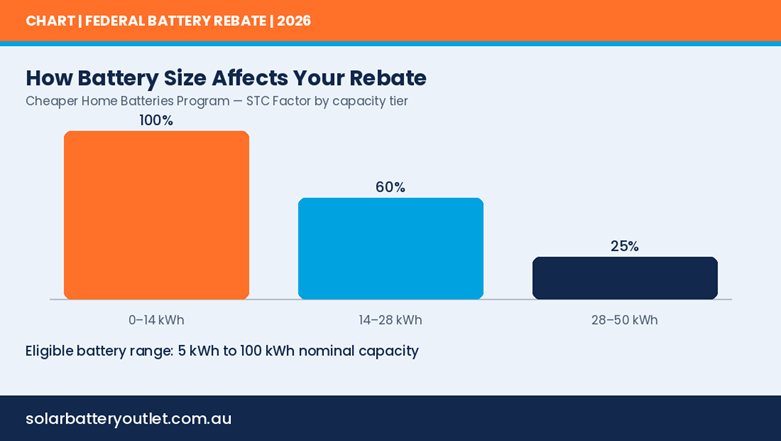
No, it does not. According to DCCEEW, the federal department behind the scheme, the Cheaper Home Batteries Program sets no minimum solar system size. You can add an eligible battery to a system of any size. You can also install one alongside brand-new panels. The only sizing rule that matters is the battery’s own capacity. It must sit between 5kWh and 100kWh of nominal capacity to qualify. Rebate value uses a tiered STC Factor, with full support on the first 14kWh. Support then tapers down for capacity beyond that threshold. So, technically, a 20kWh battery on a modest 3kW solar system still qualifies for the rebate. Whether that combination makes financial sense is a separate question entirely.
Four Questions to Ask Before Sizing Up
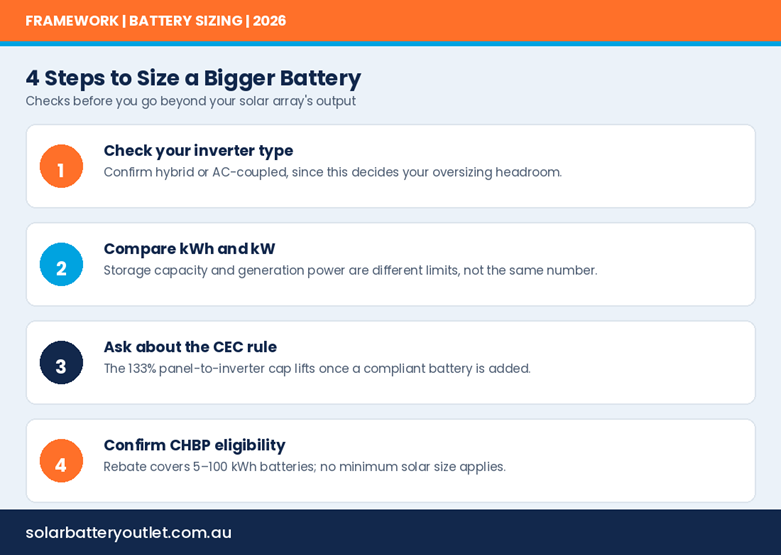
Before committing to a bigger battery, work through four checks with your installer. Confirm your inverter type first, since hybrid and AC-coupled systems handle oversizing differently. Next, compare kWh to kW properly, rather than assuming the two numbers should match. Then ask specifically about the CEC’s oversizing allowance for your inverter model. Finally, confirm your chosen battery size still sits inside the 5 to 100kWh rebate window. Running through these checks upfront tends to save homeowners an expensive reconfiguration later.
When a Bigger Battery Makes Sense, and When It Doesn’t
A larger battery earns its cost when your household uses most power in the evening. That is, after the sun stops generating for the day. It also helps homes planning to add more panels later on. The battery is already sized for that future generation. Families expecting an EV, or shifting to work-from-home hours, are good candidates too. On the other hand, a bigger battery makes less sense in one situation. That is when your existing solar barely charges a standard-sized unit already. In that case, you may pay for capacity you rarely fill from solar. You end up topping it up from the grid instead. This quietly erodes the savings a battery is meant to deliver. The better approach is to size the battery around your actual overnight usage first. Then check whether your solar can realistically keep it topped up across every season.
Getting It Right the First Time
Sizing decisions are hard to reverse once a battery is installed and commissioned. Our guide on why 2026 is a turning point for solar batteries in Australia covers this in more depth. Rebate settings and installation rules keep shifting throughout the year. Getting the sizing conversation right now matters more than ever. A reputable installer will ask about your bills, your usage pattern and your future plans first. They should never simply match a battery to your existing panels by default. If you are comparing quotes for solar battery installation in Liverpool, ask for the sizing calculation in writing. Do not accept a verbal estimate alone. That written detail protects you if the system underperforms later. It also gives you a clear record for warranty or rebate purposes.
Not sure what size battery suits your home? Solar Battery Outlet offers free, no-obligation quotes for homeowners across Liverpool, Bankstown and Mudgee. We check your electricity usage, your existing solar output and your inverter specs before recommending a size — never the other way around. Call 1800 000 777 or visit solarbatteryoutlet.com.au to request a quote.
Frequently Asked Questions
Yes. Battery capacity (kWh) and solar generation (kW) are different measurements. A battery can store more energy than your system produces in an hour. It just needs a full day of sunlight to charge completely.
Not directly. Warranty issues usually relate to exceeding your inverter’s rated input, not the battery’s storage size. Check your inverter manufacturer’s oversizing limit first, before you commit to a size.
Yes, provided the battery itself sits within the 5–100kWh eligible range. The Cheaper Home Batteries Program sets no minimum solar system size for eligibility.
Up to 100kWh nominal capacity remains eligible for the federal rebate. Your inverter specifications and your network provider’s export rules may set a lower practical limit.
Many installers recommend sizing for realistic future generation. This especially applies if you plan to add panels within the next few years, since batteries are expensive to resize later.
Disclaimer
This article is general information only and does not constitute personal financial, legal or engineering advice. Battery sizing depends on your specific inverter, wiring, roof space and usage pattern, all of which need an on-site assessment. Rebate rules, STC factors and CEC guidelines referenced here reflect the position at the time of publication and may change without notice. Always seek personalised advice before making a purchasing decision.