
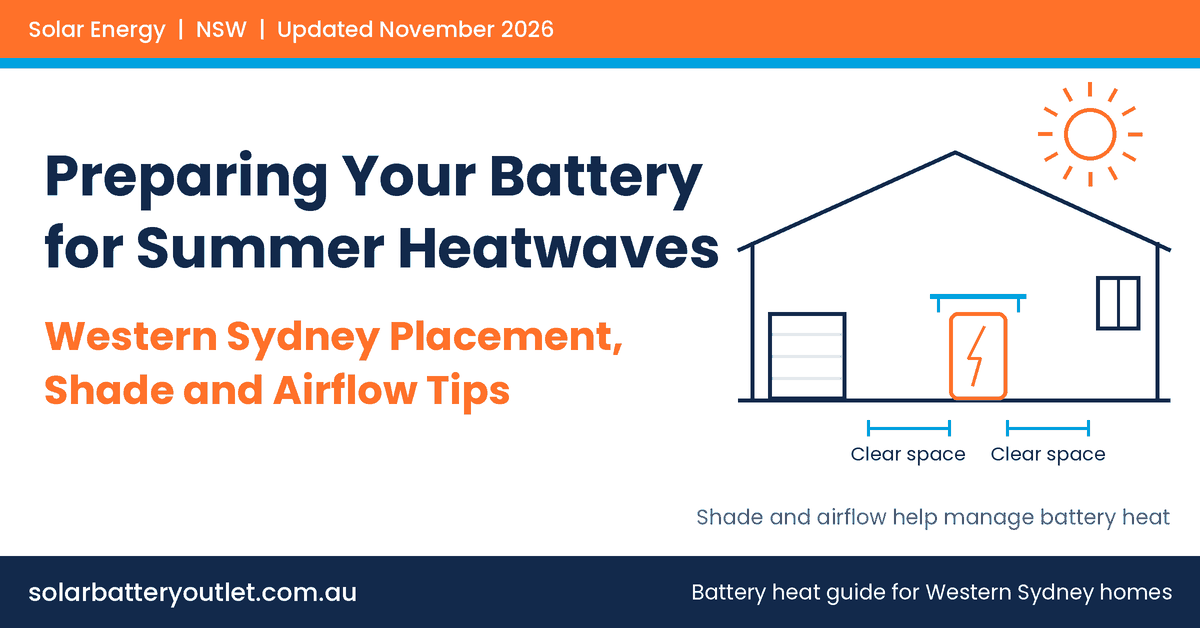
By 5 pm on a January afternoon, a Western Sydney garage can feel like an oven. Your home battery sits in that heat all summer. It protects itself by easing back, and that can change how much stored energy you can use.
This guide explains how heat affects a home battery. It also covers solar battery heatwave preparation and the questions to ask before you sign an installation contract.
Can a Solar Battery Handle a Western Sydney Heatwave?
Short answer: a compliant home battery is built for Australian conditions, but every model has its own temperature limits. When the air gets too hot, the battery or its inverter protects itself. It can slow charging, reduce output or pause until it cools.
Placement, shade and airflow decide how often that happens. So preparation starts with the site, not the settings.
Why Western Sydney Heat Puts Extra Pressure on Home Batteries
Western Sydney University researchers report that warming is felt more intensely in Sydney’s west than in the east. Summers are also lasting longer. That matters for homes in Liverpool and nearby suburbs.
What Counts as a Heatwave?
The Bureau of Meteorology describes a heatwave as three days of unusually hot maximum and minimum temperatures. Hot nights matter for batteries. Brick walls and garages release stored heat well into the evening.
Why the Evening Matters Most
Most households lean on their battery after sunset. That is also when hot walls and garages give back their heat. A battery working hard in a warm space can reach its protective limits sooner.
What Heat Does to a Home Battery
Heat has two effects. In the short term, protective limits can reduce charging and output. Over many years, sustained high temperatures can speed up battery ageing.
Check the operating temperature range on your battery’s datasheet. The manufacturer sets that range, and it differs between models.
Where to Place a Battery to Limit Heat Exposure
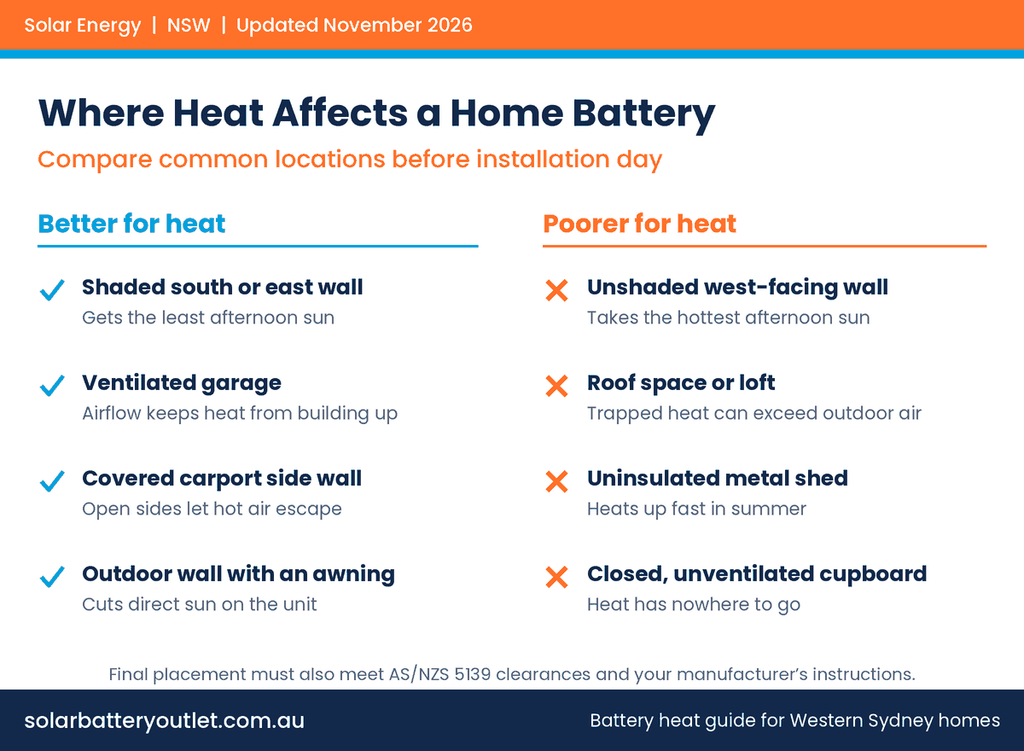
Location does more for battery heat than any app setting. Your installer must follow AS/NZS 5139 and the manufacturer’s instructions when choosing the spot.
Better Locations for Hot Summers
Shaded south- or east-facing walls receive the least afternoon sun. A well-ventilated garage can also work, although garages can trap heat. Ask your installer how air will move through the space.
For outdoor walls, a purpose-built cover or awning can cut direct sun. Shade typically lowers surface temperatures, so it helps even on a mild-looking day.
Locations That Run Hot
- West-facing walls absorb afternoon sun and release heat into the evening.
- Narrow side passages block airflow and hold warm air.
- Spots beside brick, concrete or paving radiate stored heat back at the unit.
- Closed cupboards and uninsulated sheds leave heat nowhere to go.
Keep Clearances Clear
Leave the space your installer specified around the unit. Do not stack boxes on or against the battery. Keep vents free of dust, leaves and cobwebs.
Your Solar Battery Heatwave Checklist
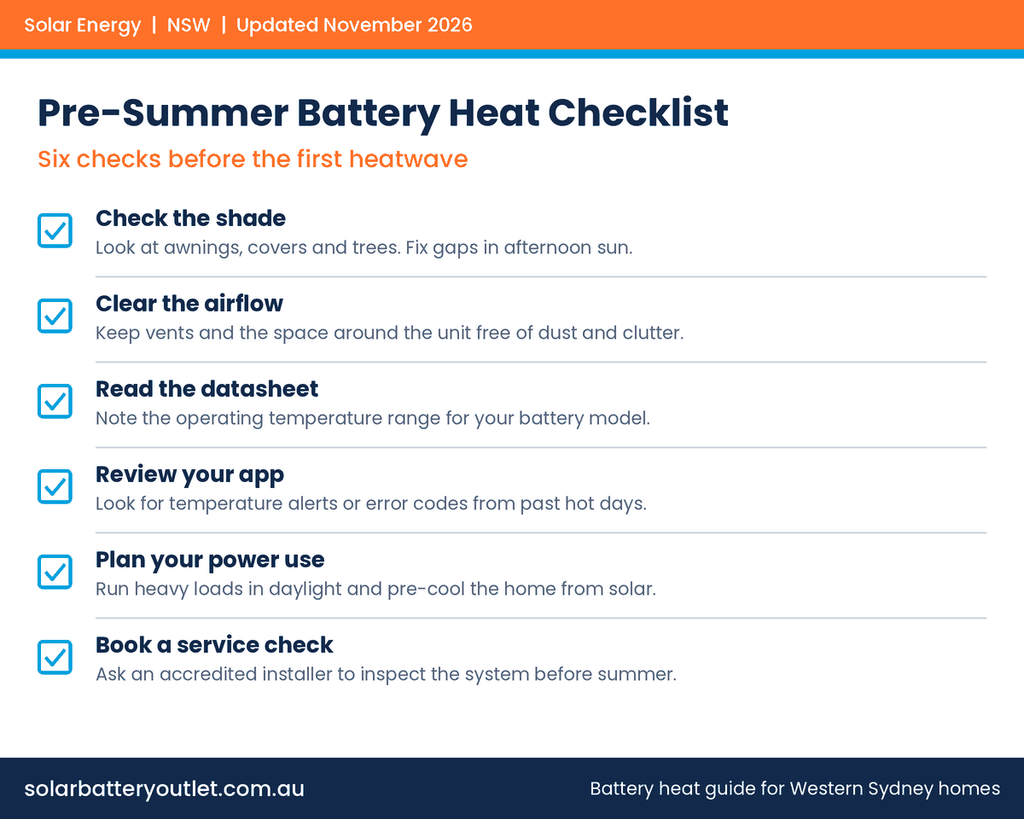
Work through these six checks before the first heatwave arrives.
How to Work Through the Six Checks
Start with shade. Walk past the battery at 3 pm and note where the sun lands. Next, look at airflow. Remove clutter, and brush leaves and dust from vents without opening the unit.
Then read the datasheet and your app history. Look for temperature alerts from last summer. Finally, plan your power use. Running heavy appliances in daylight, when solar generation is high, reduces evening demand on the battery.
A service check completes the list. Only an accredited installer should open or work on the system.
A Simple Example
Suppose your battery sits on a west-facing wall. Open the app at 6 pm on a hot day. If temperature alerts appear, ask your installer about shading or relocation before the next heatwave.
During a Heatwave
- Check the app in the late afternoon and early evening, when heat peaks.
- Expect some warmth. The unit should not feel hot to touch.
- Never cover the battery or spray it with water.
- Leave charge and discharge settings alone unless your installer advises otherwise.
- Keep your internet connection on. Some manufacturers use monitoring data when assessing claims.
Warning Signs
Contact your installer about unusual heat, swelling, odd smells, noises or temperature alarms. If you see smoke or flames, leave the area and call 000.
Heatwaves, Outages and Backup Settings
Heatwaves can strain the electricity network, and outages sometimes follow. Not every battery system provides backup power. It depends on the equipment and how the installer wired it.
Ask whether your system supports backup. If it does, ask how the reserve setting works and how heat could affect it. Keep any changes within your installer’s guidance.
Questions to Ask Your Installer Before You Sign
Heat planning belongs at the quote stage. For solar battery installation in Liverpool, ask the installer to assess sun exposure at your property before proposing a location.
Then put these questions to every installer you compare:
- Where will the battery go, and why? Ask for the reasoning in writing.
- What is the battery’s operating temperature range?
- Does the warranty set installation conditions, such as sun exposure or ventilation?
- Does the installer hold current accreditation for batteries? You can check whether your installer is SAA-accredited before you sign.
- Who handles warranty claims, and what does the process involve?
- When are payments due, and which stage of the job does each payment cover?
The Clean Energy Regulator sets rules for batteries installed under the small-scale renewable energy scheme. Owners must receive written documentation about their battery and installation. Keep it with your contract.
Australian Consumer Law also provides consumer guarantees alongside any manufacturer warranty. Take your time, and do not sign under pressure.
Already Own a Battery in a Hot Spot?
Do not move or enclose the battery yourself. A homemade box can trap heat and may conflict with the manufacturer’s instructions.
Instead, ask an accredited installer to inspect the site. They can recommend shading, ventilation or relocation that meets AS/NZS 5139. Ask how any change affects your warranty, and get it in writing.
Talk to Solar Battery Outlet Before You Sign
Planning a battery for a hot Western Sydney home? Call Solar Battery Outlet on 1800 000 777 before you sign an agreement. Our Liverpool team can talk through placement, shade, airflow and contract terms with you.
A short conversation now can help you ask better questions of every installer on your shortlist.
Solar Battery Heatwave FAQs
Extreme heat can trigger protective limits that slow charging or reduce output. Over years, sustained heat can accelerate ageing. Good placement, shade and airflow reduce the risk. Check your datasheet for the temperature range.
A shaded south- or east-facing wall, or a well-ventilated garage, usually suits hot summers. Your installer must also meet AS/NZS 5139 and the manufacturer’s instructions for your site.
It can be, if the installation follows AS/NZS 5139 and the manufacturer’s instructions. Garages can trap heat, so ask your installer about ventilation and clearances.
It depends on the warranty. Some set installation conditions, such as ventilation. Read the terms before you sign, and ask for answers in writing. Consumer guarantees under Australian Consumer Law apply separately.
Do not change settings or switch it off unless your installer or the manufacturer advises it. If the unit alarms or feels very hot, contact your installer.
Disclaimer
This article provides general information about preparing home batteries for hot weather. It does not replace individual legal, technical or purchasing advice. Battery models, site conditions and warranty terms vary. Always seek personalised advice before making a purchasing decision.
