The appliances that use the most battery power in an Australian home are easy to spot. They include ducted air conditioning, EV chargers, electric hot water, pool pumps and clothes dryers. Together, these loads can drain a home battery in just a few hours. As a result, knowing each appliance’s power draw helps you choose the right solar battery size in 2026. This guide uses 2026 figures from Australian Government and industry sources.
Which Appliances Drain a Home Battery Fastest?
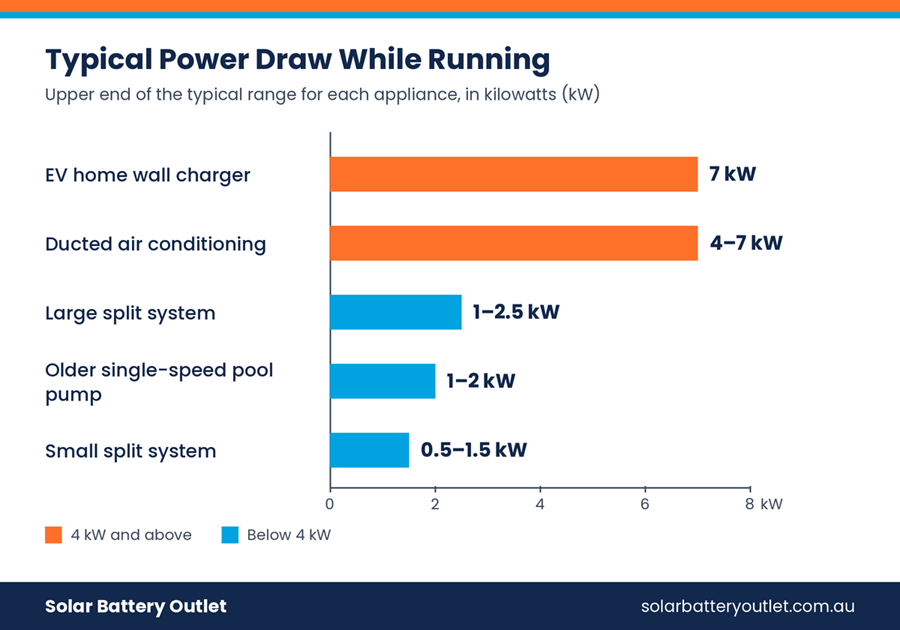
First, here is the short answer. Ranked by power draw while running, the biggest battery drainers are:
- Ducted air conditioning: about 3 to 7 kW while it works hard, depending on the system size.
- EV wall chargers: 7 kW on a standard single-phase home charger.
- Large split systems: about 1 to 2.5 kW in a big living area.
- Older single-speed pool pumps: about 1 to 2 kW for hours each day.
- Electric storage hot water: roughly 6 kWh a day for a typical household.
- Vented clothes dryers: about 2.5 to 4 kWh for each full load.
In short, a few high-draw appliances account for most of the battery drain. The sections below explain each one.
kW vs kWh: How Battery Power Really Works
Two units decide how well a battery runs your appliances. First, kilowatt-hours (kWh) measure stored energy, or capacity. Second, kilowatts (kW) measure how fast the battery can deliver power.
For example, a 10 kWh battery limited to 5 kW can run a 5 kW load for two hours. However, a 7 kW load would exceed that limit. Also, check the usable capacity, because it can sit below the headline figure. Therefore, compare both numbers, not just the kWh rating.
Why Heating and Cooling Use the Most Battery Power
The Australian Government says heating and cooling can use up to 50% of household energy. The exact share depends on your climate zone. Consequently, air conditioning usually tops any appliance list.
Next, consider size. A small split system in a bedroom typically draws 0.5 to 1.5 kW. A larger split in a living area draws about 1 to 2.5 kW. Ducted systems, however, can draw 4 to 7 kW while they work hard.
For example, a 7 kW ducted system could empty a 10 kWh battery in about 1.5 hours. Even at 4 kW, the same battery lasts only about 2.5 hours. These runtimes assume a full battery and no other appliances running.
On the positive side, YourHome says reverse-cycle air conditioners are the most energy-efficient heating and cooling choice. Choosing a correctly sized unit also reduces the load on your battery. In addition, air conditioners carry a Zoned Energy Rating Label. It scores heating and cooling from 0 to 10 stars across three climate zones.
EV Chargers: The Biggest Single Draw
An EV charger is often the largest single load in a home. A dedicated home charger delivers 7 to 22 kW, according to energy.gov.au. Most single-phase homes install a 7 kW unit.
Also, daily energy use depends on how far you drive. The average Australian drives about 33 km a day. Most EVs use 13 to 25 kWh per 100 km. Therefore, a typical daily top-up adds roughly 4 to 8 kWh.
However, the charging rate matters more for battery sizing. At 7 kW, an EV charger would drain a 10 kWh battery in about 1.4 hours. Many owners charge from solar during the day instead. Others use stored solar energy for overnight top-ups.
Electric Hot Water Systems Add a Steady Load
Next, consider water heating. It is the second-largest energy use in most homes. The Australian Government puts it at 15% to 27% of household energy, depending on location.
The average household uses around 120 to 130 litres of hot water a day. Heating 120 litres with a standard electric element takes roughly 6 kWh a day, before standing losses.
A heat pump water heater uses far less electricity. The ACT Government says heat pumps run about 50% to 70% cheaper than gas or standard systems. In addition, you can schedule a heat pump to run on midday solar.
Some homes put electric hot water on a separate controlled-load circuit. As a result, your battery may not power it at all. Ask your installer to confirm which circuits connect to your battery.
Pool Pumps Run for Hours Every Day
Similarly, pool pumps deserve a close look. For the 1.1 million Australian homes with a pool, the pump can be the single largest electricity user. Energy.gov.au says it can make up around 18% of the electricity bill.
Real-world data backs this up. Ku-ring-gai Council’s pool pump rebate program recorded older single-speed pumps averaging 7.02 kWh a day. New variable-speed pumps averaged 2.19 kWh.
Energy.gov.au also reports that a 5-star variable-speed pump uses 55% less energy than a 1-star single-speed pump. Since 2022, mandatory energy labels help you compare models. Finally, pool pumps run on timers, so you can schedule them for sunny hours. Also, heat your pool only when needed.
Clothes Dryers, Fridges and Other Everyday Appliances
Dryers rank high, too. A vented dryer uses roughly 2.5 to 4 kWh per full load. A heat pump dryer often uses half to a third of that. YourHome says dryers can account for up to 15% of energy use in heavy-use households.
Fridges and freezers never switch off. They account for around 10% of household energy bills, according to energy.gov.au. Because they run all night, they draw steadily from your battery after sunset.
TVs and home entertainment equipment add around 5% on average, says YourHome. Meanwhile, line drying costs nothing, so save the dryer for wet days.
Standby power adds up as well. Many appliances keep using energy when switched off at the machine. Energy.gov.au suggests switching most appliances off at the wall, except fridges and freezers.
How to Match a Solar Battery to Your Biggest Appliances
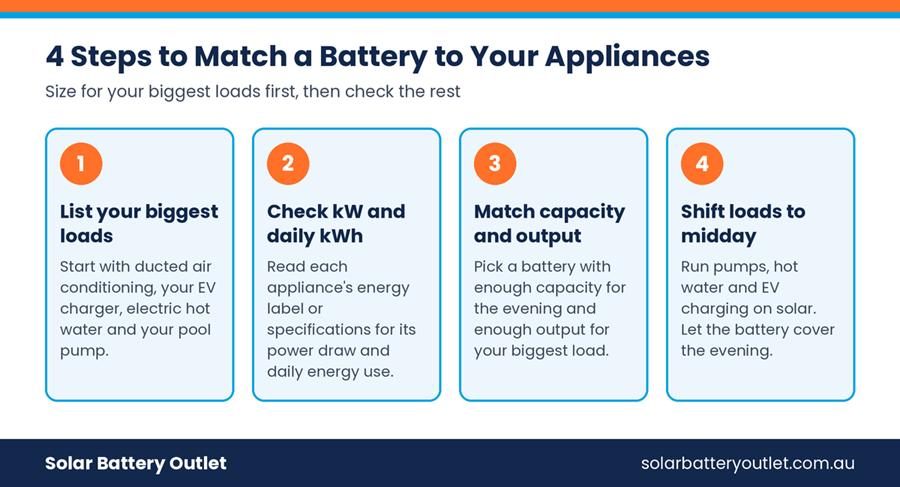
To finish, follow these four steps to size a battery around your real appliance loads.
- List your biggest loads. Start with ducted air conditioning, your EV charger, electric hot water and your pool pump.
- Check each appliance’s kW rating and daily kWh. Read its energy label or specifications.
- Match capacity and output. Choose enough kWh for the evening and enough kW for your biggest load.
- Shift flexible loads to midday. Run pumps, hot water and EV charging on solar, then let the battery cover the evening.
Frequently Asked Questions
Heating and cooling use the most electricity in most Australian homes. Energy.gov.au says they can account for up to 50% of household energy. Water heating comes second at 15% to 27%. In homes with a pool, the pool pump can rival both.
Yes, but runtime varies. A small split drawing of 0.5 to 1.5 kW may run roughly 6 to 18 hours on a battery with 10 kWh usable before inverter losses and backup reserve settings. A ducted system drawing 4 to 7 kW may drain that battery in about 1.5 to 2.5 hours.
A standard 7 kW home charger draws 7 kW while charging. That rate would empty a 10 kWh battery in about 1.4 hours. Many owners therefore charge from solar during the day instead.
Older single-speed pumps do. Ku-ring-gai Council recorded 7.02 kWh a day for older pumps, against 2.19 kWh for new variable-speed models. Scheduling your pump for sunny hours reduces its battery use.
It depends on your daily kWh, your evening use and your largest loads. Add up the appliances you want to run after sunset. Then check the battery’s capacity in kWh and its output in kW. A licensed installer can confirm the right size.
Not sure which appliances your battery should cover? Call Solar Battery Outlet on 1800 000 777 for a no-obligation chat.
Disclaimer
This article offers general information only. Appliance power draw, battery runtime, and running costs vary by model, climate, electricity tariff, and how you use each appliance. The figures here come from published Australian sources and simple calculations, so treat them as estimates. They do not replace advice from a licensed electrician or an accredited installer. Solar Battery Outlet does not guarantee any savings or battery runtime. Always seek personalised advice before making a purchasing decision.
