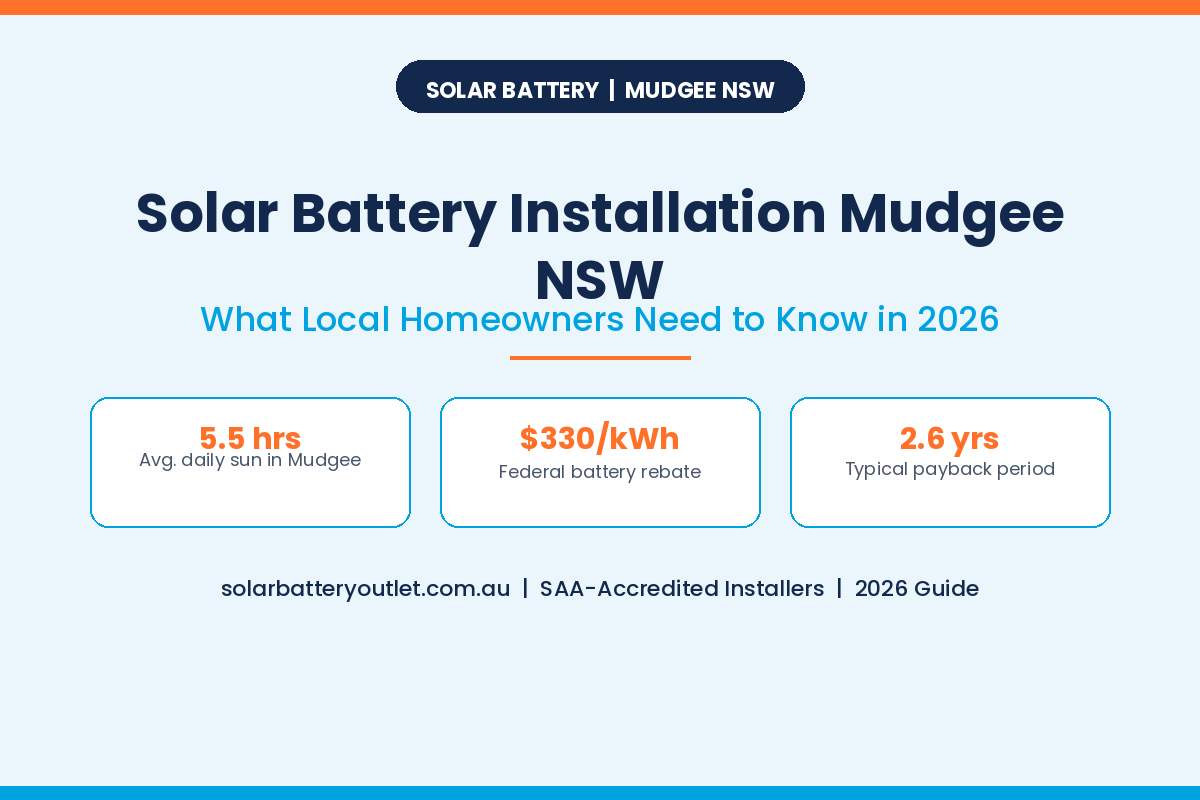
If you live in Mudgee or the surrounding Mid-Western Regional area, you have probably noticed more battery vans parked outside neighbours’ driveways over the past year. That is not a coincidence. Regional NSW is installing home batteries faster than almost anywhere else in the country, and 2026 brings a fresh set of rebate changes, network rules, and installer standards that every local homeowner should understand before signing a contract.
This guide walks through what has changed, what a solar battery installation actually looks like in Mudgee, what realistic payback looks like on your bill, and how to pick a solar battery installation company you can trust. No sales pressure — just the facts you need to make a confident decision.
What’s Changing for Mudgee Homeowners in 2026
The federal Cheaper Home Batteries Program is still running and remains the single biggest reason for the explosion in battery uptake across regional NSW. Nationally, home battery installations surged by roughly 260 per cent year-on-year, with more than 268,000 units installed by the end of 2025 alone.
As Clean Energy Council CEO Jackie Trad put it, households are “taking control of their own power bills in record numbers.” That momentum has reached Mudgee too, with the Clean Energy Regulator recording steady month-on-month growth in regional NSW postcode data.
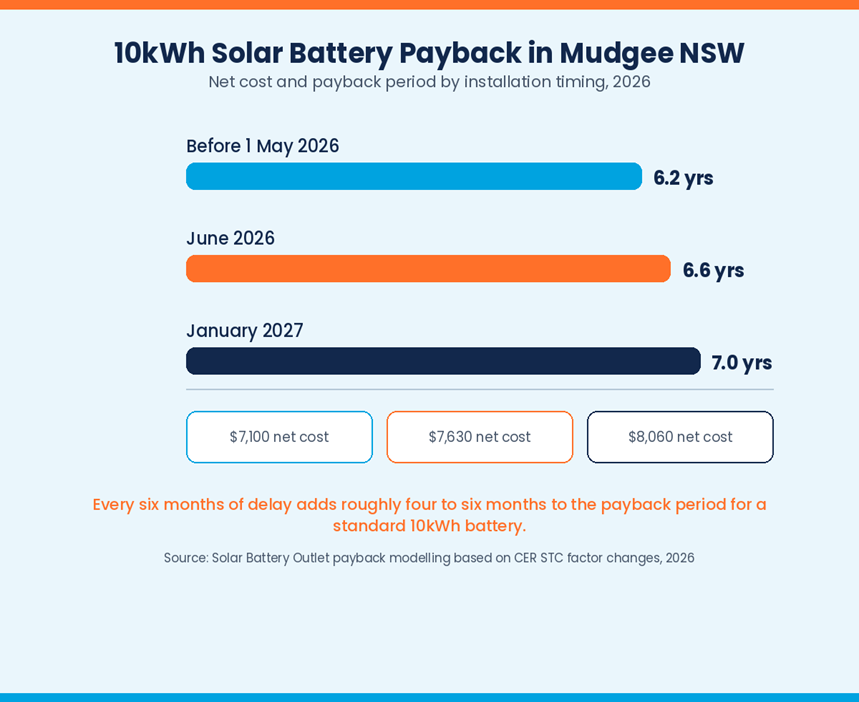
However, the rebate rate is not fixed. The STC factor used to calculate your discount steps down every six months, and from 1 May 2026, a tiered structure further reduced support for batteries with usable capacity above 14 kWh. The rebate itself continues until 2030 — it simply gets a little smaller over time, so the date you install affects your discount — but choosing the right system matters more than rushing.
Why Mudgee’s Solar & Battery Landscape Is Different
Mudgee sits within the Essential Energy network, which covers regional and rural NSW rather than metro Sydney. Essential Energy has introduced two-way pricing tariffs that reward households for exporting solar power during the 5pm–8pm peak window rather than the 10am–3pm solar trough — a detail that changes how much a battery can genuinely save you compared to a Sydney household on Ausgrid.
Regional network charges also run higher than metro areas, since Essential Energy maintains infrastructure across a much larger geographic footprint per customer. That makes shifting evening usage onto stored solar even more valuable for Mudgee households than for their city counterparts.
Mudgee also enjoys around 5.5 hours of peak sunlight a day on average, which is a solid resource for charging a battery fully most of the year, including winter. Combined with strong local uptake, New South Wales now leads the national battery market by a clear margin under the federal program, according to Clean Energy Regulator postcode data current to 31 May 2026.
The 5-Step Installation Roadmap for Mudgee Homes
A solar battery installation in Mudgee generally follows the same core process everywhere in NSW, but a few regional details are worth planning for early. Here is the roadmap we recommend to every local homeowner before they book an installer.
Here are the steps:
1. Get 3 Written Quotes — Compare SAA-accredited installers on price, battery brand and confirmed install dates — not just the headline rebate figure.
2. Check Your Roof & Switchboard — Mudgee’s older homes often need a switchboard upgrade before a battery can be safely connected. Ask for this in writing.
3. Confirm Rebate Stacking — Combine the federal Cheaper Home Batteries discount with any applicable NSW rebate. Ask your installer to itemise both on the quote.
4. Schedule Installation — Regional NSW bookings can take 2–4 weeks longer than metro Sydney. Lock in a confirmed date, not just a signed contract.
5. Register for VPP & Monitor — Join a Virtual Power Plant where available and monitor performance in the first 90 days to confirm expected savings.
Two steps trip up more Mudgee homeowners than any others: switchboard readiness and installer scheduling. Older regional homes often carry legacy switchboards that need upgrading before a battery can be connected safely, and regional bookings can run several weeks behind metro Sydney during peak demand periods. Building both into your timeline avoids nasty surprises.
What Battery Payback Really Looks Like in Mudgee
Numbers matter more than marketing here. For a standard 10 kWh battery, the payback period lengthens the longer you wait, purely because the rebate discount shrinks every six months while the annual saving from the battery itself stays roughly the same.
Carl Binning, Executive General Manager at the Clean Energy Regulator, recently confirmed the scheme has “just breached 430,000 households.” The program is scheduled to run until 2030, with the discount reducing every six months.
For context, Mudgee households typically use 15 to 22 kWh per day, meaning a well-sized 10 kWh battery covers a meaningful share of evening consumption without over-investing in capacity you rarely draw down. A good installer will model this against your actual bills rather than a generic household average.
Choosing the Right Solar Battery Installation Company
Timing and rebates matter, but the single biggest factor in how your installation turns out is the solar battery installation company you choose. Mudgee’s growing market has attracted both excellent local installers and some less scrupulous operators chasing rebate demand.
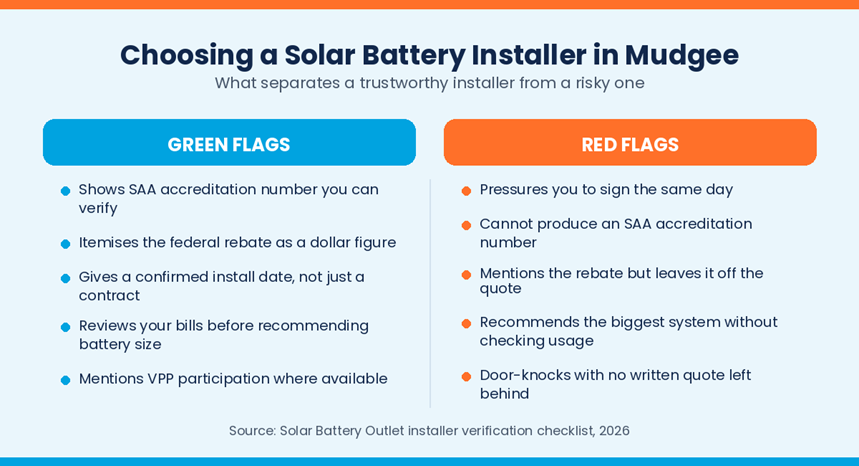
Look for SAA-accredited electricians, a written quote that itemises the rebate as a dollar figure rather than a verbal promise, and a confirmed installation date rather than just a signed contract. If you are comparing brands, the best solar batteries Australia homeowners currently favour include Tesla Powerwall, BYD, Sungrow, Enphase and Growatt — check the exact model is on the Clean Energy Council approved product list. Avoid any installer who pressures you to sign on the spot, cannot produce an accreditation number, or recommends the largest possible system without reviewing your electricity bills first. A legitimate installer is happy for you to take a written quote home and compare it against others.
Frequently Asked Questions
Yes. The federal Cheaper Home Batteries Program applies nationally, including Mudgee and the wider Mid-Western Regional Council area. Your rebate amount depends on your battery’s usable capacity and the STC factor at the time of installation, not your location.
Most straightforward residential installations take about a day once scheduled. However, regional bookings in Mudgee can take two to four weeks longer to secure than metro Sydney during peak demand, so plan your timeline accordingly.
Not always, but many older Mudgee homes do. Ask your installer to inspect your switchboard during the quoting stage and include any upgrade cost in writing, rather than discovering it on installation day.
In most cases, yes. The federal rebate and any applicable NSW-based incentive are calculated separately and can typically be claimed together, though eligibility depends on your retailer, tariff and system configuration. Confirm the exact figures with your installer in writing.
Most Mudgee households use between 15 and 22 kWh of electricity per day, which makes a 10 kWh battery a common and cost-effective starting point. Larger families, homes with an EV, or all-electric households may benefit from a bigger system after a proper usage assessment.
| Ready to find out what a solar battery installation would cost for your Mudgee home? Solar Battery Outlet offers free, no-obligation quotes for homeowners across Liverpool, Bankstown and Mudgee. We review your bills, check your existing solar system, and give you honest numbers — no countdown timers, no pressure. Call 1800 000 777 or visit solarbatteryoutlet.com.au to get started. |
Disclaimer
This article is general information only and does not constitute financial, legal or professional advice. Rebate amounts, eligibility criteria and payback figures are indicative, based on publicly available data at the time of writing, and may change without notice under federal or NSW government programs. Always obtain a written, itemised quote from an SAA-accredited installer and verify current rebate rates before making a purchasing decision. Solar Battery Outlet recommends comparing at least three quotes and reviewing your own electricity usage before committing to any solar battery installation.
About Solar Battery Outlet: We are a Liverpool-based solar battery installer, part of GWM Group Pty Ltd, servicing homes across Liverpool, Bankstown and Mudgee. All installations are carried out by SAA-accredited electricians, and we manage all rebate paperwork on your behalf.
